


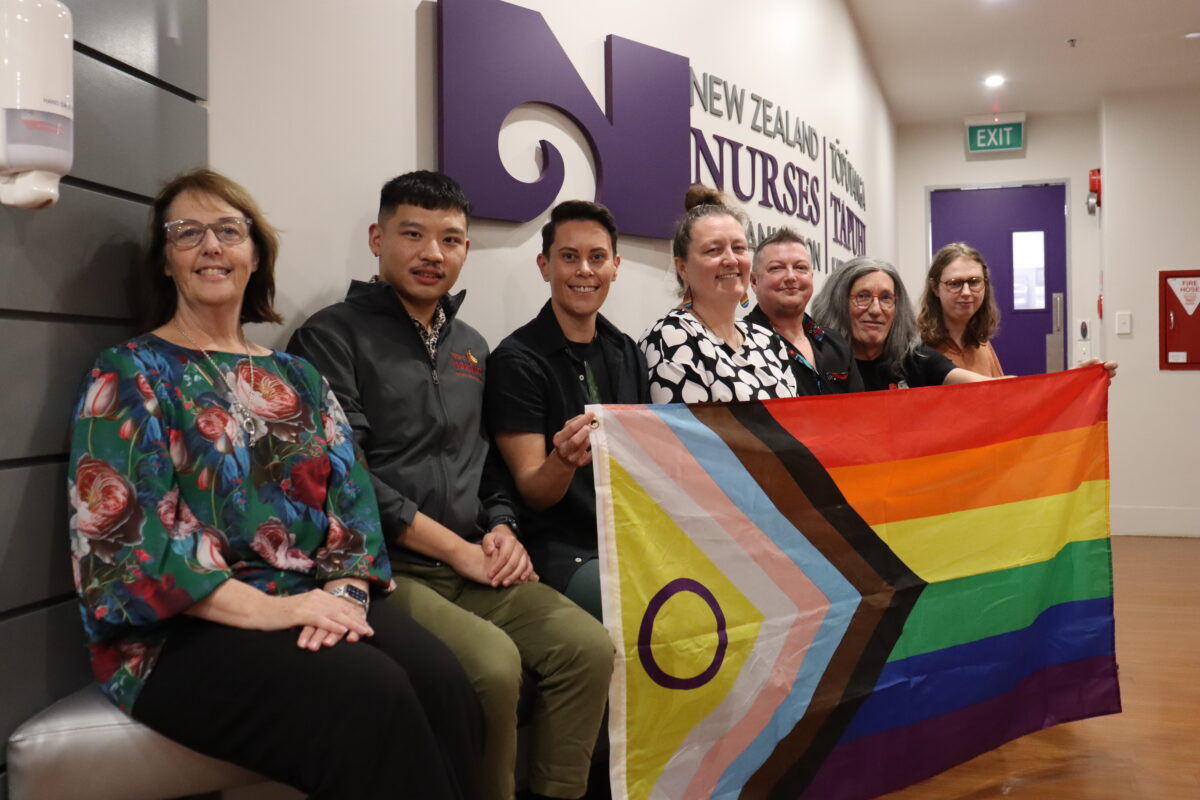
It was the work that preceded this, when members past and present advocated to New Zealand Nursing Organisation — Tōpūtanga Tapuhi Kaitiaki o Aotearoa (NZNO), that helped lead us to this point.

Mel Meates, a current member of the rainbow group, and their persistent efforts were the catalyst for this group.
In December 2023, Meates approached NZNO, and in 2024 followed up with advocacy emails which resulted in chief executive Paul Goulter acknowledging in a reply, “you are correct to identify that NZNO can do a whole lot better for our rainbow members”, and, “I don’t want another year where we are conspicuous by our lack of progress for our rainbow members”.
NZNO then committed to the formation of this group, with help of some of Meates’ contacts (to put the word out to the rainbow nursing community) and from Sandie Bayliss, an ally and NZNO professional nursing adviser.

This group is also 100 per cent backed and supported by Mairi Lucas, director of professional services.

Now one year later we have completed our terms of reference, sent delegates to the CTU’s Out@work conference and started on guidelines to make future NZNO policies rainbow friendly.
Why is this needed?
Like other minority groups there are a number of negative statistics regarding rainbow people receiving health care, and we acknowledge that rainbow practitioners are also users of our health system.
In the last Counting Ourselves survey (a survey of trans and non-binary people in New Zealand aged over 14), 82 per cent of respondents felt their nurse was good or very good at treating them with respect and dignity.1

This is in contrast to the 97 per cent from the New Zealand Health Survey (this is a survey designed to reflect the demographic of New Zealand).
Meanwhile, 58 per cent of the Counting Ourselves respondents rated their level of care during their last emergency visit being good or very good compared to 85 per cent from the New Zealand Health Survey.
Counting Ourselves asked respondents multiple questions regarding their experiences in the last 12 months. Twenty-one per cent stated that: “A health-care provider knowingly referred to me by the wrong gender, either in person or in a referral.” Sixteen per cent said: “I was asked unnecessary or invasive questions about being trans or non-binary that were not related to the reason for my visit”. And 13 per cent said they “could not access an appropriate bathroom”.
These examples explain why 11 per cent of people who avoided going to a general practice (GP) office when they had a medical problem in the last 12 months and 49 per cent of people who didn’t seek help for their mental health or substance abuse stated they were “afraid my gender identity would be seen as a mental health issue or as the cause for any mental health issue”.
Unfortunately employment statistics are just as grim, with 64 per cent of Counting Ourselves respondents in paid employment compared to 78 per cent from the New Zealand Health Survey.
Half of respondents who are out at work stated “ there were times when they did not disclose they were trans or non-binary because they feared discrimination”.
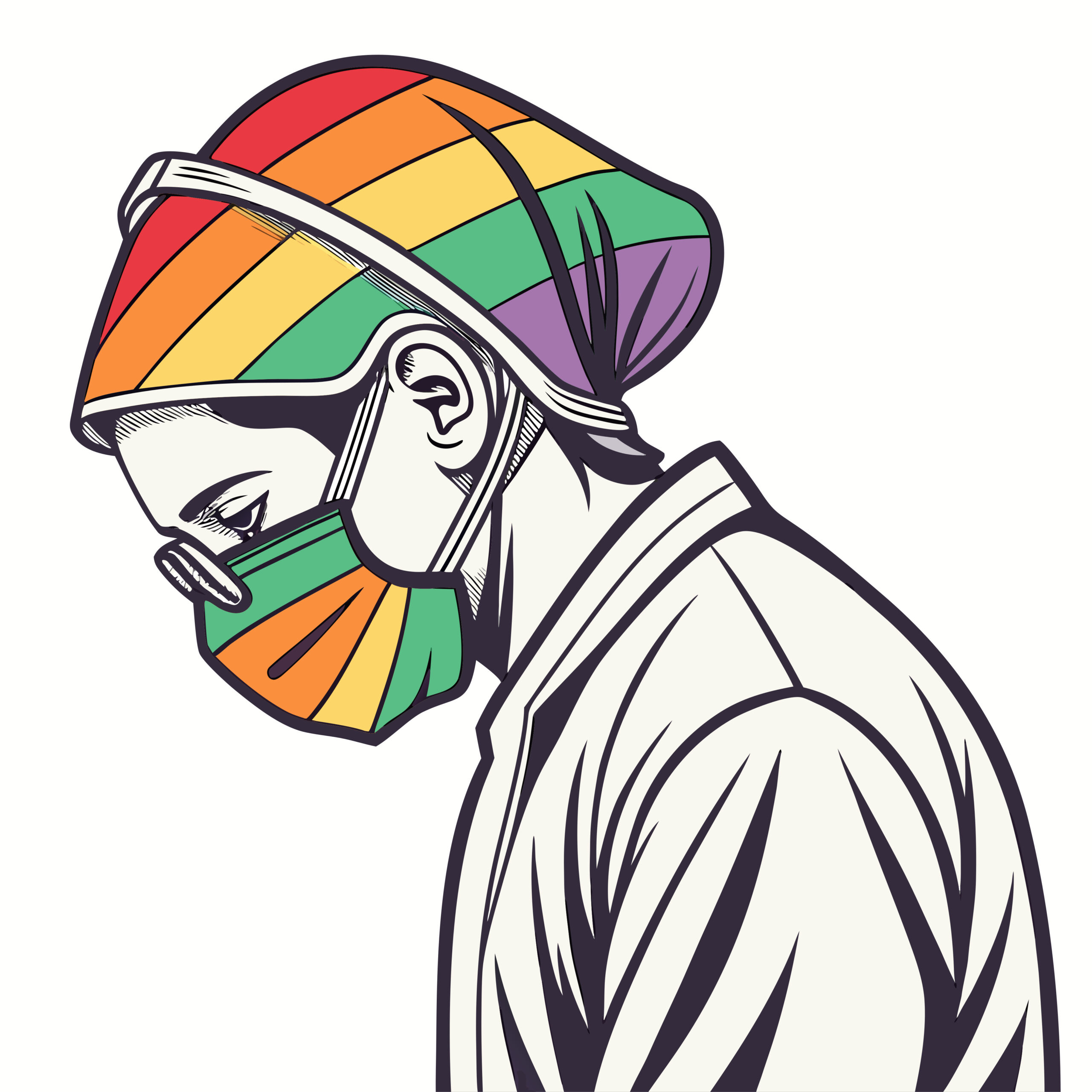
If people are afraid to be out at work for fear of being mistreated then without that representation and expertise for diverse clients, those clients will continue to see health care as unsafe for them.
Now more than ever it is important we stand with the rainbow community against attacks to their access to evidence-based health.
The Cass Report and attacks on transgender health in Aotearoa
The recent push against evidence-based transgender health dates back to August 2022 with the interim report from the Cass Review.
The Cass Review was commissioned by the National Health Service in the United Kingdom with its full release in April 2024. The Cass report explored gender services for transgender youth and people with gender dysphoria in that country.
“Now more than ever it is important we stand with the rainbow community against attacks to their access to evidence-based health.”
The report has been heavily criticised by international and New Zealand health groups due to its lack of consultation with experts on transgender health or trans people themselves, the inclusion of advisory groups that have advocated for conversion therapies, and its misrepresentation of evidence.
The Cass report also promotes gender exploratory therapy, which is widely considered to be a type of conversion therapy 2 , which is illegal in New Zealand under the Conversion Practices Prohibition Legislation Act 2022.3
Despite these issues the current Coalition Government is using it as evidence to push its discriminatory views.
In December 2024 the Ministry of Health (MOH) opened public consultation on whether there should be additional safety measures for puberty blockers. It is not standard practice for the MOH to open public consultation on the safety measures implemented for medication. This is just one piece of evidence that the Coalition Government is attacking transgender health.

Another is the eight-month delay in the release of the guidelines for gender- affirming care in Aotearoa, New Zealand, originally commissioned in 2023 and submitted in October 2024.
The guidelines were meant to be released in March 2025 but were delayed before being published, and were held until a decision was made about the use of reversible pubertal suppression for transgender children and young people with gender incongruence or gender dysphoria, which was released on November 19 this year.
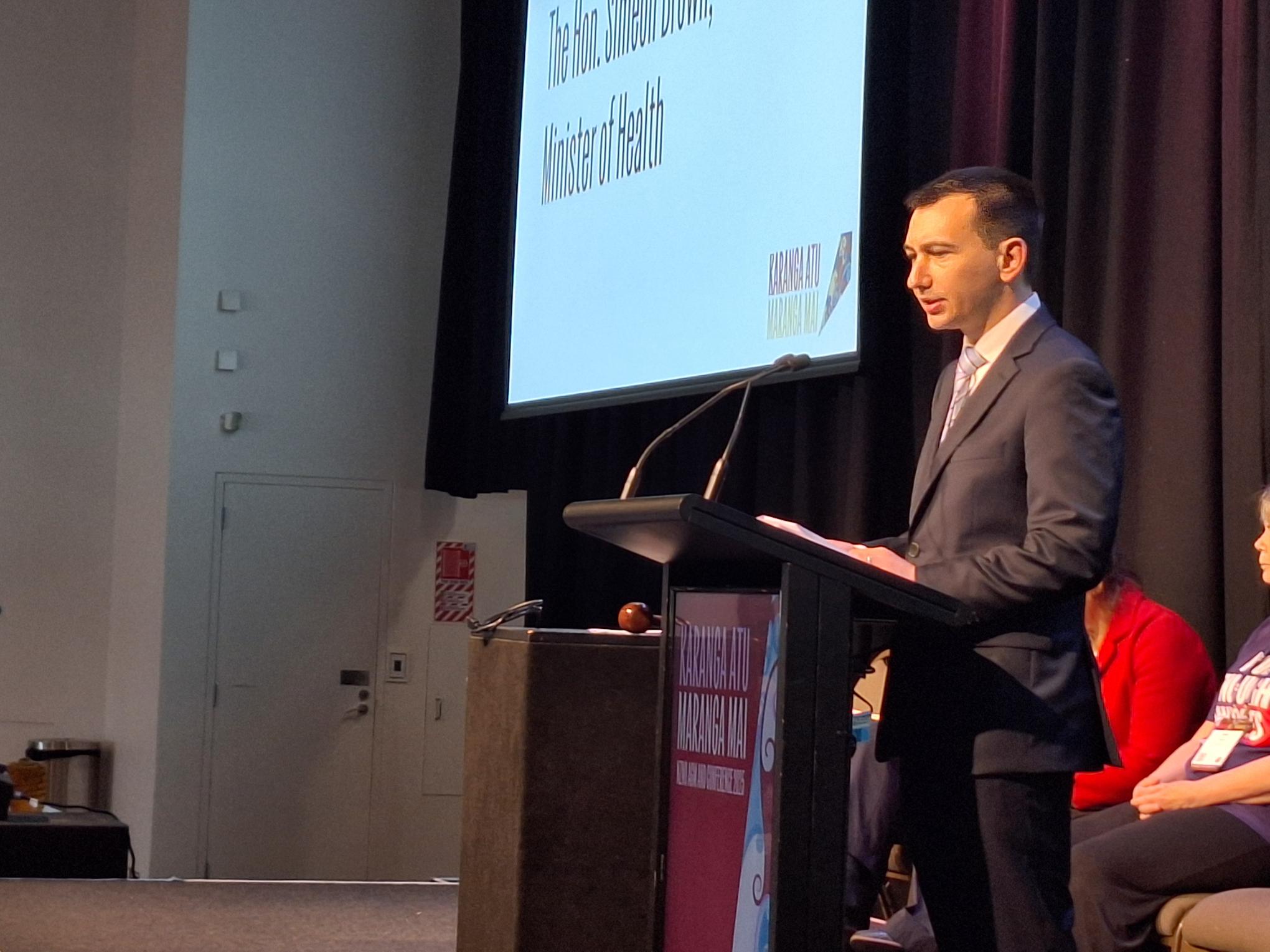
On that date the decision to ban reversible puberty suppressants was announced by the Minister of Health, three hours after New Zealand First posted about the ban on Facebook stating “NZ First is winning the war on woke”.
This ban is in direct opposition to the MOH’s own evidence brief and position from November 2024.4 The decision to announce this ban on the eve of Transgender Day of Remembrance is an additional insult.
It is somewhat heartening to see this ban now been blocked pending a judicial review, after legal action by the Professional Association for Transgender Healthcare Aotearoa (PATHA).
What next?
There is still a lot of work to be done and there are multiple identities under the rainbow umbrella that can have their own unique challenges, discriminations and adversities. The above highlights just one identity.
We are excited to put out an expression of interest for the first substantive committee. While the interim committee has ideas of what we want this group to be, we would like to hear what you want.
To find out how you can join this special interest group and respond to the expression of interest, you can email Sandra Bayliss at [email protected]. We are excited to continue to work to improve our workplaces and our health care.
Membership is open to people with lived experience and allies who are passionate about helping us to improve things. Only those with lived experience will be committee members.

Ahakoa he aha te rākau, he hua kei roto — no matter what species of tree, each bears its own fruit.
References
- Counting Ourselves (2025) Findings from the 2022 Aotearoa New Zealand Trans & Non-binary Health Survey, Counting Ourselves, pp. 19–82, 150–158.
- Janssen, A. et al. (2024) An Evidence-Based Critique of ‘The Cass Review’ on Gender-affirming Care for Adolescent Gender Dysphoria. The Integrity Project.
- Conversion Practices Prohibition Legislation Act 2022. (2022).
- Ministry of Health. (2024). Position Statement on the Use of Puberty Blockers in Gender-Affirming Care. Ministry of Health NZ.