


About the authors:Poonam Kumari, RN, BHSc, MN(hons), is a clinical nurse specialist in infection prevention and control, at Waitemata District Health Board, Auckland, New Zealand. Mark Thomas, MBChB, MD, FRACP, is an infectious disease physician at Auckland District Health Board and an associate professor in molecular medicine and pathology in the Faculty of Medical and Health Science, University of Auckland. Stephen Ritchie, MBChB, PhD, FRACP, is an infectious disease physician at Auckland District Health Board, and a senior clinical lecturer in molecular medicine and pathology in the Faculty of Medical and Health Science, University of Auckland. Andrew Jull, RN, PhD, is a nurse advisor on This article was accepted for publication in August 2018. |
ABSTRACTAim: The aim of this research was to survey patients’ experience of the care provided by the outpatient intravenous antibiotic (OPIVA) service at Auckland City Hospital. Background: Research in Australia has demonstrated that OPIVA is a safe and effective option for managing selected patients who require a long period of intravenous antibiotic treatment. Methods: In this cross-sectional study, 101 patients were invited to participate, and 75 (74 percent) completed the questionnaire. Most of the respondents were male, New Zealand European, and most (73/75, 97percent) had received intravenous antibiotic therapy as an inpatient and then completed their antibiotic treatment in the community. Results: The survey responses were positive about the overall provision of OPIVA care (99 percent), communication with the OPIVA nurses (97 percent) and doctors (96 percent), and the written information provided about the OPIVA service (99 percent). Responses were mostly positive about the training for home antibiotic administration (90 percent) and the convenience of attending the OPIVA clinic (87 percent). Areas identified for improvement fell under two overarching themes: inconvenience associated with health-care delivery and issues about the management of central venous access devices (CVAD). Conclusion: OPIVA therapy was well-regarded and met the expectations of the majority of respondents in this survey. Improvement opportunities include better discharge information, more education opportunities for community nursing teams, collaboration between different teams, training sessions for staff and patients, and the availability of the service after hours. |
||||
KEYWORDSoutpatient parenteral antibiotics, OPIVA, outpatient antibiotic therapy, OPAT, hospital in the home, HITH, peripherally inserted central catheter (PICC), PICC line, elastomeric pump, patient experience |
|||||
 Poonam Kumari
 Stephen Ritchie
 Mark Thomas
 Andrew Jull
INTRODUCTION
OUTPATIENT INTRAVENOUS ANTIBIOTIC (OPIVA) services allow patients who require prolonged intravenous antibiotic treatment to receive some or all of their treatment at home (Abusalem, Myers, & Aljeesh, 2013; Candel, Julián-Jiménez & González-Del Castillo, 2016; Kieran et al, 2009). OPIVA services, also known as outpatient parenteral antimicrobial therapy services, are widely available due to their utility in the treatment of patients with a wide range of infectious diseases (Baker et al, 2012). OPIVA services usually use one of three methods to administer intravenous antibiotics (Candel et al, 2016; Upton, Ellis-Pegler & Woodhouse, 2004). The first method requires the patient to attend an infusion centre or clinic to receive their intravenous antibiotics and have regular care of their central venous access device (CVAD). This method is commonly used for antibiotics with a long half-life, which only need to be infused once a day. The second method involves community nursing services visiting patients’ homes to connect them to an intravenous infusion device and to provide CVAD care. The third method involves the patient and/or their family members administering boluses of the intravenous antibiotics, with regular visits from community nurses to provide CVAD care (Candel et al; Upton et al).These two methods are commonly used for antibiotics that have shorter half-lives and therefore need to be administered either by continuous infusion or by repeated boluses.
At Auckland District Health Board (ADHB), the OPIVA service started in 1979 and mainly used the third model of care until elastomeric infusion devices were introduced, which made self-administered infusion easier. The ADHB OPIVA service now cares for 150-200 patients annually. The Auckland City Hospital infectious diseases department previously published a study of the ADHB OPIVA service from the era before elastomeric infusion devices were widely used, but it did not take the views of patients into account (Upton et al, 2004). The current study was performed to understand patients’ experiences of the OPIVA service and to identify areas for potential improvement.
BACKGROUND
OPIVA services were first introduced in the United States (US) in 1974 to treat patients with cystic fibrosis and exacerbations of pneumonia that required prolonged courses of intravenous antibiotics. Clinicians faced several challenges when treating respiratory tract infections in these patients, including lack of response to antibacterial therapy administered orally and the lengthy hospital stays required for parenteral drug administration. An early report on the use of OPIVA in the treatment of acute and chronic respiratory tract infection in children with cystic fibrosis reported an increased survival rate and that patients became skilled in self-administration of intravenous antibiotics. Patients avoided hospitalisation, with reduced medical expenses for patients and their families, less disruption of family routine, and a more rapid return to school or work (Seaton & Barr, 2013; Williams et al, 2015). In the 1980s and 1990s, OPIVA was progressively introduced in many parts of the world, including the US, the United Kingdom (UK), Canada, Australia and New Zealand. In the last 30 years, OPIVA has become increasingly popular as a cost-effective strategy for infections that require lengthy treatment (Lane et al, 2014). A survey of infectious diseases physicians in the US in 2006 indicated that 94 percent of patients requiring treatment with antibiotics in the longer term were discharged from hospital on OPIVA therapy (Lane et al). In the UK, OPIVA therapy was initially available only in a small number of specialist centres, but its use expanded with increasing recognition of the benefits for both patients and health-care services (Chapman et al, 2012). Research in Australia has shown that OPIVA is a safe and effective option for management of selected patients who require a long period of intravenous antibiotic treatment (Subedi et al, 2015).
Many public hospitals in New Zealand have developed OPIVA services that have changed the concept of service delivery in the hospital and primary health care sector. Auckland City Hospital formally introduced its OPIVA service in 2000 (Upton et al, 2004), allowing many patients to receive intravenous antibiotics at home by self-administration, with daily assistance from district nurses if needed. The intensive input needed from district nurses was decreased when elastomeric infusers were introduced in 2001. Until then, patients were receiving their medication as a bolus and needed to wake at night to administer their antibiotics, and some needed to administer their medication up to four times daily. The elastomeric infusers allowed antibiotics to be administered continuously over 24 hours, with only one bottle change daily. This meant more patients could be taught to self-administer their antibiotics, which was much simpler and more time-efficient (Upton et al, 2004).
LITERATURE REVIEW
A search of the Medline, CINAHL, Web of Knowledge, Scopus and PubMed databases was undertaken in June 2016 to identify studies of patient experiences of OPIVA. Google Scholar was also searched to identify relevant articles that may have been presented at seminars or conferences or published in a report not easily accessible in other search engines. The reference lists of the retrieved articles were searched manually to identify any further relevant papers.
The search was conducted using the search terms “outpatient intravenous antibiotics”, “OPIVA”, “outpatient antibiotic therapy”, “OPAT”, hospital in the home”, “HITH”, “parenteral”, “intravenous”, “outpatient setting”, “home dialysis”, “home care services”, “peripherally inserted central catheter”(PICC), “PICC line”, “elastomeric pump”, “patient experience”, and “patient satisfaction” (see Table 1, below). The search yielded limited literature on the patient experience of OPIVA. Forty-one articles were found that discussed the patient experience of outpatient intravenous therapy in other settings, including oncology and renal medicine. The abstract for each identified article was assessed using the Survey, Question, Read, Recall and Review (SQ3R) technique (Sapsford, 2007) to glean a general idea of the content of the paper and whether it was relevant to this study. The full-text version of each paper was then obtained and assessed for relevance to the research topic.
Table 1: Search terms used and yield of literature search
| Subject | Search terms | Results |
|---|---|---|
| Patient experience/satisfaction or similar | OPIVA, OPAT, HITH, intravenous parenteral | 20 |
| Patient satisfaction/experience Studies in other areas |
Chemotherapy, home dialysis, home care service | 13 |
| Patient satisfaction/experience Studies in other areas |
PICC line/elastomeric pump | 7 |
Abbreviations: HITH – hospital in the home
OPAT – outpatient parenteral antimicrobial therapy
OPIVA – outpatient intravenous antibiotic
PICC – peripherally inserted central catheter
Four studies measured the quality of outpatient experience of OPIVA – these included a study on patients transitioning from hospital to home, a case report of a single patient, and two reports based on a telephone-administered structured interview or a face-to-face semistructured interview. Two of the 20 papers included in this literature review were randomised controlled trials, 12 were surveys, and one was a prospective clinical evaluation. Nine of the 12 surveys identified addressed patient satisfaction with an OPIVA service and the remaining three assessed quality of life in patients participating in an OPIVA programme and patient experience of the PICC line and elastomeric infusers.
MATERIALS AND METHODS
Design, setting and participants
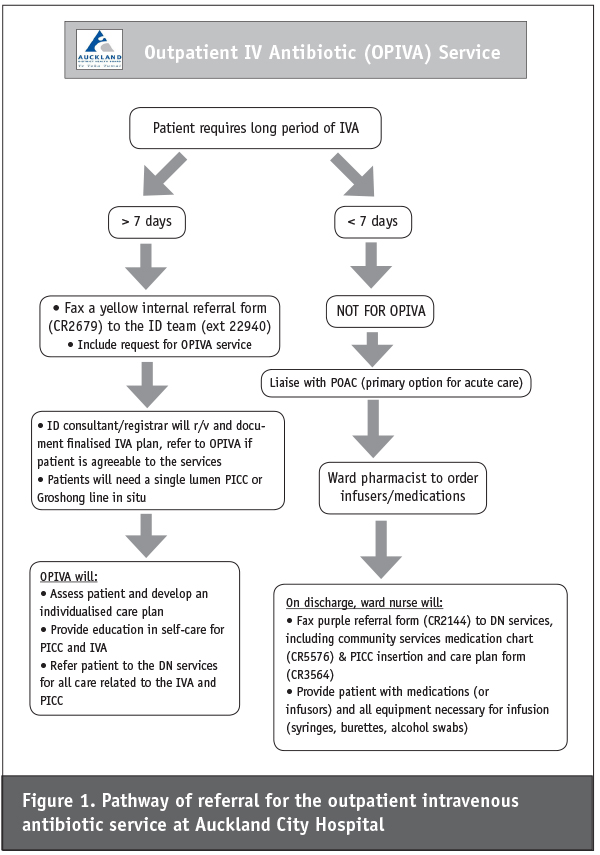
Auckland City Hospital is an 850-bed teaching hospital that provides secondary care for approximately 478,000 people who reside in central and eastern Auckland, and tertiary care to residents of the Auckland District Health board (ADHB) region and of many other DHBs. The ADHB OPIVA service is managed by the adult infectious disease service, which receives referrals from within the hospital and from the community. Study participants were consenting adults (≥15 years of age) treated with intravenous antibiotics by the OPIVA service. All patients cared for by the service between January and June 2016 were invited to participate in the survey. No exclusion criteria were applied. The objective, study outline, and the benefits were explained in the participant information sheet (PIS) that was attached to the questionnaire and given to each patient in a sealed prepaid envelope. Participants were asked to either place their completed survey form in a collection box at the outpatient clinic reception desk, or to post it to the study coordinator, using the self-addressed envelope provided with the questionnaire.
The survey
A self-administered questionnaire, which consisted of 35 questions across three sections, was designed for this study. The first section encompassed socio-demographic and clinical features, including age, gender, ethnicity, referring service, type of CVAD and mode of antibiotic administration. The second section asked about the patient’s experiences, and included questions about communication, information, education, whānau/family involvement, organisation and coordination of care. Questions in this section were informed by the outpatient experience survey used at ADHB, and most survey questions were answered using a five-point Likert scale ranging from “strongly disagree” to “strongly agree”. The third free-text section invited participants to record any positive or negative experiences they encountered during their OPIVA treatment. We focused on the negative comments to identify potential areas for improvement of the OPIVA service.
STATISTICAL ANALYSIS
Quantitative data were descriptively analysed using Statistical Package for Social Sciences v16.0. Qualitative data from free-text comments were analysed using a general inductive process and NVivo version 10 software.
Ethical approval
Ethical approval was obtained from the University of Auckland human participants ethics committee on December 14, 2015.
RESULTS
Completed questionnaires were provided by 75 (74 percent) of the 101 OPIVA patients who were invited to participate in the study. The majority of the participants were male, with a mean age of 58 years (range 16-96) (see Table 2, below). Seventy-one (95 percent) of the 75 participants had received OPIVA via a PICC and 31 (41 percent) were independently disconnecting and reconnecting their infusers or administrating boluses of their antibiotics.
Table 2: Demographic and clinical features of OPIVA participants
| Characteristic | Number (%) |
|---|---|
| Mean age (std dev) | 58 (19) |
| Gender
Male |
49 (65) 26 (35) |
|
Ethnicity
|
48 (64) 8 (11) 10 (13) 7 (9) 2 (3) |
|
English as first language
|
60 (80) 12 (17) 2 (3) |
|
Lives alone
|
11 (15) 60 (81) 3 (4) |
|
Central venous access device
|
71 (95) 1 (1) 3 (4) |
|
Person responsible for antibiotic administration
|
6 (8) 35 (47) 31 (41) 3 (4) |
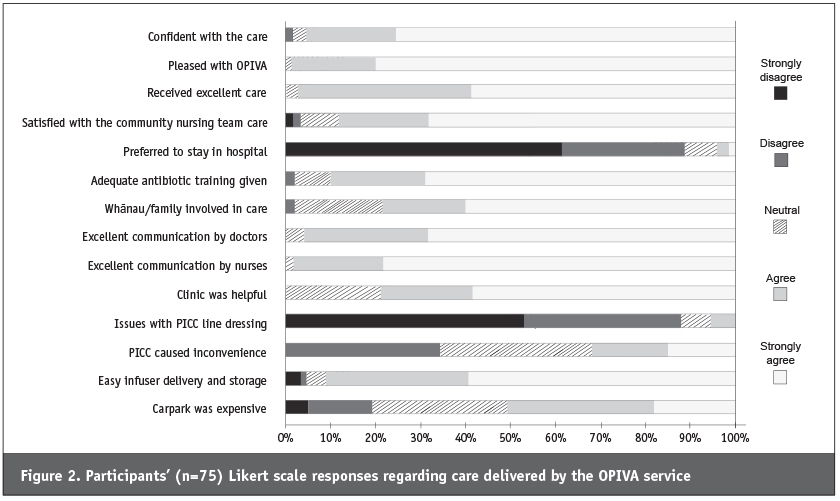
The overwhelming majority of participants reported that their overall experiences of the OPIVA service were positive (see Figure 2, below). Seventy-two of 74 (97 percent) reported that communication with the OPIVA and district nurses was excellent; and 43 out of 48 (90 percent) reported their antibiotic training was adequate. The patients’ assessment of the adequacy of their antibiotic training did not differ between those participants who self-administered their antibiotics and those whose antibiotics were administered by a district nurse.
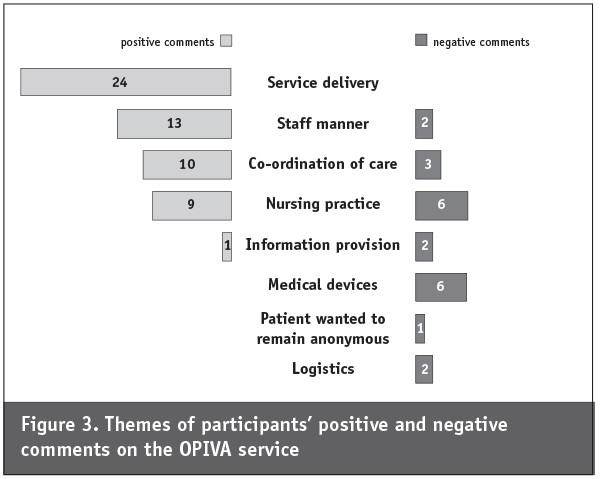
Thirty-six (48 percent) of the 75 participants provided free-text comments that reflected both positive and negative experiences (see Figure 3, below). Six participants included negative comments that could be grouped into two overarching themes: inconsistencies in care between service providers and inconvenience associated with aspects of the health-care delivery. Participant reports of inconsistent care revealed service providers’ lack of knowledge about management of central lines. Examples of inconsistent care included variation between the discharge information provided by the OPIVA service and by the inpatient service, and incomplete discharge information provided by one of the OPIVA nurses.
“I found that trying to receive this treatment which I desperately needed was difficult, to say the least! Had it not been for another specialist involvement, I do not believe would have received it, has achieved/eradicated the bacteria from its target area so far, but i believe that i am still not out of the woods so to speak. This was all due to a lack of knowledge by doctors in the areas of my infection.”
“The district nurses were inconsistent. The last nurse took PICC line out too early – much inconvenience to myself but overall were reasonably okay.”
“I found the service good most times, just that was not given enough information or help with managing to get to appointments from the team and parking costs was a disappointment.”
Examples of inconvenience to patients related to the PICC line and/or the elastomeric infusers:
“More regular PICC line dressing changes would have been good as I struggled to keep them on for a week . . . ”
“No problems at all, except for the inconvenience of having to carry antibiotics around in bag but cannot be avoided.”
Several participants made suggestions that might improve the OPIVA service. Examples were:
“Compared to the option of further time in hospital, the OPIVA service is very good. On call OPIVA service for weekends would be helpful in conclusion . . .”
“Internet online may be a good idea but in my case having access to OPIVA nurse and all the other OPIVA nurses meant I had no need to go online.”
“Only issue is that the nurses seem to be run off their feet – maybe more resource is required, otherwise excellent.”
DISCUSSION
OPIVA, which was developed in the 1970s initially for the treatment of respiratory tract infections in patients with cystic fibrosis, is now widely used in many countries for patients with a diverse range of infections (Baker et al, 2012). OPIVA treatment enables patients to either avoid, or have a reduced period of hospitalisation while maintaining safe, structured follow-up care from a specialised infectious diseases team (Rucker & Harrison, 1974; Seaton & Barr, 2013; Upton et al, 2004). Some of the essential drivers of OPIVA are that it improves patients’ quality of life and gives them the option of being treated at home, thus allowing shorter hospital stays, reduced inpatient costs, and fewer incidents of health-care associated infections (Abusalem et al, 2013; Ansari, 2013; Corwin et al, 2005; Davis & Woodhead, 2016; Dubois & Santos-Eggimann, 2001; Eron & Passos, 2001; Goodfellow et al, 2002; Hitchcock, Jepson, Main & Wickens, 2009; Kieran et al, 2009; Leff et al, 2006; Marra et al, 2005; Montalto, 1996; Sims et al, 2013; Wilson, Wynn, & Parker, 2002). The availability of newer antibiotics with prolonged half-lives, in conjunction with the development of more refined vascular access devices, have further facilitated OPIVA delivery (Richards et al, 2005). A number of studies have examined patient satisfaction with OPIVA services and found home delivery of intravenous antibiotic therapy is more acceptable, safe, efficient and patient-centred than delivery of antibiotic therapy to inpatients (Ansari, 2013; Candel et al, 2016; Goodfellow et al, 2002; Kieran et al, 2009; Seaton & Barr, 2013; Sims, Baker, Bellamy & McMurtry, 2013; Upton et al, 2004; Wilson et al, 2002).
Overall, almost all participants reported high levels of satisfaction with their OPIVA care. These findings are similar to those from other published studies (Ansari, 2013; Corwin et al, 2005; Davis & Woodhead, 2016; Eron & Passos, 2001; Kieran et al, 2009; Lemelin et al, 2007; Marra et al, 2005; Richards et al, 2005). The findings from a prospective cohort study showed that OPIVA treatment was associated with significant improvements in patients’ health-related quality of life in domains such as psychosocial stress, social functioning and physical functioning (Goodfellow et al, 2002). While our study was not designed to measure the health-related quality of life of our patients, the findings suggest that similar improvements in health-related quality of life have occurred in our patients.
A small number of patients in our survey commented on issues which could have been improved. These included inconsistencies in the care provided by different medical and nursing teams, inconvenience arising from the medical devices, and other logistical problems including those related to attending clinics. Standardising the education and training of OPIVA care providers may minimise inconsistent care, and prioritising patient-centred care during decision-making may minimise inconvenience to patients in their daily life (Evans et al, 2016).
There were two key findings in this survey. First, most participants in our survey regarded the OPIVA service highly on overall performance. The survey responses were strongly positive towards provision of OPIVA care (99 percent), communication by nurses (97 percent), communication by doctors (96 percent), provision of adequate education (90 percent), provision of adequate information (99 percent), and the convenience of attending clinics (87 percent). Second, two major themes were identified that brought to light opportunities for improvement of the OPIVA service. These themes were inconsistent care between service providers, and the inconvenience of the medical devices and logistical issues affecting patients.
A detailed review of the literature found that all papers measured patient satisfaction with OPIVA, but found no studies of patient experience with OPIVA . This is the first study of patient experience in New Zealand. Our findings are similar to those of other published studies (Ansari et al, 2013; Kieran et al, 2009; Lemelin et al, 2007; Marra et al, 2005). Two previous randomised controlled trials conducted in New Zealand found that patients with cellulitis or community-acquired pneumonia (CAP) could be safely managed at home with OPIVA and appropriate co-ordination of care (Corwin et al, 2005; Richards et al, 2005). Both these randomised controlled trials highlighted that patients preferred treatment at home rather than in hospital.
Administration of intravenous antibiotic therapy at home is well accepted by patients (Corwin et al, 2005). From our survey findings, 89 percent of patients preferred not to continue their antibiotic treatment in hospital and only a small minority (4 percent) would have preferred to do so. Again, only a small minority (4 percent) reported being anxious on discharge. The findings of our survey indicated that the majority of patients preferred to be treated by the OPIVA service. This finding is similar to the results of earlier randomised controlled trials from Christchurch Hospital (Corwin et al, 2005; Richards et al, 2005), one of which reported that one in three patients who were treated in hospital would have preferred the OPIVA service and that only one in 20 patients who were transferred to OPIVA would have preferred to remain an inpatient and continue their treatment in hospital (Corwin et al, 2005). Similarly, patients in the prospective cohort studies reported by Alawi et al (2015) and Ansari (2013) preferred to be treated by the OPIVA service and expressed high satisfaction with the delivery of care. Other studies have also reported patients being highly satisfied with their experience of the care delivered by an OPIVA service (Ansari et al, 2013; Dubois & Santos-Eggimann, 2001; Hitchcock et al, 2009; Montalto, 1996).
The findings of a cross-sectional prospective cohort study in Canada showed that patients who received OPIVA experienced a significant improvement in their health-related quality of life in domains such as psychosocial stress and social and physical functioning (Goodfellow et al, 2002). While our study was not designed to explore health-related quality of life after discharge from hospital, the delivery of a well-received OPIVA service could be expected to improve patients’ overall health. Therefore, any improvement or further development of our current OPIVA service, with integration of the recommendations made by the respondents in our study, may yield more patient satisfaction and better patient experiences, reduce hospital costs and improve patients’ quality of life. A prospective clinical trial performed in Australia noted that both patients and family members reported high levels of satisfaction with the delivery, comfort, and convenience of OPIVA care (Leff et al, 2006), which is similar to the findings of this study.
Like other studies, a multi-method review of home-based chemotherapy found that standardising education and training for care providers may minimise the risk of inconsistent care between health-care providers (Gorski & Grothman, 1996). Further, if health professionals keep patients at the centre of their decision-making about care, this may help minimise inconvenience to patients in their daily life.
Surveys of patient satisfaction with OPIVA have consistently found high satisfaction with provision of this service. Eighty-three percent of patients in a study by Lemelin et al (2007) rated OPIVA as an appropriate service for their illness and 64 percent rated the overall care received as good (Lemelin et al, 2007). However, 37 percent expressed concern about being left alone at home with no hospital surveillance, especially in the evenings and at night. In our study, 77 percent of patients reported that they would have been disappointed if there was no OPIVA service available, which is similar to the findings of others (Marra et al, 2005). Marra et al (2005) reported that 89 percent of the patients in their study preferred treatment at home and 82 percent were willing to pay for OPIVA in order to be discharged home sooner. They explained that co-ordination of care was pivotal to a well-functioning OPIVA service.
Some respondents in our survey complained of inconsistencies in the co-ordination of care between different specialties and expressed their dissatisfaction when the two teams had not been liaising with each other. However, when questioned about “co-ordination of care”, 97 percent of patients agreed that they had received excellent care. This finding is similar to that in the study by Lemelin et al (2007), although in their study 60 percent of patients felt that their care was appropriately co-ordinated.
A minority of patients treated by OPIVA services self-administer their antibiotics, and the remainder have the antibiotics administered via an infuser device. Educating patients who will be self-administering their antibiotic regimen how to do this is another crucial phase in the OPIVA process (Amodeo et al, 2009). Pajarón et al (2015) studied patients who were self-administering antibiotics as treatment for infective endocarditis, and found that patient or carer administration of antibiotics was safe and effective. Eaves et al (2014) found that retention of information by patients and carers was excellent, with 92 percent (35/38) of patients and carers fully competent and confident after training had been provided. Our key finding from training patients to self-administer antibiotics was that 90 percent of patients were satisfied with the written, visual and practical demonstration of antibiotic administration.
Eighty-seven percent of patients found the OPIVA clinic to be useful. Seventy-eight percent of our respondents disagreed they had to wait for a long time at the clinic, 89 percent agreed their concerns were well addressed, and 70 percent disagreed that their clinic appointments were too frequent. These findings suggested patients receiving OPIVA experienced minimal logistical issues. A similar pattern of responses was seen in a patient satisfaction survey conducted in a breast-cancer clinic, where patients reported brief waiting times, consistent continuity of care from physicians, and good interpersonal skills on the part of nurses and physicians. A high proportion of respondents in that survey felt their questions were answered and their expectations met (Bergenmar et al, 2006).
In contrast with the above findings, thematic analysis of our survey results showed that a few patients did experience some degree of inconvenience. However, most of our patients had no problems with the PICC dressings and did not experience inconvenience with the PICC line in their arm or any irritation from the dressings. In a clinical audit of patient experience of a PICC line inserted for chemotherapy by Harrold et al (2016), 65 percent of 48 patients reported no complications with the line. Chambers, Pabia, Sawyer & Tang (2017) reported that the complete or partial occlusion rate for PICC lines was low (8.2 percent), which is consistent with the findings of Harrold et al (2016).
Eighty-eight percent of the respondents in our survey disagreed they had issues with the PICC line, confirming a low number of issues with this type of line. Harrold et al (2016) reported that none of their study participants reported complications with activities of daily living, such as showering with a PICC line or coping at home with an elastomeric infuser bottle attached to the belt bag. In contrast, a small percentage of patients in our survey experienced issues with the PICC line, including showering, keeping the dressing dry, allergic reactions and the need for regular dressing changes. However, the clinical audit by Harrold et al (2016) was undertaken in patients receiving chemotherapy with a catheter dwell time ranging from seven days to 20 months, whereas our patients receiving OPIVA had a catheter dwell time of seven days to six weeks. Our findings suggest that when the catheter dwell time is shorter, it may be more difficult for patients to adjust to the presence of a foreign body in a vein. Ninety percent of patients in the study by Harrold et al (2016) reported that they would recommend a PICC to others, including five patients who rated PICC insertion as very painful but would still recommend it to others because it made the treatment journey easier. In the study by Goodwin et al (2002), a minority (10 percent) of patients used a PICC line, whereas the majority (95 percent) of our patients did so.
A recent international cross-sectional descriptive study, designed to identify current site management for CVADs, to clarify practice for central lines when the skin is impaired, and to describe current training for CVAD management across 34 countries (Broadhurst et al, 2016), found variations in recommended best practice between health-care clinicians, patient populations and countries. In our study, one of the common themes in the open-text comments was inconsistent PICC dressing changes. The findings of the larger-scale study by Broadhurst et al (2016) are similar to ours in regard to lack of consistency of PICC dressing changes, nursing practice and management of skin allergies.
Elastomeric infuser bottles were also discussed in the open free-text component of our survey. Ninety-two percent of patients were satisfied with the delivery of the infusers and their storage requirements and 78 percent disagreed that they had to wait for a long time to be discharged home. Our findings are consistent with those of Factor et al (2007), who reported that patients preferred an elastomeric infuser as part of their treatment. Only one patient in our study found the infuser bottle inconvenient to carry around in the belt bag.
In a multi-method review of home-based chemotherapy, Evans et al (2016) found that patients perceived a number of advantages in being treated at home, including privacy, a familiar environment, reduced waiting times, less disruption to daily life, more involvement of family members in their care, fewer transport difficulties, independence and personalised care by nurses in the home. Most of our survey respondents considered that the OPIVA clinic was very convenient and they felt comfortable being treated at home by the district nurses. A few reported fear of infuser pump malfunction, lack of hospital surveillance, the ongoing commitment of caregivers, adjusting to wearing the portable pump, which restricts activities of daily living, and less opportunity to share experiences with other patients. None of our respondents mentioned any instances of infuser pumps malfunctioning. However, patients felt that wearing the belt bag to store the infuser bottle at all times was inconvenient and, for some, was a source of anxiety with regard to explaining it to others.
In contrast, in a semi-structured interview, patients with advanced cancer receiving home parenteral nutrition and their family members felt frustrated, powerless, and unable to cope with nutritional support at home (Orrevall et al, 2004). Home parenteral nutrition uses a model of care similar to OPIVA – patients receive nutrition through a vein using a PICC line. However, these patients and their family members accepted home parenteral nutrition because of the severity of their condition, and still regarded home-based treatment as a positive alternative to hospitalisation.
A study of patients’ experience of home dialysis in Wellington, New Zealand, which included face-to-face interviews, reported that the relationship between the patient and machine was ambivalent; however, dialysing in hospital was described as negative because of the restrictions imposed on lifestyle and the loss of personal autonomy when compared with home dialysis and peritoneal dialysis (Shaw, 2015). This study found that patients who dialysed at home took responsibility for self-management, which is similar to our finding that 41.3 percent of patients took full responsibility for self-administering their own antibiotics and care of their PICC line.
A qualitative ethnographic study in the UK, investigating the experiences of patients on peritoneal dialysis at home, described four major themes: feeling medicalised at home, rigid timetables, uncertainty about managing a crisis, unavoidable deterioration, and still seeking a kidney transplant in the hope of freedom (Baillie & Lankshear, 2015). The findings of that study are clearly different from ours, because of the greater challenges posed by peritoneal dialysis. However, these patients on dialysis were still grateful to be at home and to be given the opportunity to self-manage, as was the case in our patients who experienced OPIVA.
LIMITATIONS
Several limitations were identified for this study. The major limitation was the small number of participants, arising from the duration of the data collection period (six months). Given that the OPIVA service treats 150-200 patients per annum, the response rate represented about 40-50 percent of those treated over a year, although it was 75 percent for the six-month period. The results we obtained were very consistent and were unlikely to have changed substantially by increasing the number of respondents. The other limitation of this survey study was the possibility of memory recall bias. However, the participants were given the patient experience survey on the very last clinic appointment, so the experience was recent and easy to remember. Lastly, the results of the thematic analysis, focused on negative comments, included only a small number of comments from participants. However, each of the negative comments was carefully analysed to be able to understand the root of the patient’s dissatisfaction.
RECOMMENDATIONS
The following recommendations are proposed for improving the delivery of the OPIVA service:
- Increased consideration of the patient’s choice for the method of intravenous antibiotic delivery.
- Improved standardisation of education for antibiotic administration.
- Increased provision of information about PICC lines and better consistency between district nurses.
- Increased whānau/family involvement.
- Improved provider training, co-ordination and teamwork.
- Extending availability of OPIVA resources, including creation of an OPIVA website.
- Improving access to OPIVA team members overnight and during weekends.
CONCLUSION
The aim of this project was to explore patient experiences of the care provided by the OPIVA service for patients prescribed a prolonged course of intravenous antibiotics therapy at Auckland City Hospital. We found that the majority of the patients were satisfied with the way the OPIVA team communicated, provided training on antibiotic administration, gave information and co-ordinated care. Improvement opportunities include better discharge information, more education opportunities for community nursing teams, collaboration between different teams, training sessions for staff and patients, and the availability of the service after hours.
ACKNOWLEDGEMENTS
We would like to thank the infectious diseases team at Auckland City Hospital and the hospital’s nursing professional development manager Di Roud for helping fund this study.
REFERENCES
Abusalem, S., Myers, J. A., & Aljeesh, Y. (2013). Patient satisfaction in home health care. Journal of Clinical Nursing, 22(17-18), 2426-2435.
Alawi, S. A., Abdulkarim, S., Elhennawy, H., Mansoor, A. A., & Ansari, A. A. (2015). Outpatient parenteral antimicrobial therapy with ceftriaxone for acute tonsillopharyngitis: Efficacy, patient satisfaction, cost effectiveness, and safety. Infection and Drug Resistance, 8, 279-285.
Amodeo, M. R., Clulow, T., Lainchbury, J., Murdoch, D. R., Gallagher, K., Dyer, A., Metcalf, S. L., Pithie, A. D., & Chambers, S. T. (2009). Outpatient intravenous treatment for infective endocarditis: safety, effectiveness and one-year outcomes. The Journal of Infection, 59, 387-393.
Ansari, A. A. (2013). Outpatient parenteral antimicrobial therapy (OPAT) in the Kingdom of Bahrain: Efficacy, patient satisfaction and cost effectiveness. Open Infectious Diseases Journal, 7(1), 90–95.
Baillie, J., & Lankshear, A. (2015). Patient and family perspectives on peritoneal dialysis at home: Findings from an ethnographic study. Journal of Clinical Nursing, 24(1-2), 222–234.
Baker, M. G., Barnard, L. T., Kvalsvig, A., Verrall, A., Zhang, J., Keall, M., … Howden-Chapman, P. (2012). Increasing incidence of serious infectious diseases and inequalities in New Zealand: A national epidemiological study. The Lancet, 379(9821), 1112–1119.
Bergenmar, M., Nylén, U., Lidbrink, E., Bergh, J., & Brandberg, Y. (2006). Improvements in patient satisfaction at an outpatient clinic for patients with breast cancer. Acta Oncologica, 45(5), 550–558.
Broadhurst, D., Moureau, N., & Ullman, A. J. (2016). Central venous access devices site care practices: An international survey of 34 countries. Journal of Vascular Access, 17(1), 78–86.
Candel, F. J., Julián-Jiménez, A., & González-Del Castillo, J. (2016). Current status in outpatient parenteral antimicrobial therapy: A practical view. Revista Española De Quimioterapia, 29(2), 55–58.
Chambers, C. R., Pabia, M., Sawyer, M., & Tang, P. A. (2016). Baxter elastomeric pumps: Feasibility of weight estimates. Journal of Oncology Pharmacy Practice, advance online publication.
Chapman, A. L. N., Seaton, R. A., Cooper, M. A., Hedderwick, S., Goodall, V., Reed, C., … Nathwani, D. (2012). Good practice recommendations for outpatient parenteral antimicrobial therapy (OPAT) in adults in the UK: A consensus statement. Journal of Antimicrobial Chemotherapy, 67(5), 1053–1062.
Corwin, P., Toop, L., McGeoch, G., Than, M., Wynn-Thomas, S., Wells, J. E., … Richards, D. (2005). Randomised controlled trial of intravenous antibiotic treatment for cellulitis at home compared with hospital. BMJ, 330(7483), 129–132.
Davis, G., & Woodhead, J. (2016). Setting up a unique outpatient parenteral antimicrobial therapy (OPAT) service. Journal of Community Nursing, 30(3), 61–65.
Dubois, A., & Santos-Eggimann, B. (2001). Evaluation of patients’ satisfaction with hospital-at-home care. Evaluation & the Health Professions, 24(1), 84–98.
Eaves, K., Thornton, J., & Chapman, A. L. (2014). Patient retention of training in self‐administration of intravenous antibiotic therapy in an outpatient parenteral antibiotic therapy service. Journal of Clinical Nursing, 23(9-10), 1318–1322.
Eron, L. J., & Passos, S. (2001). Early discharge of infected patients through appropriate antibiotic use. Archives of Internal Medicine, 161(1), 61–65.
Evans, J. M., Qiu, M., Mackinnon, M., Green, E., Peterson, K., & Kaizer, L. (2016). A multi‐method review of home‐based chemotherapy. European Journal of Cancer Care, 25(5), 883-902.
Factor, D., Koo, A., Raghavan, K., Blanco, R. (2007). Use of elastomeric pumps in day surgery – assessment of patient satisfaction: 2AP2‐2. European Journal of Anaesthesiology, 5(24), 12.
Goodfellow, A. F., Wai, A. O., Frighetto, L., Marra, C. A., Ferreira, B. M., Chase, M. L., & Jewesson, P. J. (2002). Quality-of-life assessment in an outpatient parenteral antibiotic program. Annals of Pharmacotherapy, 36(12), 1851–1855.
Goodwin, D. D., Hanson, C. J., & Berry, P. C. (2002). The changing face of Canadian home parenteral therapy. Journal of Infusion Nursing, 25(6), 372–378.
Gorski, L. A., & Grothman, L. (1996). Home infusion therapy. Seminars in Oncology Nursing, 12(3), 193–201.
Harrold, K., Martin, A., & Scarlett, C. (2016). Proactive PICC placement: Evaluating the patient experience. British Journal of Nursing, 25(8), S4–14.
Hitchcock, J., Jepson, A. P., Main, J., & Wickens, H. J. (2009). Establishment of an outpatient and home parenteral antimicrobial therapy service at a London teaching hospital: A case series. Journal of Antimicrobial Chemotherapy, 64(3), 630–634.
Kieran, J., O’Reilly, A., Parker, J., Clarke, S., & Bergin, C. (2009). Self-administered outpatient parenteral antimicrobial therapy: A report of three years experience in the Irish healthcare setting. European Journal of Clinical Microbiology & Infectious Diseases, 28(11), 1369–1374.
Lane, M. A., Marschall, J., Beekmann, S. E., Polgreen, P. M., Banerjee, R., Hersh, A. L., & Babcock, H. M. (2014). Outpatient parenteral antimicrobial therapy practices among adult infectious disease physicians. Infection Control and Hospital Epidemiology, 35(7), 839–844.
Leff, B., Burton, L., Mader, S., Naughton, B., Burl, J., Clark, R., . . . Burton, J. R. (2006). Satisfaction with hospital at home care. Journal of the American Geriatrics Society, 54(9), 1355–1363.
Lemelin, J., Hogg, W. E., Dahrouge, S., Armstrong, C. D., Martin, C. M., Zhang, W., . . . Viner, G. (2007). Patient, informal caregiver and care provider acceptance of a hospital in the home program in Ontario, Canada. BMC Health Services Research, 7, 130.
Marra, C. A., Frighetto, L., Goodfellow, A. F., Wai, A. O., Chase, M. L., Nicol, R. E., & Jewesson, P. J. (2005). Willingness to pay to assess patient preferences for therapy in a Canadian setting. BMC Health Services Research, 5, 43.
Montalto, M. (1996). Patients’ and carers’ satisfaction with hospital-in-the-home care. International Journal for Quality in Health Care, 8(3), 243–251.
Orrevall, Y., Tishelman, C., Herrington, M. K., & Permert, J. (2004). The path from oral nutrition to home parenteral nutrition: a qualitative interview study of the experiences of advanced cancer patients and their families. Clinical Nutrition, 23(6), 1280-1287.
Pajarón, M., Fernández-Miera, M. F., Allende, I., Arnaiz, A. M., Gutiérrez-Cuadra, M., Cobo-Belaustegui, M., & Sanroma, P. (2015). Self-administered outpatient parenteral antimicrobial therapy (S-OPAT) for infective endocarditis: A safe and effective model. European Journal of Internal Medicine, 26(2), 131–136.
Richards, D. A., Toop, L. J., Epton, M. J., McGeoch, G. R. B., Town, G. I., Wynn-Thomas, S., & Abernethy, P. D. (2005). Home management of mild to moderately severe community-acquired pneumonia: A randomised controlled trial. Medical Journal of Australia, 183(5), 235–238.
Rucker, R. W., & Harrison, G. M. (1974). Outpatient intravenous medications in the management of cystic fibrosis. Pediatrics, 54(3), 358–360.
Sapsford, R. (2007). Survey research (2nd ed.). Sage Publications.
Seaton, R. A., & Barr, D. A. (2013). Outpatient parenteral antibiotic therapy: Principles and practice. European Journal of Internal Medicine, 24(7), 617–623.
Shaw, R. (2015). Being-in-dialysis: The experience of the machine-body for home dialysis users. Health, 19(3), 229–244.
Sims, A. L., Baker, P., Bellamy, R., & McMurtry, I. A. (2013). Outpatient parenteral antibiotic therapy in primary hip and knee arthroplasty infection managed with debridement and retention of prosthesis: A retrospective cohort study. Surgical Infections, 14(3), 293–296.
Subedi, S., Looke, D., McDougall, D., Sehu, M., & Playford, E. (2015). Supervised self-administration of outpatient parenteral antibiotic therapy: A report from a large tertiary hospital in Australia. International Journal of Infectious Diseases, 30, 161–165.
Upton, A., Ellis-Pegler, R. B., & Woodhouse, A. F. (2004). Outpatient parenteral antimicrobial therapy (OPAT): A review of experience at Auckland Hospital. New Zealand Medical Journal, 117(1200), U1020.
Williams, D. N., Baker, C. A., Kind, A. C., & Sannes, M. R. (2015). The history and evolution of outpatient parenteral antibiotic therapy (OPAT). International Journal of Antimicrobial Agents, 46(3), 307–312.
Wilson, A., Wynn, A., & Parker, H. (2002). Patient and carer satisfaction with ‘hospital at home’: Quantitative and qualitative results from a randomised controlled trial. British Journal of General Practice, 52(474), 9-13.
Daily doses – uncut news
| 5 Oct |
Labour's pay rise a first step, but pay equity needs a full settlementTōpūtanga Tapuhi Kaitiaki o Aotearoa NZNO has welcomed Labour's promised pay rise for care and support workers as a first step. It says care and support workers now need a full settlement of their pay equity claim and a workable pay equity system for all of its members. |
| 1 Oct |
Health NZ releases first national report on serious adverse eventsHealth New Zealand has published its first national Serious Adverse Event Report, acknowledging the serious harm experienced by patients and whānau and outlining the improvements identified and actions underway to strengthen patient safety. The report covers serious adverse events reported in Hospital and Specialist Services between 1 July and 31 December 2025. |
| 25 Sept |
380 more health care workers at the end of winter too little too lateAn announcement of 380 additional nurses, midwives and health care assistants for hospitals around the country at the end of winter is too little too late, NZNO says. |
| 23 Sept |
Auckland University research finds nurse shortages increase post-surgery deaths and complicationsNew research by Auckland University has found addressing nurse shortages in post-operative care may save 182 lives a year because short-staffed wards have higher rates of potentially preventable deaths and complications after their surgeries. |
| 21 Sept |
Whanganui Hospital ED averaged 680% capacity over a week Working in an overcrowded emergency department (ED), up to 680% capacity over a week, makes staff feel overwhelmed with the pressure, Tōpūtanga Tapuhi Kaitiaki o Aotearoa NZNO says.
|
| 14 Sept |
WellSouth's Newborn Enrolment Kahu Taurima Programme a finalist at the Primary Care Awards 2026WellSouth's Newborn Enrolment Kahu Taurima Programme is a finalist at the Primary Care Awards for the HALEO Best Supplier Service, Product or Campaign category. Winners will be announced on 17 October. |
| 14 Sept |
Global Study: Nursing Shortages Require Workforce Policy Solutions, Not Recruitment Campaigns AloneWhy people choose nursing, and why they leave, comes down to the same factors. The global nursing shortage cannot be solved simply by encouraging more people to enter the profession, according to a new evidence brief. |
| 8 Sept |
Overworked, understaffed Gisborne ED staff strike Health and safety concerns arising from unsafe staffing levels have forced nurses at Gisborne Hospital’s emergency department (ED) to go on strike.
|
| 4 Sept |
Strong growth in wāhine Māori and Pacific women’s cervical screening rates highlights success of self-testing programmeCervical screening participation has increased significantly for both wāhine Māori and Pacific women, reflecting the strong impact of self-testing, Screening Services and the dedicated efforts of health providers working alongside their communities. |
| 4 Sept |
Government must adopt Wai 2713 recommendations on disability systemThe Coalition Government must urgently adopt new recommendations from the Waitangi Tribunal which has found significant parts of the disability system prejudice tāngata whaikaha Māori (Māori with disabilities), NZNO says. |
| 31 Aug |
Employing graduate nurses will help keep them in nursing and the countryA new proposal that will require Te Whatu Ora to offer all eligible graduate nurses jobs in the public health system will help keep them in nursing and in Aotearoa New Zealand, NZNO says. |
| 26 Aug |
Health Minister’s claim Winter Plan ‘managing well’ delusionalHealth Minister Simeon Brown’s claim that hospitals are ‘managing well’ because of the Government’s Winter Plan is delusional, NZNO says. |
| 25 Aug |
Hospital data shows nursing shortages continue to put patients at riskTe Whatu Ora data released today shows patients are continuing to be put at risk by the Coalition Government’s deliberate failure to safely staff hospital wards, NZNO says. |
| 24 Aug |
Fed-up North Shore ED staff declare state of emergencyNZNO members working in the emergency department (ED) at North Shore Hospital have declared a state of emergency due to unsafe staffing levels resulting in ongoing overcrowding. |
| 19 Aug |
What happened to the winter health plan?The $25 million 2026 Winter Plan launched by Health Minister Simeon Brown in March to erase pressure on the health system has been an unmitigated disaster, Tōpūtanga Tapuhi Kaitiaki o Aotearoa NZNO says. |
| 11 Aug |
Applications open for advanced nursing education programmesHealth New Zealand is encouraging registered nurses to apply for two advanced education programmes that support nurses to further develop their clinical skills and expand access to care in communities across New Zealand. |
| 3 Aug |
Health New Zealand welcomes settlement of NZRDA collective agreementHealth New Zealand welcomes the vote by New Zealand Resident Doctors Association (NZRDA) members to settle their collective agreement. |
| 30 Jul |
Backing our frontline rural health workforceRural communities across New Zealand will benefit from three new investments that will support the rural health workforce and help more people access care closer to home, Associate Health Minister Matt Doocey says. |
| 22 Jul |
Te Whatu Ora must disclose staffing levels at time of tragic deathTe Whatu Ora must disclose whether the Waikato emergency department (ED) was short-staffed at the time a man tragically died in the waiting room, NZNO says. |
| 6 Jul |
Reflecting on IND 2026Looking back on last month’s International Nurses Day 12 May 2026 (IND 2026), the impact of this year's theme "Our Nurses. Our Future. Empowered Nurses Save Lives" continues to resonate across the world. ICN’s landmark IND 2026 report defined seven key powers of nursing and this message has been strengthened with nurses in every region celebrating, naming, and owning their powers throughout May. |
| 3 Jul |
Health New Zealand acknowledges Ombudsman statement on Wakari Ward 10AHealth NZ welcomes the independent investigation by the Ministry of Health into Ward 10A. On Wednesday the Health NZ board agreed to close Wakari Ward 10a as a forensic intellectual disability (ID) unit, with the future use of the ward yet to be determined. |
| 2 Jul |
New programme to fast track bowel cancer care and cut colonoscopy waitlistsHealth New Zealand is today launching a national initiative, designed to fast track bowel cancer care and reduce colonoscopy waitlists by up to 30 per cent. |
| 1 Jul |
Six new Co-Response Team locations announced to strengthen support for people in mental distressThe next six locations for Health New Zealand and NZ Police Co-Response Teams have been confirmed, expanding a model that helps people experiencing mental distress receive timely, wraparound support that better meets their health needs. |
| 29 Jun |
Mental health and addiction targets progress continuesHealth New Zealand continues to make important progress against its mental health and addiction targets, meeting four out of five national targets this quarter. |
| 25 Jun |
Access to care continuing to improve across a range of health indicatorsNew health data released today shows continued improvement in access to care across a range of health indicators. |
| 18 Jun |
Funding "boost" continues dangerous under-funding of aged careThe Health Minister’s funding "boost" for aged residential care continues underfunding to the sector and will continue unsafe practices and short staffing, which is putting vulnerable residents at risk, NZNO says. |
| 16 Jun |
Labour to make maternity scans freeLabour will add free maternity scans to the Medicard alongside three free doctor’s visits a year, so every pregnant woman gets the care she needs. |