




 Some people might not be aware that primary care and primary health-care (PHC) are actually two very different things.
Primary care is just about identifying the level of medical care — primary (first point of call in the community), secondary (hospitals) or tertiary (specialist).
But PHC is more of a philosophical approach, springing from the barefoot doctors of China in the 1960s who focused on preventative care in rural communities. Done well, PHC empowers communities, is often led by communities — and is all about improving access to health care for everyone. It’s a values system.
But sadly that’s not what we’re working with here in Aotearoa.
Nurses missing from Labour’s free GP visit policy?
Another missing piece of the puzzle is Labour’s three free GP visits policy. Where are the nurses?

Labour hasn’t been in touch with the PHC college about this –so far we’ve been left out of the conversation.
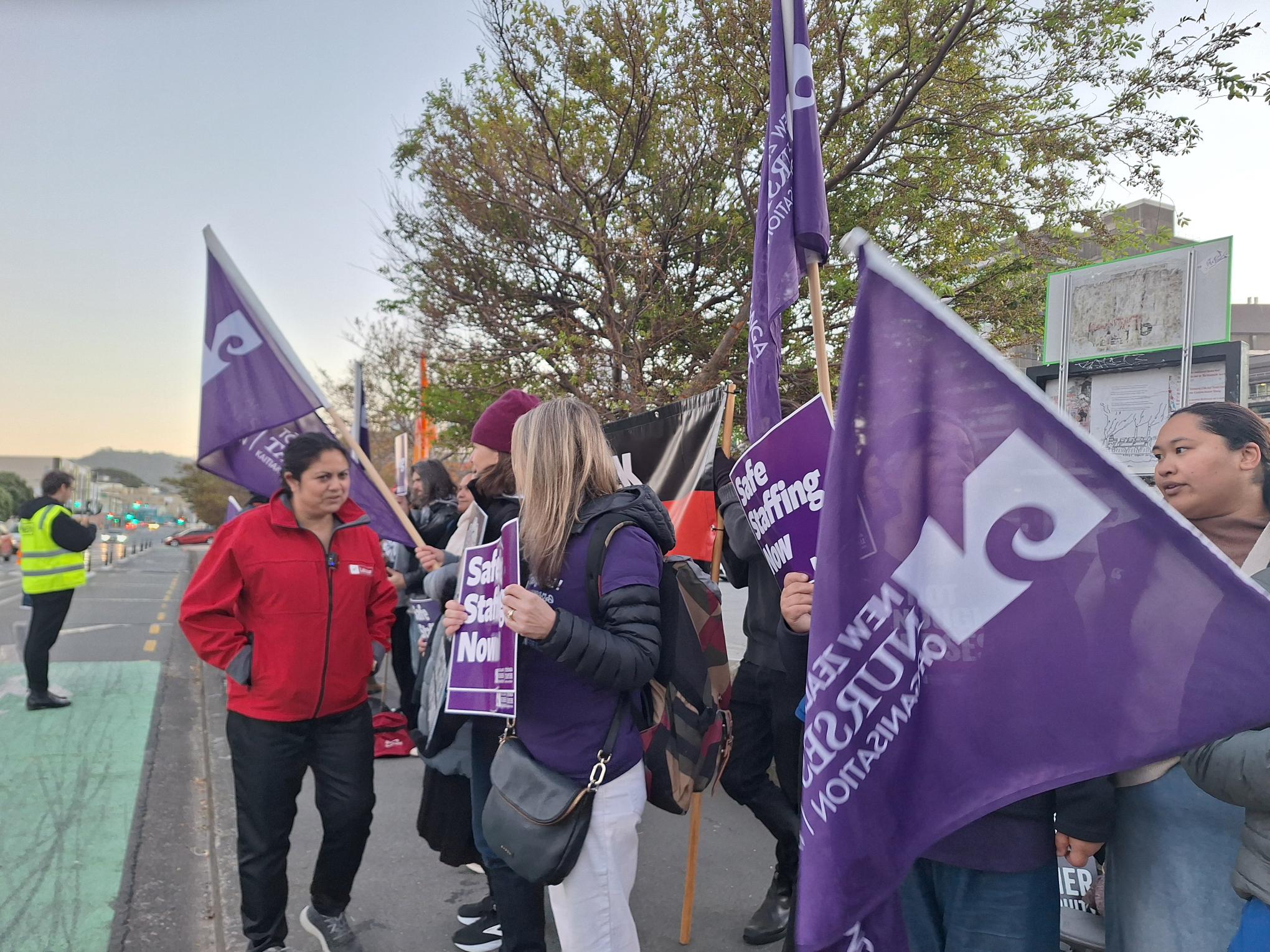
Current PHC funding is based on patient enrolments. But we need a PHC system that’s actually structured to embrace the full scope of registered nurses and support their potential to expand into nurse prescribing and/or becoming NPs.
Labour’s health spokeperson Ayesha Verrall told Kaitiaki a “wide range of professionals working in primary care” were consulted in the development of the policy.
Our primary care system tends to be doctor-led, medicalised (as opposed to whole-person) — and increasingly privatised.
More practices than ever are being run by large corporates like Green Cross, which owns The Doctors, Unichem and Life pharmacies — and is up for sale to private equity firms.
‘We see our role as expanding holistic practice rather than as business-owners.’
This growing trend to treat community health as a business, which prioritises profit over need, is something we in the college are really concerned by.
It is in this environment that we strive to give the holistic care we are obliged and want to give — whether as health-care assistants, enrolled nurses, registered nurses, nurse prescribers or nurse practitioners.
But many of us want something different. We see our role as expanding holistic practice rather than as business-owners: of providing the full package of care for people — diagnoses and treatment; psychosocial and medical.
Dwindling support
Into this profit-driven environment, come the new graduates.
When I started in 2013 , there was a well-structured nurse-entry-to-practice (NETP) programme for new graduates employed on a minimum of 0.8 full-time equivalent (FTE). We had clinical coaches supporting us through the first year and funding for 96 study hours to attend courses in vaccinations, smear-taking and the like. We also had funding for post-graduate study, to prepare our level two portfolio and for experiential days where we would visit other services.
But that has now gone.
The new ‘supported first year of practice’ (SFYP) scheme which has replaced NETP allows graduates to be employed part-time on 0.6 FTE hours, a drop in study hours to 80 and mentoring/coaching hours slashed from 240 to 80-100. Funding goes to the practice/primary health organisation directly, with less oversight from HNZ of the professional support provided.
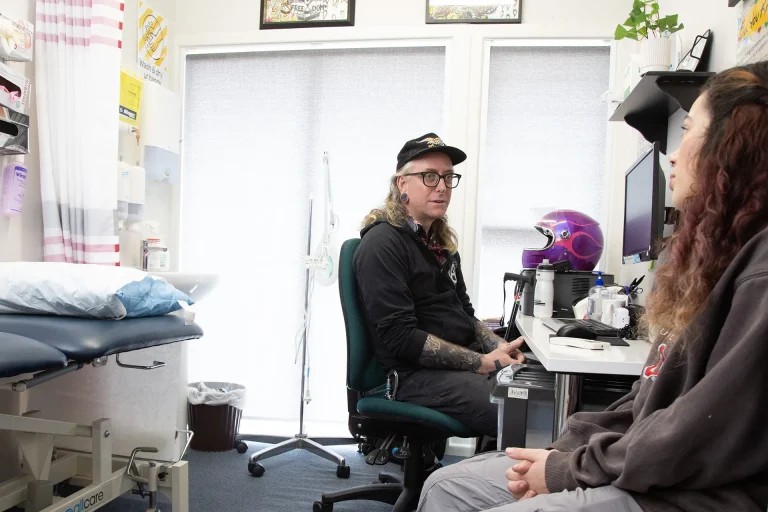
At the other end, the NP training programme has been replaced with the ‘NP training supporting scheme’ with a 70-hour drop in clinical supervision over the year.
All of these add up to a lot less support and valuing of PHC nurses.
‘We’re atomised so much in primary care, because we don’t have a mega structure . . . it can be isolated.’
In Māori/iwi providers, it’s even tougher — they are deeply underfunded. I work at both an iwi provider and a medical centre and get paid substantially more at the former.
Many of us doing it for passion but that might not always be sustainable.
College ‘stable’ island in rocky seas
We’re atomised so much in primary care, because we don’t have a mega structure like HNZ. It can be isolated — I don’t even know the nurses two doors down at my practice. But our college is a stable rock and provides a sense of solidarity — you don’t feel so alone. If you work in primary care, please come and join us!
We have weathered the recent political environment while maintaining good membership of about 1300 and a stable committee — all while planning our symposium Protecting our future — stronger together in Christchurch on October 9-10.
We get out there quite a bit — we are represented on the GP forum and a range of primary health advisory groups. We’re also publishing our Logic journal every quarter — we’re proud of this!
And with our 2026/27 collective bargaining is set to begin next month, we’ll be fighting hard for pay parity with HNZ and for NPs to be included in the MECA.
- Michael Brenndorfer is a PHC nurse practitioner based in Auckland and on the publishing committee of the primary health nurses’ college Logic journal. This article was written from a kōrero and edited by Kaitiaki coeditor Mary Longmore.
* This article was corrected on May 28 to reflect that the number of clinical supervision hours in the NP training support scheme has been reduced by 70, not 150.