



NZNO’s College of Respiratory Nurses (CRN) chair Jacqueline Westenra says comparing cigarettes to vaping deliberately misleads youth into believing that vaping was “cool” and less harmful.


Some of the marketing tactics to increase business sales in the lead up to Christmas bordered on the unethical. This included free delivery for orders placed before December 24, automatic entry into prize draws upon a vape purchase, and some stores were even offering free fancy Christmas wrapping.
Westenra says the marketing is appalling and clearly aimed at young people who did not even smoke cigarettes.
“I’m speechless and breathless. But this is businesses for them [vaping companies]. This is them putting profit before people,” Westenra says.

“If there’s one thing I could say to a young person about to walk into a vape shop for the first time over the festive season, it would be: ‘Don’t get sucked in. Don’t be fooled. Ignore that Santa bearing a vape because it isn’t a gift.”

Just some of the marketing tactics to increase business sales in the lead up to Christmas included free delivery for orders placed before December 24, automatic entry into prize draws upon a vape purchase, and some stores were even offering free fancy Christmas wrapping.
Westenra says that youth were purposely being led to believe that vaping was less harmful.

“If there’s one thing I could say to a young person about to walk into a vape shop for the first time over the festive season, it would be: ‘Don’t get sucked in. Ignore that Santa bearing a vape because it isn’t a gift’.”

“Even without the vaping, the number of Māori children suffering from respiratory issues is high.”
The College of Respiratory Nurse endorse the Asthma and Respiratory Foundation’s Train the Trainer programme where community leaders, educators and health professionals are equipped with skills and resources to engage youth in learning about the impact of vaping.
“It’s still an addiction. Vaping is not completely safe and has been proven to cause lung inflammation and chronic obstructive pulmonary disease [COPD].
“The long-term effects on lung and overall health, are unknown because we don’t have the longitude studies. But youth who are not smokers should not start vaping. There’s really no help out there for vapers wanting to quit.”
The primary health nurse, who works with asthma patients and COPD patients daily, says Māori leaders had every right to be concerned about the high number of rangatahi becoming addicted to vaping.
Māori leaders weigh in
The Āti Awa Toa Hauora Partnership Board manahautū, Hikitia Ropata, says its latest Whānau Voice report showed families across the region were deeply concerned about the impact vaping was having on young people.
“Our rangatahi [youth] are not quitting smoking and switching to vaping – most are starting out as vapers and have never smoked. Vapes are cheaper than cigarettes.”

Recent data shows that the highest vaping rates in Aotearoa are now among 14-year-old Māori girls.
“This is not harm reduction. This is government support for addiction.”
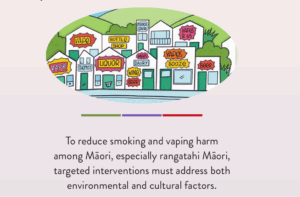
Ms Ropata says the Whaitua geo-mapping tool shows that vaping products are heavily concentrated in lower-income communities, with vape shops found close to kura and schools, making nicotine addiction highly visible and accessible to young people.
“Normalising vaping in our communities means siding with tobacco companies over our most vulnerable whānau, our tamariki and rangatahi.”
The board is calling on the Government to work in partnership with providers, not against them.
“Māori health providers must be trusted to exercise kaupapa-based judgement informed by whānau voices.”