


Less than half EN graduates taken on by HNZ
NZNO’s enrolled nurse section (ENS) said it was good to see more EN graduates were being employed, but there was a long way to go — particularly in regions like Taranaki.
Latest figures show 92 out of 201 EN graduates have found work at HNZ so far this year — 46 per cent.
Another 60 have joined the ACE (advanced choice of practice) job-matching pool. With 149 EN graduates from 2025 already in the pool, that brings the total number in the pool seeking nursing work to 209.
While this was progress on the 29 hired in August, more work was needed, ENS committee member Glenda Huston said.
“It would be great to see them employed in all sectors, enabling us to practice to our full scope.”

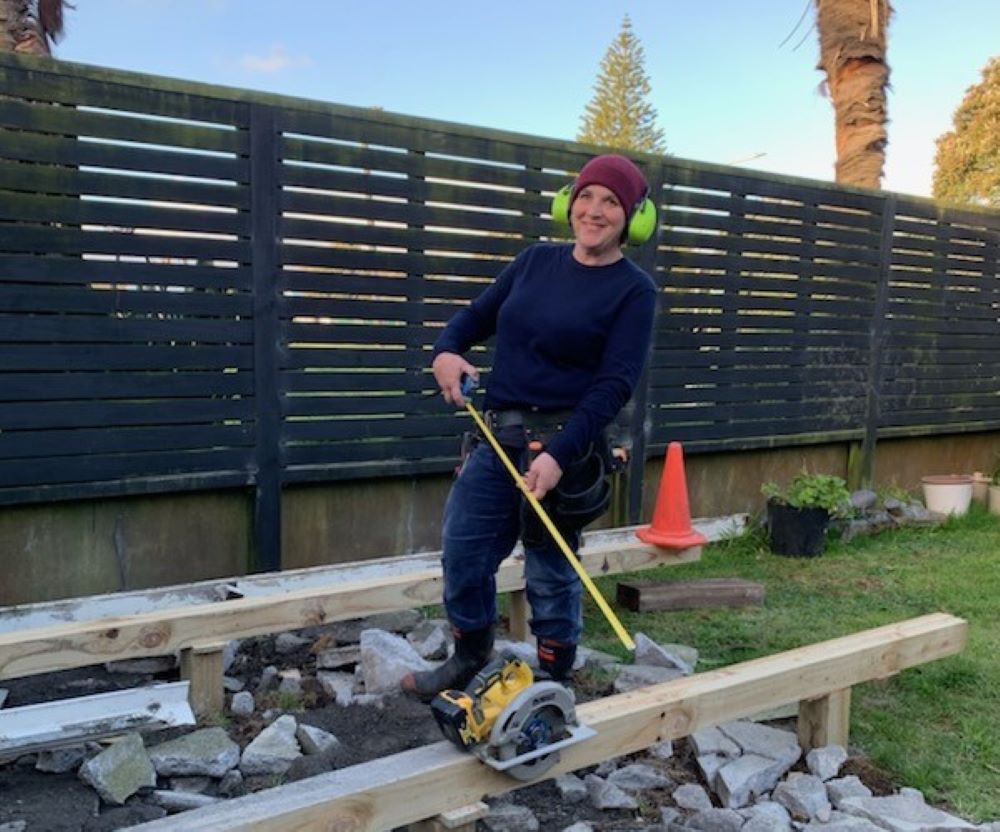
After roughly a dozen rebuffs, newly-graduated Taranaki enrolled nurse (EN) Shelley Slater is ‘taking a break’ from applying for nursing jobs and buckling on a toolbelt instead.
“I’ve got a fabulous husband and been working on a building site with him and I’ve painted two houses. I just roll on,” she tells Kaitiaki five months after graduating.
Other ENs are working as bartenders or health-care assistants — or have left the region in search of nursing work.
“It’s been hard. I just had to put it on the back blocks. I just couldn’t face writing another cover letter — it’s making me ill,” said Slater, who is based in Hāwera.
Slater decided to retrain as a nurse in her 50s, after 30 years working as a trained artist.
“I was just tired and thought ‘there must be something else I can do the rest of my existence’.”
She signed up to WITT (Western Institute of Technology Taranaki)’s 18-month EN programme, and absolutely loved it — even though colleagues on placement seemed confused about the EN role.
“The HCAs would bail me up over the bed and say ‘what are you doing this for, we can do your job’. You’re like the middle child, a bit,” she said.
‘We’re quite capable of having our own patients, patient load and responsibilities.’
“We were told that it’s about team environments. But it’s all quite a singular mindset — this is an RN, this is an HCA and somewhere in the middle, maybe, an EN. It’s seen as a grey area and I just felt like a little shadow.”
The registered nurses (RNs), however, were mostly “pretty cool”, with many starting out as ENs.
Slater loved the training but was shocked to find there were hardly any jobs out there.
“You scroll through the careers platform and it’s all just RN, RN.” she said. “There are no EN roles advertised in Taranaki. None. People just don’t want to know.”

Over the past five months, she had gone through a lot of emotions.
“You think you’re doing a good thing and it turns out, not so much. It’s not met with warmth, put it that way. And it wasn’t even met with warmth on placement.”
Others from her cohort are working in health, but not as nurses. Just five or six out of 18 had so far found EN work — one at Taranaki Base Hospital, another at local iwi provider Ngāti Ruanui Health and others in aged care. One graduate had moved to Dunedin for a job.
‘I’ve got a fabulous husband and been working on a building site with him and I’ve painted two houses — I just roll on.’
Despite that, Slater says she’s optimistic about the future — or trying to be.
“I love being a nurse and I’m keeping myself up-to-date with first aid and keeping fit and well.”
‘Where are the jobs?’
Another WITT graduate from 2024, Samantha Hoogeboom, said only six out of her 24 classmates got EN jobs after graduating, which was “frustrating”.
“We got told at the start by Te Whatu Ora, ‘don’t worry, you’ll all get jobs’ . . . but a lot of my classmates never did.”
Hoogeboom was one of the lucky ones, scoring a year’s maternity cover at Taranaki Base Hospital while others worked as HCAs or baristas. But since that finished, she’s only had casual hospital HCA work.
“It’s just really heart-breaking. I’m in my mid-20s but for younger people just coming out of high school, it’s really tough and causes a lot of financial pressure.”
‘Why are we giving false hope to students and pushing them through education when there are no jobs for them?’
Both WITT and HNZ had failed ENs, she believed.
“Why are we giving false hope to students and pushing them through education when there are no jobs for them?”
And when she was working as an EN, she was still expected to practice under others’ direction — which did not reflect their new scope.

“It’s a bit frustrating, as when I was on the stroke unit, I was taking patient load, I was running a night shift, I had 12 patients, I was IV trained. It’s just really disappointing.”
WITT’s head of nursing Helen Lelean said the school’s own tracking suggested “the majority” of EN graduates had found nursing work in a range of areas locally since the diploma began in 2024. These included rehabilitation, inpatient mental health, aged care, theatre nursing community child health, primary health and the elderly abuse community team. Others had left the region, gone overseas or enrolled in a bachelor of nursing.
However, WITT could not provide any figures to back this up.
Te Whatu Ora-Health NZ (HNZ) confirmed to Kaitiaki it has employed just three ENs in Taranaki this year, bringing to 16 the total number of EN employees in the region — including fixed-term and casual.
Outdated views?
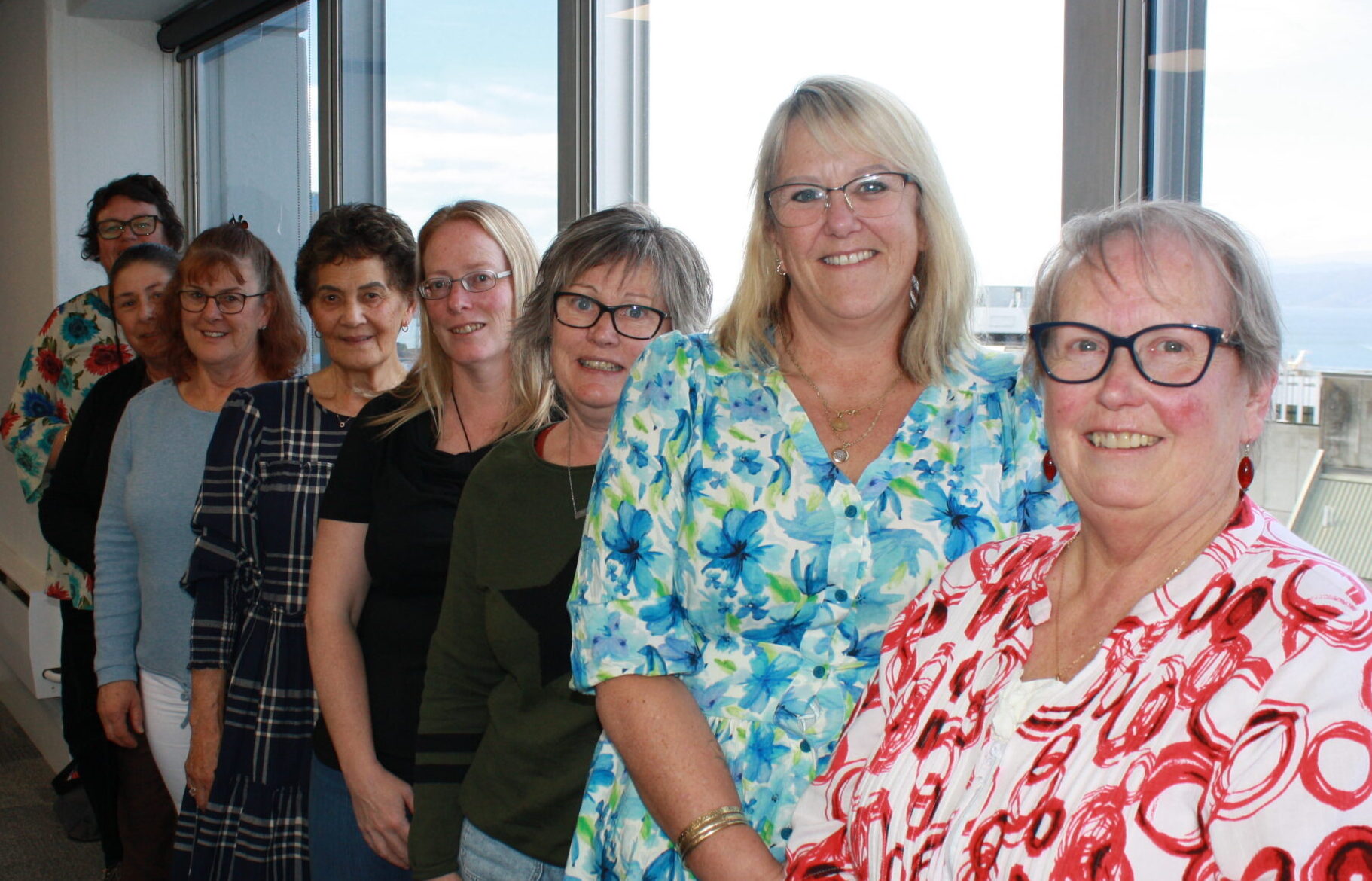
Taranaki EN Glenda Huston blamed “outdated views” about the EN role, nearly two years after a new scope meant ENs no longer needed RN supervision for the likes of assessments, planning and implementing care and taking on leadership roles within a health-care team.
“They believe that enrolled nurses should be team nursing — but we don’t do team nursing in Taranaki and the [new] scope says that we don’t have to do team nursing,” Huston said.
“We’re quite capable of having our own patients, patient load and responsibilities.”
Huston had been an EN for 36 years, but still wasn’t allowed to care for patients in the medical ward without supervision — despite being able to under the current scope.
‘We want them to be aware of the advantages to them as employers in having ENs as a key part of of health care provision.’
‘More education needed’ — WITT, HNZ
Lelean said the school had been working with local health services to raise awareness of the specific skills ENs offered — but more effort was needed to “grow understanding” of their value.

“We want them to be aware of the advantages to them as employers in having ENs as a key part of of health care provision.”
In aged care especially, education was needed alongside policy changes to allow ENs to work onsite without an RN, she said.
Acting Taranaki chief nurse Diana Fergusson said ENs were employed in a range of areas, including mental health and operating theatres — but acknowledged they could be used more widely.
“We are continuing to consider how enrolled nurses can contribute across a wider range of services as workforce models evolve and in line with the Nursing Council’s current scope of practice,” she told Kaitiaki.

Chief nurse Nadine Gray has also acknowledged more work was needed nationally to support ENs being employed and working to their fullest scope.
HNZ was now waiting for Nursing Council guidance, currently being worked up in consultation with NZNO’s enrolled nurse section, she said.
However, NZ Aged Care Association (ACA) chief executive Tracey Martin said HNZ denied its efforts to include ENs’ new scope in the latest funding deal — despite promising it would.
ACA — which represents almost all the country’s 37,000 aged residential care providers — was was “very supportive” of ENs’ new scope and lobbied hard for it to be recognised in the ACA-HNZ 2026/27 aged residential care provider agreement.
But this had not been successful. Martin said conversations were ongoing amid “differing views” about how far and fast the EN scope should be adopted within aged care.
She also agreed more education would help individual providers understand the role ENs could play in aged care today.