



There is something increasingly difficult to reconcile in New Zealand’s health workforce debate.
We are repeatedly told that we have a health workforce shortage. We know registered nurses (RNs) are under pressure across the health system. Aged residential care providers, particularly those in smaller towns and rural communities, know just how difficult recruiting and retaining nurses can be.
At the same time, we have enrolled nurses (ENs) whose contemporary scope of practice enables them to contribute more to patient and resident care than some of our existing contractual arrangements allow.
That doesn’t make sense.
The Nursing Council’s 2025 changes to the enrolled nurse scope of practice recognised that nursing practice has evolved. ENs can make a greater contribution to care, while continuing to work within a regulated professional framework and with appropriate access to the support and guidance of RNs and other health practitioners.

‘We can construct nursing teams in which RNs and ENs are both able to practise to the full extent of their respective scopes . . . That should not be controversial.’
Yet parts of the aged residential care agreement between employers and Te Whatu Ora-Health New Zealand (HNZ) still reflect an older way of thinking about the EN role. That matters.
It matters to providers trying to build safe and sustainable clinical teams. It matters to RNs carrying responsibilities that could appropriately be shared across a broader nursing workforce. It matters to ENs who have undertaken professional education and maintain professional registration but can find that contractual requirements prevent them from using the full breadth of their scope. Most importantly, it matters to residents.
Aged residential care today is not what it was 20 years ago. People are entering care later, with greater frailty and much more complex clinical needs. Our facilities support people living with dementia, multiple long-term conditions, complex medication regimes, significant mobility limitations and palliative and end-of-life care needs.
Aged care is health care.
That means we need a workforce model designed around the care residents actually require, not around professional arrangements that have simply remained in contracts because that is how they have always been written.
This is not an argument for replacing RNs with ENs. RNs have a distinct scope of practice and carry clinical responsibilities that are essential within aged residential care. Nothing about making better use of ENs diminishes that. The question is whether we can construct nursing teams in which RNs and ENs are both able to practise to the full extent of their respective scopes, with appropriate clinical leadership, support and safeguards. That should not be controversial.
In fact, if we are serious about addressing workforce shortages, it should be fundamental.
Rural aged care hardest-hit
There is another reason this matters, particularly to aged residential care. Workforce shortages do not have the same consequences everywhere. A large metropolitan provider may have more options when it loses a nurse. A small facility in a provincial or rural community may not. When that facility can no longer safely staff a particular level of care, it isn’t merely an operational problem for the provider — it can become a very personal problem for an older person and their family.
‘Nor should this become an argument between registered and enrolled nurses. We need both.’
A person who needs dementia care or hospital-level residential care does not stop belonging to their community because their health needs have changed. They should not have to travel significant distances away from a spouse, children, friends and the place they have lived for decades simply because we have failed to maintain the workforce necessary to provide the care they need locally. The address may need to change. Their connection to their community should not.
That is why seemingly technical decisions about scopes of practice and contractual wording have consequences well beyond the nursing workforce. They ultimately influence whether communities can sustain aged residential care at all.
There are, of course, legitimate questions that need to be worked through. What does appropriate RN support look like? How should different care levels be treated? What additional safeguards might be required in smaller facilities? How do we ensure ENs are working within their competence as well as their scope? How should assessment, care planning, clinical escalation and medication management operate? Those are exactly the conversations we should be having.
EN changes ‘not reflected’
What we should not do is start from the assumption that because a function has historically been allocated to an RN in an aged-care contract, it must remain so indefinitely. Regulation should determine professional scope. Contracts should then enable safe practice within that scope.
During discussions with HZN earlier this year, the Aged Care Association understood that changes reflecting the expanded EN scope were intended to be considered for the 2026/27 aged residential care agreement. Those changes have not ultimately been reflected in the agreement to the extent we had anticipated. That is disappointing, but it should not be the end of the conversation.
‘Sometimes the answer is to look again at the people already standing beside us and ask whether we are allowing them to do enough.’
The health system cannot simultaneously tell us that workforce capacity is one of its greatest constraints and then fail to examine whether existing contractual arrangements are preventing qualified, regulated professionals from contributing everything they safely can. Nor should this become an argument between registered and enrolled nurses. We need both.
We need experienced RNs providing clinical leadership, assessment, oversight and care. We need ENs able to contribute to the extent their education, competence and professional scope allow. We need caregivers and kaiāwhina whose contribution is recognised and developed. And we need career pathways that encourage people to enter aged care, build their skills and stay.
The answer to a workforce shortage cannot simply be to ask the same people to do more. Sometimes the answer is to look again at the people already standing beside us and ask whether we are allowing them to do enough. For ENs in aged residential care, I think it is time we asked that question seriously.
Because ultimately this isn’t about protecting a particular workforce model. It is about making sure that when an older New Zealander needs care, the skilled people required to provide it are there, and that the care can be delivered as close as possible to the people and community they call home.
It’s about the right care, at the right place, at the right time, close to home.
See also: ‘I won’t give up’ says enrolled nurse working on building site.
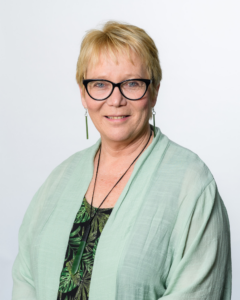
Tracey Martin is chief executive of the New Zealand Aged Care Association and former New Zealand First MP and Minister for Seniors.