


At a glance:
- One in five New Zealanders are estimated to live with a respiratory condition.
- Respiratory disease is the third-leading cause of death in New Zealand.
- Respiratory disease accounts for about nine per cent of hospital stays.
- It is estimated by Asthma and Respiratory Foundation to cost $8 billion annually
- Respiratory disease is one of the most pressing and solvable health challenges facing Aotearoa New Zealand.
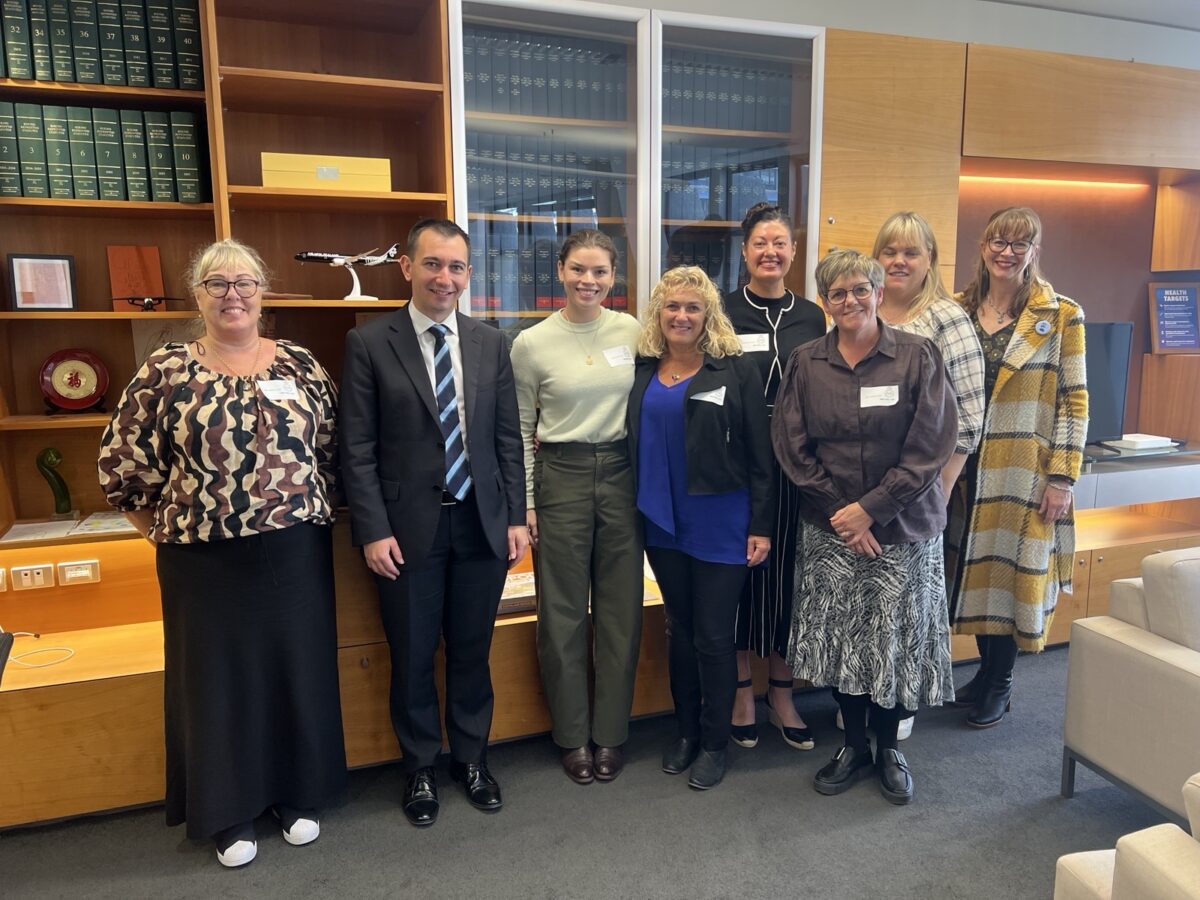
At an April 30 meeting, NZNO’s college of respiratory nurses told Minister of Health Simeon Brown that more support for primary-health care (PHC) nurses to provide respiratory care in the community would save millions.
Early diagnosis and treatment of lung diseases had a huge impact on outcomes — clinically and economically, the nurses said in a letter given to the Minister on the day.
Evidence showed getting specialist care early to people with asthma and COPD halved their need for respiratory health care over a year. Respiratory-related hospitalisations cost an estimated $8 billion in direct and indirect costs, according to the Asthma and Respiratory Foundation — yet many were unnecessary.
PHC nurses were well-placed to make a difference — they just needed the resources and specialist training, the nurses suggested in the letter.
“Nurses working in primary care are in the ideal position to enable timely diagnosis of obstructive airways diseases [like] COPD, asthma and bronchiectasis through spirometry [breathing test].”

‘Primary health providers need to be supported in recruiting and training nurses to provide services which are timely, accessible and culturally appropriate for their local community.’
PHC nurse-led clinics could provide low-cost smoking/vaping cessation, pulmonary rehab, vaccinations such as influenza, COVID, pneumococcal and RSV and patient respiratory treatment reviews.
But with cost identified as a major barrier for people, any such clinics must be funded.
Other barriers included getting more nurses into primary health, which paid less than hospitals — and then into hard-to-staff areas
Currently, registered nurses (RNs) and nurse practitioners (NPs) were offered “significantly less” in the voluntary bonding scheme than doctors and midwives to work in hard-to-staff areas/specialties — making it less appealing.
Inequities
Currently, access to community respiratory care like pulmonary rehabilitation and spirometry was fragmented around the country, leading to inequities in outcomes.
Māori and Pacific communities were hit especially hard, with higher rates of asthma, COPD, lung cancer and respiratory hospitalisation rates two to three times higher than non-Māori.
What works?
Local, whānau-centred, culturally and community-grounded care was proven to deliver better results — especially in respiratory health, where ongoing self-management was critical.
“Primary health providers need to be supported in recruiting and training nurses to provide services which are timely, accessible and culturally appropriate for their local community.”
A national lung screening programme, too, as existed in Australia would make a huge difference in preventing hospitalisations. When provided through local PHC services, it could bring a 50 per cent increase in screening for high-risk populations such as Māori.
‘These are precisely the type of interventions that can deliver both equity and value for money.’
An Auckland pilot, Te Oranga Pūkahukahu, for Māori aged 55-74 is delivering lung screening through local PHC providers rather than centrally, after overseas (United Kingdom) findings showed this approach increased screening by 40-50 per cent in high-risk populations. Picking up lung problems like asbestiosis, chronic obstructive pulmonary disease (COPD) and tuberculosis early, prevented hospitalisation and, in some cases, early death, the nurses said.
“These are precisely the type of interventions that can deliver both equity and value for money.”
Where are the nurses?
However, there were not currently enough respiratory-trained PHC nurses in New Zealand to respond to a national lung screening programme — something that needed to change.
“Where is the workforce or resource to pick up these people who will be identified?”
Funding vaccinations like RSV (respiratory syncytial virus) and pneumocococcus, also prevented hospitalisations — saving double every dollar spent on vaccines, according to the Prevention Pays report.
Across all these areas, respiratory nurses were central to success, allowing earlier diagnoses, active follow-up and patient education, which all prevented conditions worsening and hospitalisation, the nurses said.
Committee members told Kaitiaki after the hui that they felt the Minister paid close attention to their concerns.
Chair, Nelson RN Jacquie Westenra, said nurses wanted to see fewer people ending up in hospital with preventable respiratory diseases.
“We talked about what is obvious — how we can provide a better service to prevent people ending up in hospital.”
Simeon Brown responds:
Minister of Health Simeon Brown said nurses were “key” to the Government’s efforts to strengthen the primary health workforce.
“The Government is focused on ensuring all New Zealanders, including Māori, have access to timely, quality health care. We know primary care is the cornerstone of the healthcare system, and we have a range of initiatives underway to strengthen the workforce,” he told Kaitiaki.
“Nurses are a key part of this, and I thank them for their shared commitment to improving health outcomes for all Kiwis.”

Brown said he enjoyed meeting the respiratory nurses and “greatly valued” their contribution.
See also Respiratory nurses raise ‘crucial’ voice on lung health