


Nurses play a vital role in delivering patient-centred, evidence-based care within rapidly changing health-care environments.
As patient needs become more complex, innovative approaches to care delivery are required.
A new model of care has been introduced for heart failure patients with reduced ejection fraction (HF-REF) — a percentage measure of how well the heart pumps blood around the body — to enhance timely, evidence-based care with improved patient and clinician experiences, and to support better health outcomes.
This article discusses the key components of this model and how it can be applied in nursing practice and in other areas or specialities.

Rural, and urban
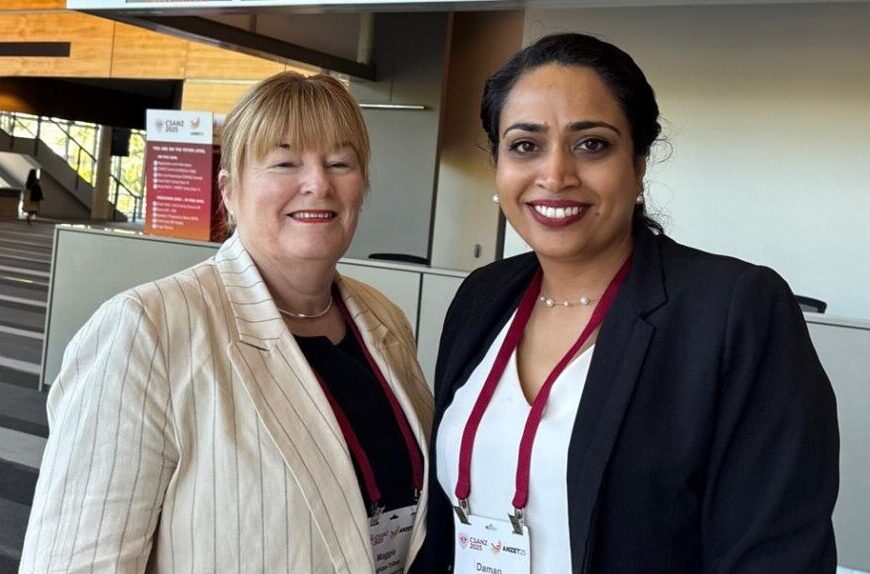
Together we have pioneered this model of care in Hawke’s Bay.

Daman Kaur, a nurse practitioner in the Hawke’s Bay cardiology department introduced the model in a rural and remote area of the region — trialling it for nine months with great success.
Colleague Margaret Coghlan-Talbot, clinical nurse specialist in cardiology, then introduced it to urban areas.
This telehealth model of care for HF-REF patients went nationwide from February. The key to this transformation is telehealth remote patient monitoring (RPM), which allows heart failure medications to be up-titrated more quickly, safely, and efficiently.
Additionally, this model of care addresses accessibility, is cost effective, and helps us meet our commitment to equity of care.
From a nursing perspective, RPM is a game-changer. It gives us the clinical data we need to make safe, timely decisions—without having to wait for in-person clinics and rely on patient memory, or manual paperwork.
Why rapid titration matters
For several years, cardiology specialists in New Zealand have called for an appropriate model of care to support patients transitioning from hospital to the community and to facilitate subsequent rapid titration of guideline-directed medical therapy (GDMT) for optimal treatment.
A position statement released by the heart failure national working group and the NZ Heart Foundation in 2024 1 included the following recommendation:
“Following hospitalisation for heart failure, patients with HFrEF should have early initiation of low-dose, combination guideline-directed medical therapy. Appropriate models of healthcare are required to support immediate transition from hospital to the community and to facilitate subsequent rapid titration of GDMT to optimise therapy.”
Heart failure patients need to be started and up-titrated on GDMT quickly after discharge to reduce symptoms, hospitalisation, and death. But the traditional model of care (with in-person clinics) is resource-heavy and has struggled to deliver this.

Many factors affect this — including patient access, being rural or remote-location, work, or having whānau commitments. Additionally, the old system is resource and time-consuming, dependent on patient travel, and constrained by limited appointment slots. This often means it takes many months to reach target doses, increasing mortality and morbidity.
RPM changes that.
How RPM works
With our innovative new model of care, patients are given a 4G-enabled tablet paired with pre-configured health monitoring devices: scales, blood pressure monitor, and pulse oximeters. The tablets are locked down for health-use only, with no need for the patient to provide internet, download apps, or use their own phone. The kit is simple and takes just a few minutes to initiate and personalise for each patient.
The RPM system collects vital signs and symptom reports daily (even intra-daily if needed). It also supports secure messaging, video calls for remote consultations, and educational content. Because patients don’t have to come into the clinic for every adjustment, we can assess medication tolerance remotely and up-titrate more frequently and confidently. Clinicians can set individual parameters and if readings are outside those parameters, they get alerted.

Clinicians don’t need to check all data daily as alerts are generated along with automated safety questionnaires. This provides clinicians with vital information and the clinician can then contact the patient as needed, or the patient can leave a message to contact the clinician. The video clinic appointments are weekly, which saves both the clinician and patient time and expenses associated with travel and time off work.
The results
The difference this made is substantial.
- Patients completed their medication titration in six to eight weeks, compared to six to nine months under standard care.
- Their 30-day hospital readmission rate is 0 per cent, compared to 25 per cent for patients not using RPM.
- Missed appointments have dropped to 0 per cent (versus 15.3 per cent for in-person clinics).
- Each patient enrolled in the RPM model is saving the health system approximately $9500. To date, our team has saved more than $250,000 and more than 50 bed nights with each new enrolment increasing these totals.
Why it works for patients and nurses
From a patient perspective, using a dedicated tablet with pre-provisioned medical devices removes barriers to RPM and increases engagement. This approach standardises care with a common set of devices for all patients, eliminating the technology issues that plagued our previous attempts at RPM.
Since we began providing this model of care nearly two years ago patients have consistently applauded the ease of use, convenience and immediacy of RPM.

From a nursing perspective, RPM is a game-changer. It gives us the clinical data we need to make safe, timely decisions—without having to wait for in-person clinics and rely on patient memory, or manual paperwork. Instead of waiting for the next clinic visit, we can check vitals and respond. Patients can ask for a call-back.
As clinicians, we have more clinical data to make decisions, which increases the safety and confidence for patient and clinician in the treatment.
RPM also saves time. Because we’re not spending hours coordinating appointments, chasing data, travelling to clinics (sometimes long distances) and dealing with no-shows; we can focus more on clinical care. The result is greater efficiency and less burnout, all while expanding our team’s capacity to manage more patients.
Our experience has shown remote care should be the default for managing heart failure patients with HF-REF, unless there’s a clinical reason not to. A remote-first approach ensures more patients benefit from rapid titration reducing the overall burden on hospitals and staff from worsening heart failure symptoms.
Conclusion
In Hawke’s Bay, we’ve shown that the telehealth heart failure model of care can improve outcomes, reduce costs, and ease pressure on health-care teams. We now have a clinician-friendly, patient-centered solution built right here in New Zealand—and it’s delivering world-class results. It is equity in action.

Remote-patient monitoring isn’t just about technology — it’s about giving clinicians better tools to do their jobs more efficiently, and giving patients a better chance at recovery. The sooner we explore how technology can solve some of our delivery-of-care challenges, the better it is for the clinicians, patients, our communities, and the health system as a whole.
Daman Kaur NP, MN, BN is a a nurse practitioner in the Hawke’s Bay cardiology department; Margaret Coghlan-Talbot, RN, BN, MN, is a clinical nurse specialist in cardiology.
Discounted entry for NZNO members to digital health workshop
Daman Kaur and Margaret Coglan-Talbot will speak about the RPM project as part of a HiNZ (Health informatics New Zealand) one-day course From IT to Digital & AI in Health on March 31.
The Auckland workshop is designed for health-care professionals, leaders and managers — not technical specialists — to give practical takeaway guidance and next steps that work in real provider environments.
NZNO members can enter NZNO into the ‘access or discount code’ box on the ticketing website and will be charged the member price of $199 rather than $299.
References
- Doughty, R. N., Devlin, G, Wong, S., McGrinder, H., Chirnside, J., Sinclair, L., Copley, M., Harrison, W., Lund, M., Grey, C., Kaur, D., Fisher, R., Chan, D. 2023 Position Statement on Improving Management for Patients with Heart Failure in Aotearoa New Zealand. New Zealand Medical Journal 2024; 137:93-9.