


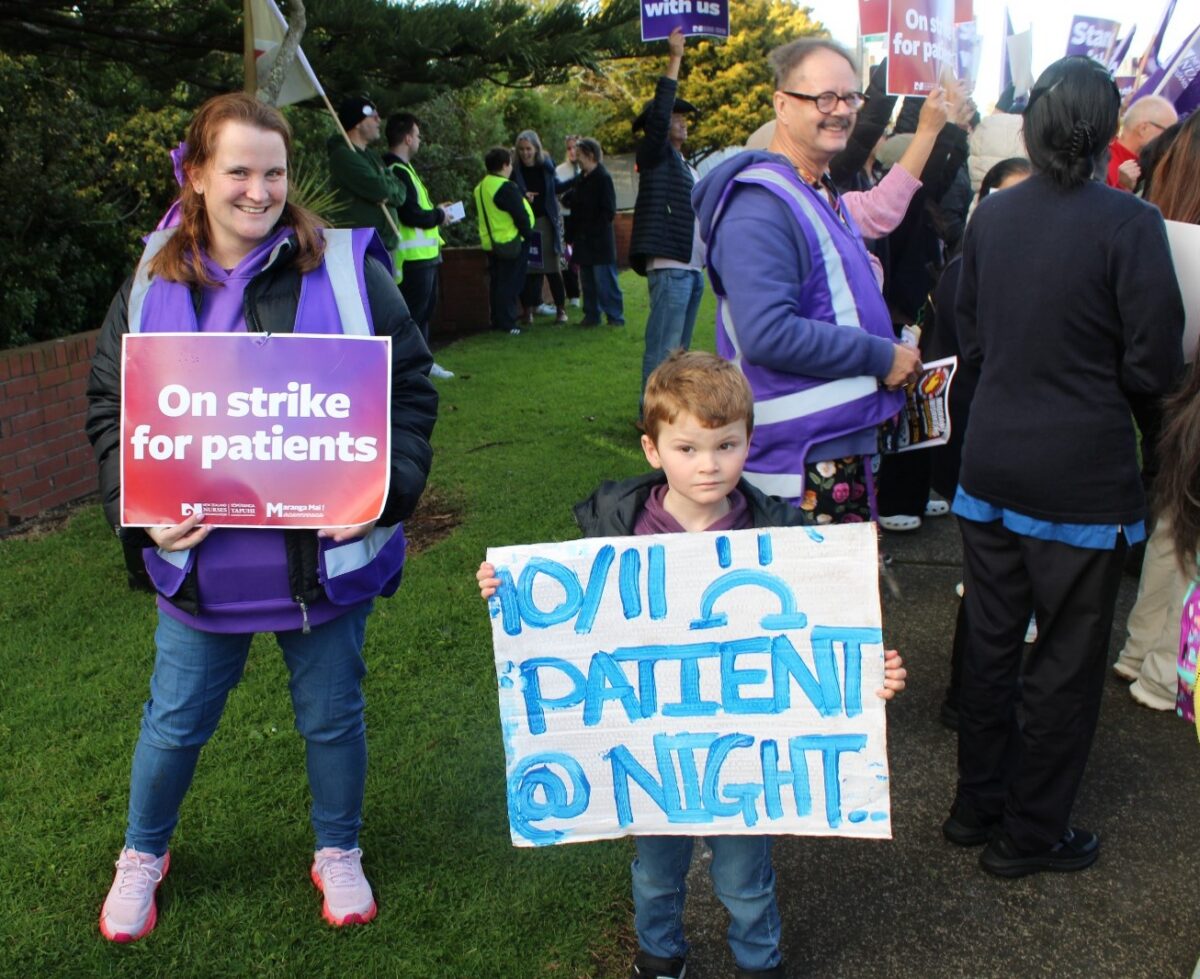
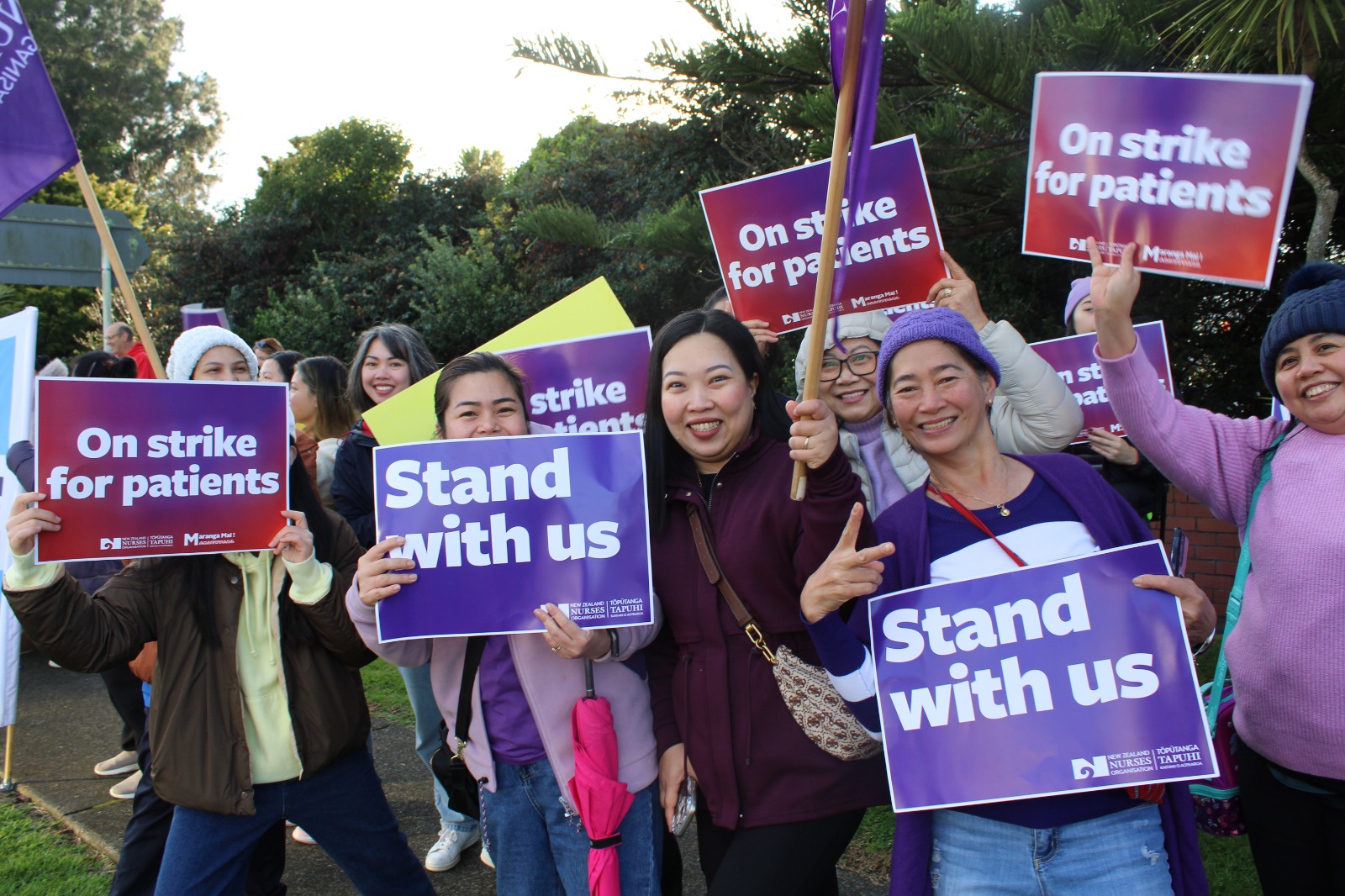
The hour-long health and safety strike drew about 90 people, including former staff, to the streets of west Auckland.
NZNO members had been raising health and safety concerns since April 2025 — the ward becoming a flashpoint for national concerns over understaffing.
Ahead of the strike, media reported on how a patient suffered a broken spine while the ward was short three health-care assistants (HCAs). This came after repeated warnings during the day about severe capacity issues.
The ward provides care for older people who have suffered strokes — and is the largest acute ward in Aotearoa.
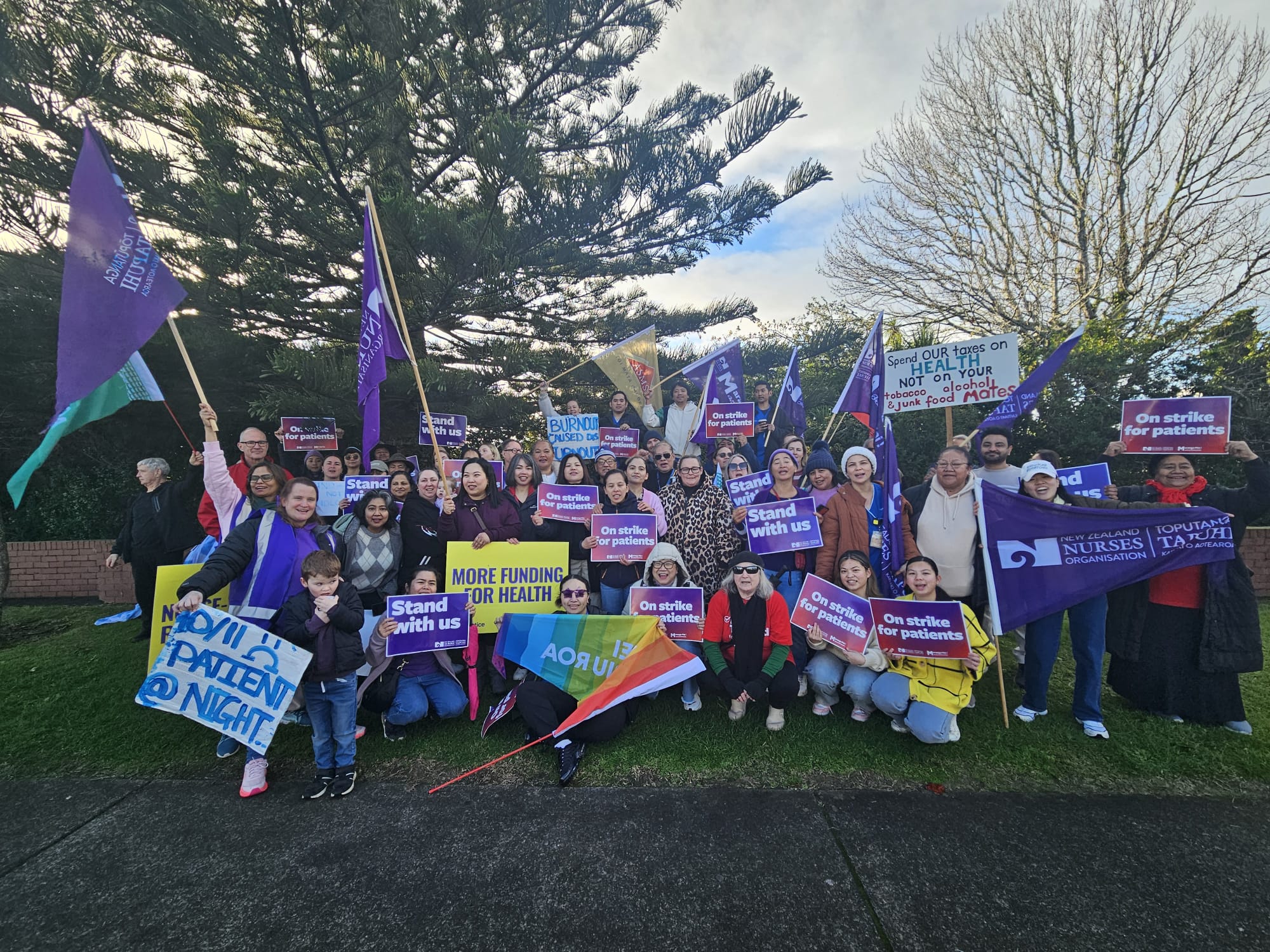
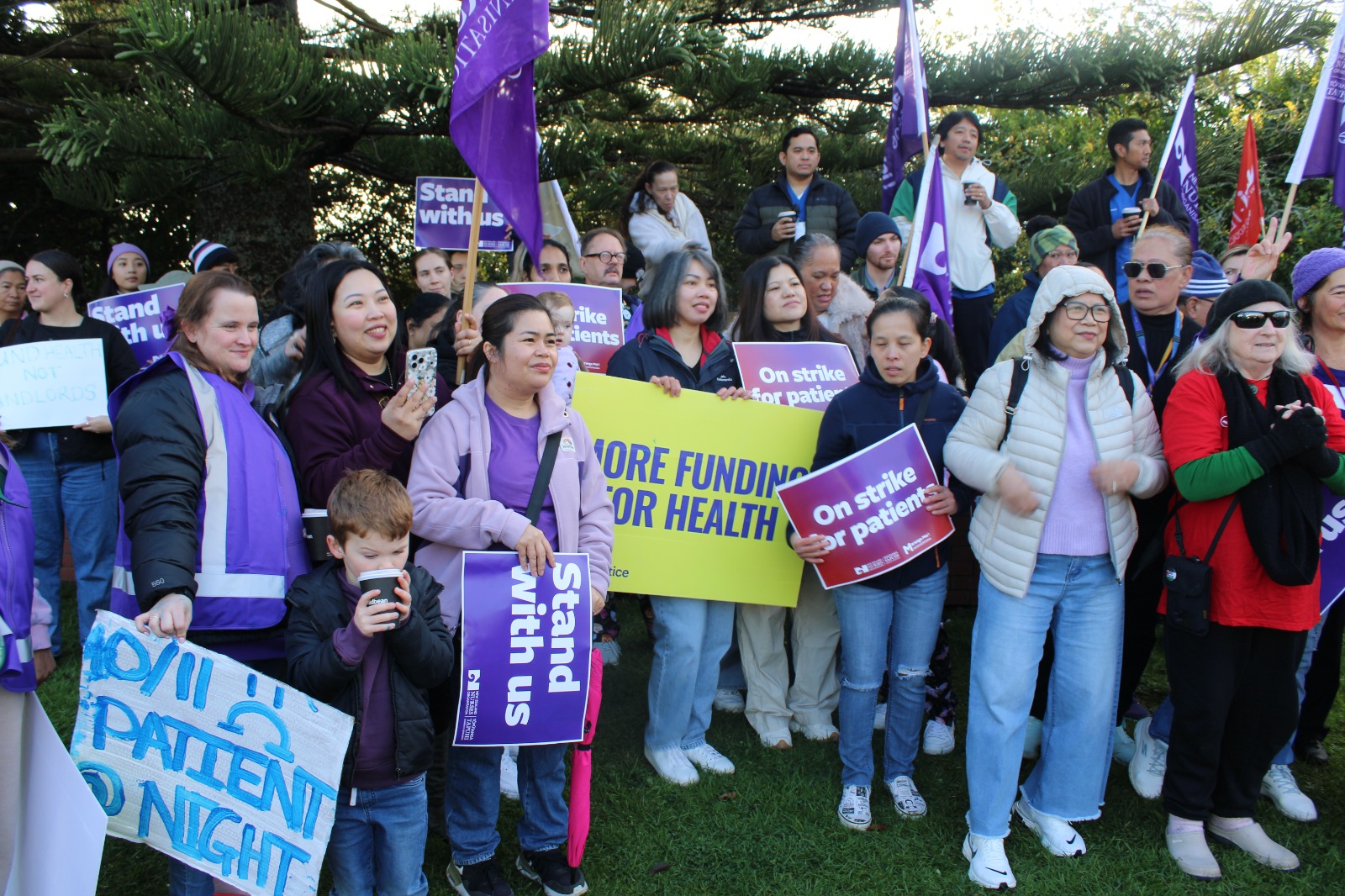
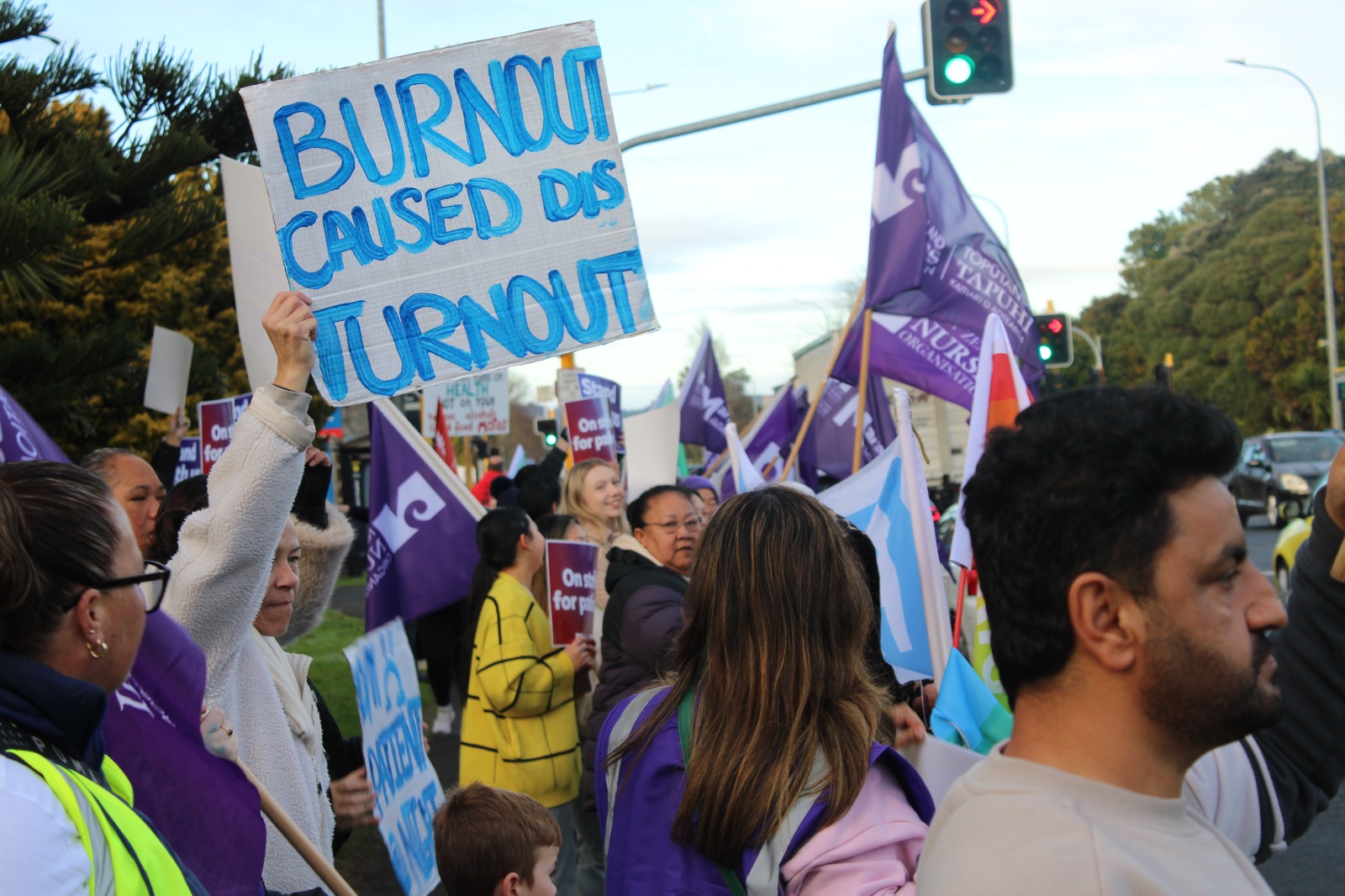
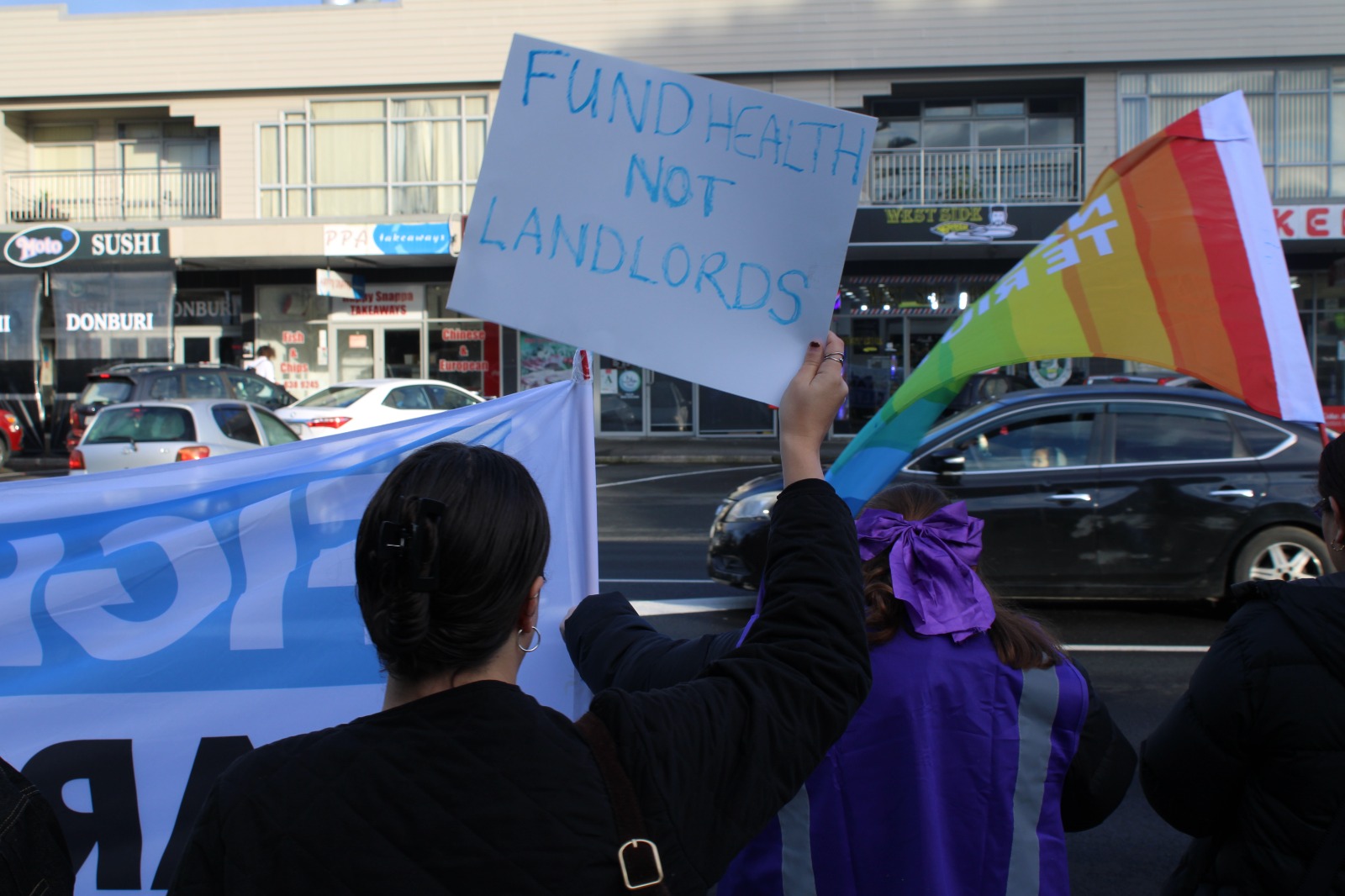
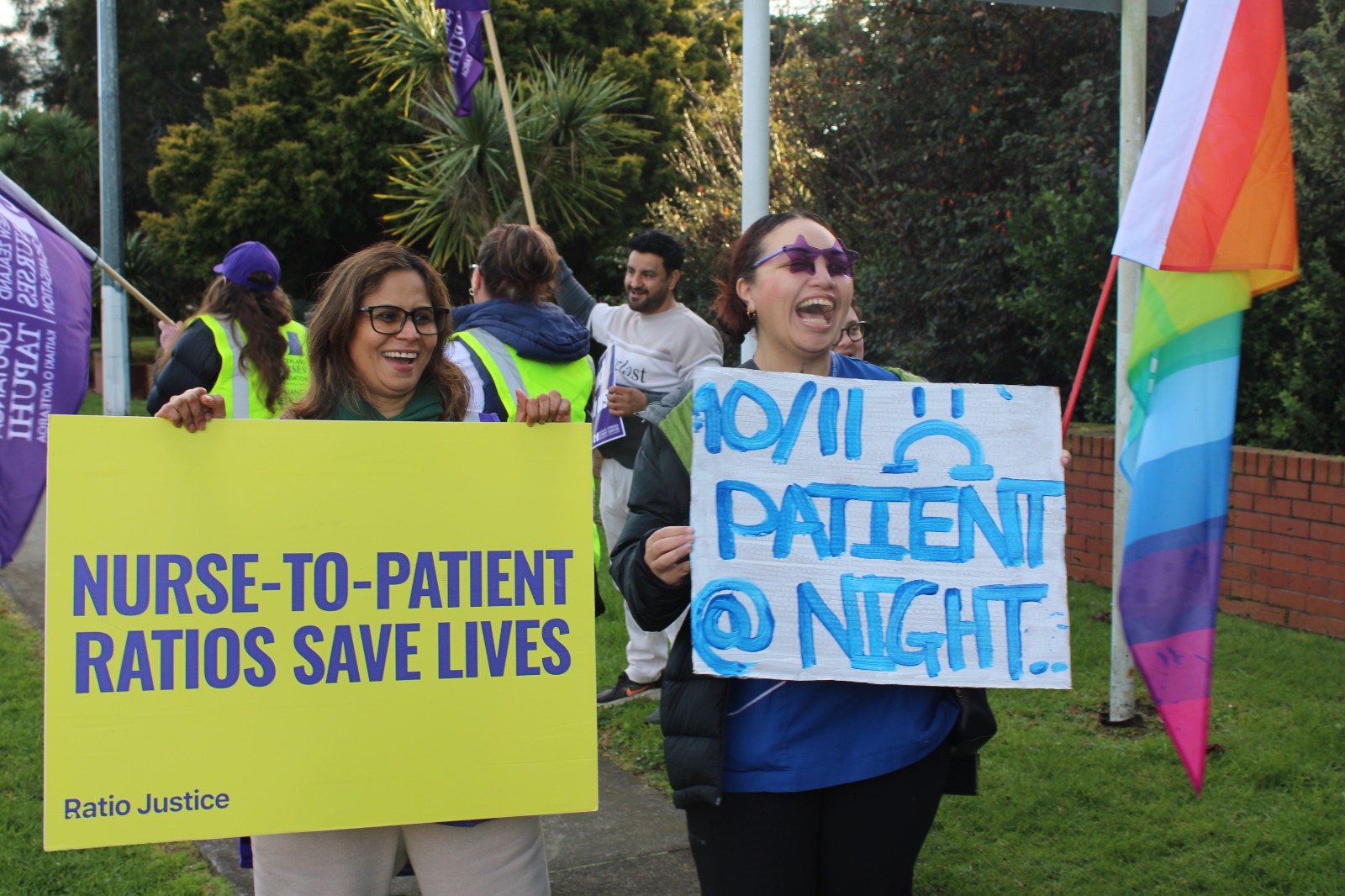
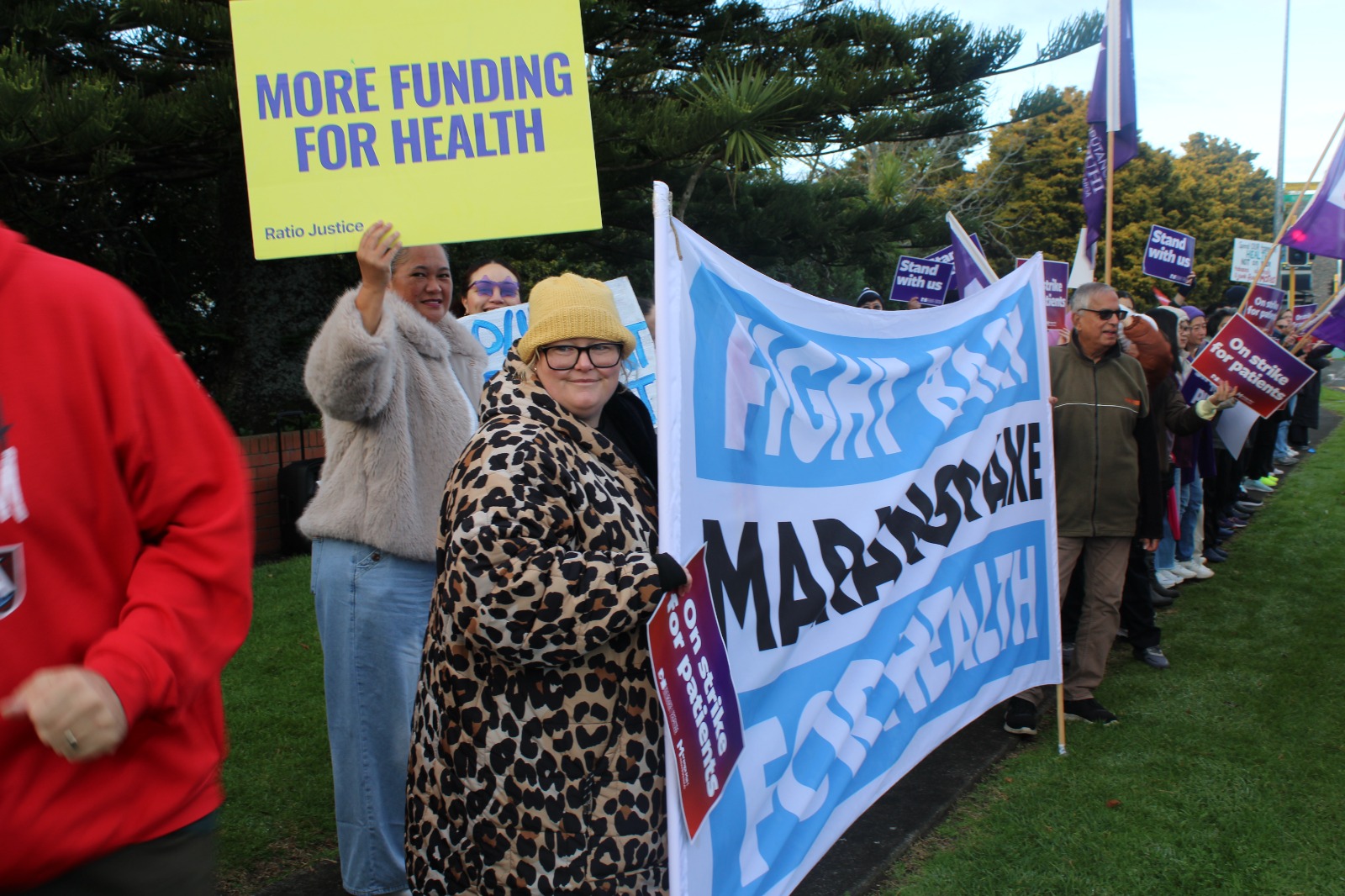
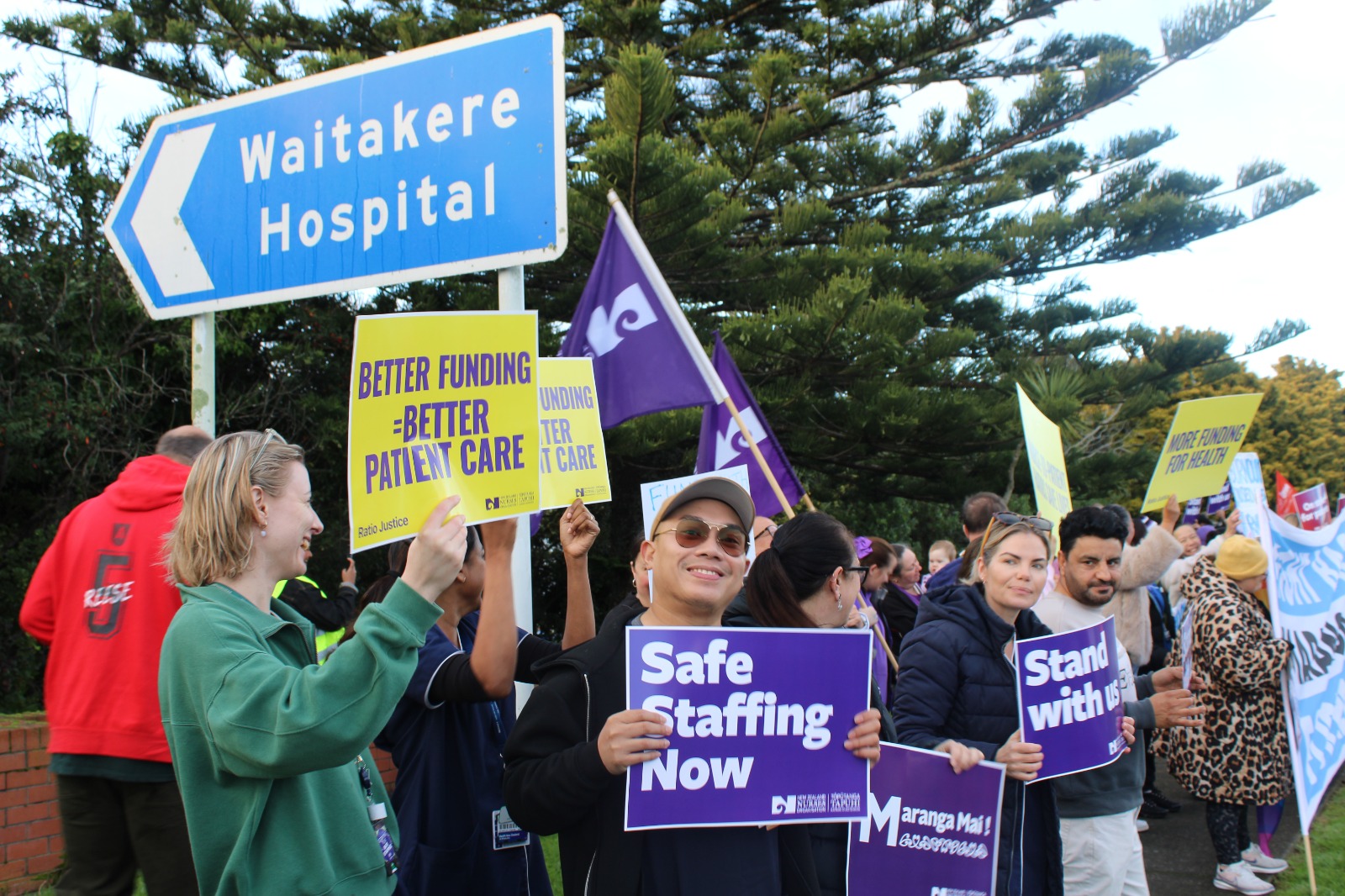
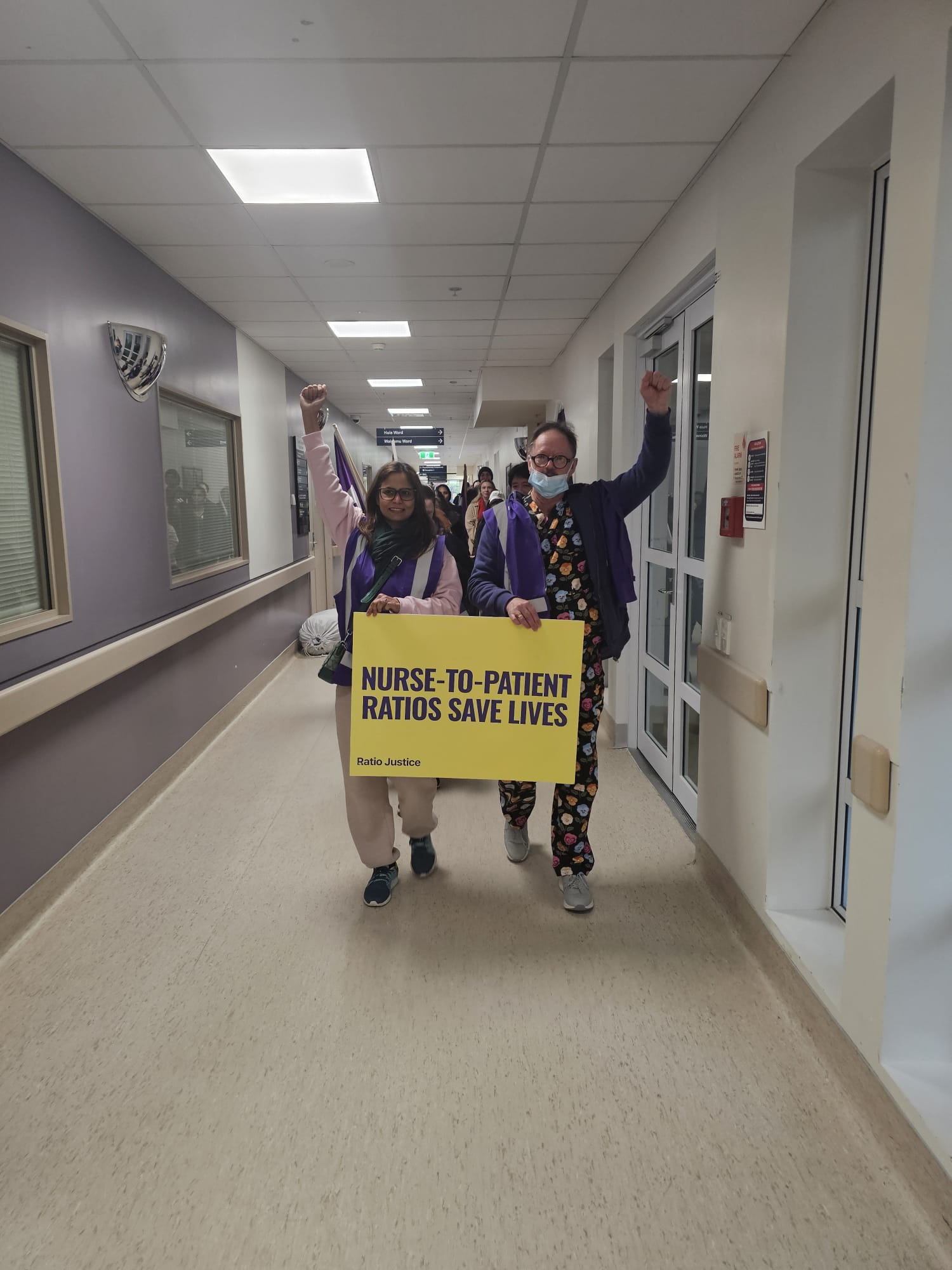
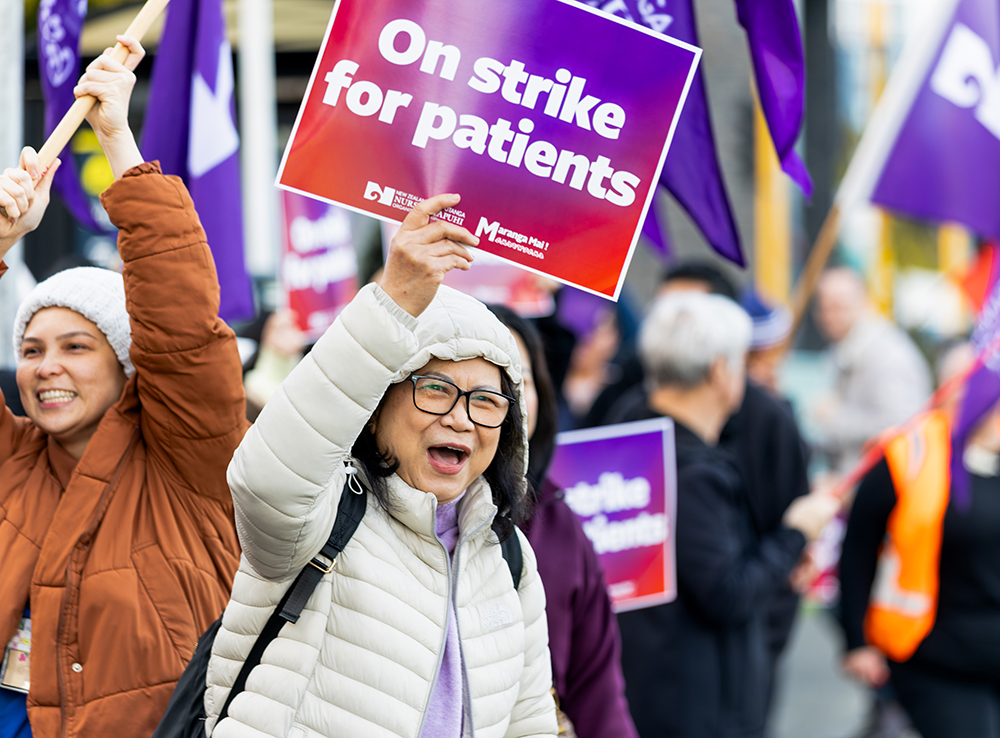
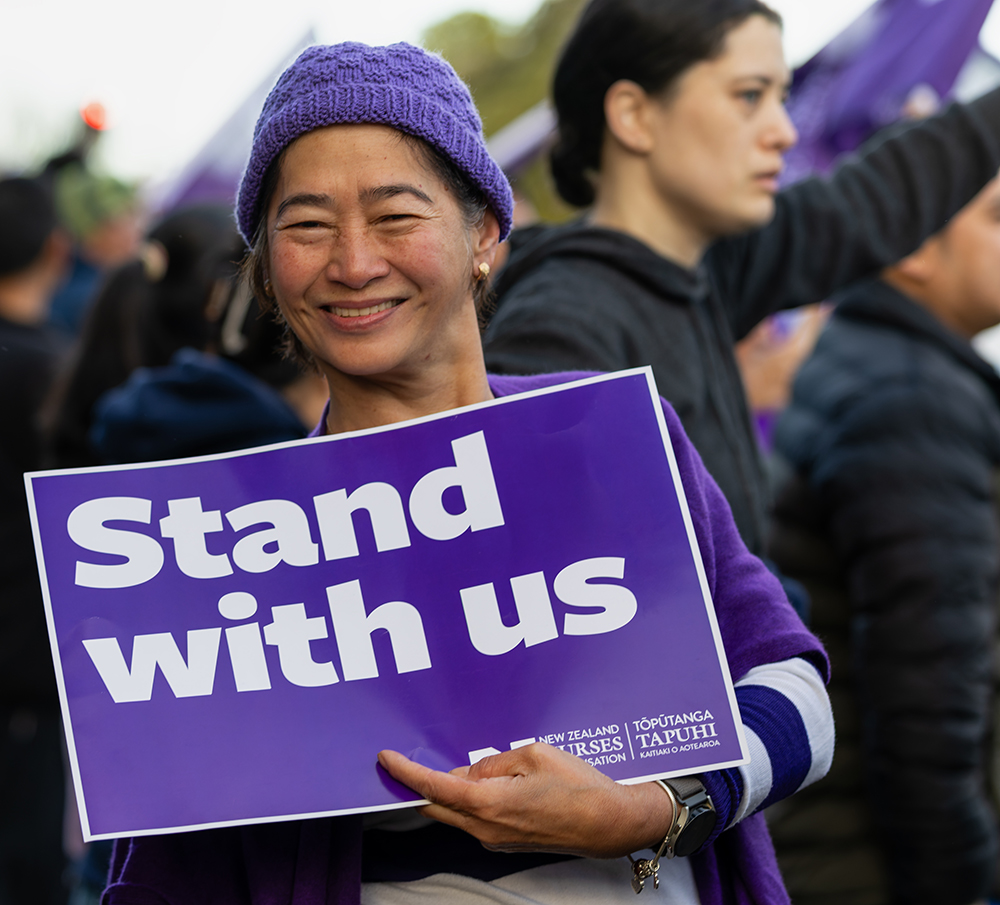





NZNO delegate Gemma Bethell, who brought her son Theodore, 6, along, (“he loved it”) said the strike was “high energy and really positive” as former staff and workers from other parts of the hospital turned out to support about 40 Muriwai ward staff.

Warning of further strikes if nothing changed, Bethell said staff were not prepared to back down on making their ward safer for patients – and themselves.
“It’s not something we can back down on, because it’s causing harm. Harm to the staff and potential harm to patients. Everyone’s so burnt out and tired,” she said.
“If they’re not prepared to meet us with some health and safety compromises and to address some of these concerns, I think there’ll be further strikes.”
She acknowledged Te Whatu Ora-Health NZ (HNZ) had hired two more HCAs to fill vacancies – however it was refusing to change the base ratios.
After raising their unsafe staffing concerns in May, staff were told at a meeting with Waitematā district chief nurse Kate Gilmour that they would have to prove it by constantly updating the CAG (capacity at a glance) tool.
‘It’s not something we can back down on, because it’s causing harm. Harm to the staff and potential harm to patients.’
“But when you go into an emergency situation, you’re not thinking ‘oh, I better switch the CAG because there’s six of us dealing with a code for the next 40 minutes – that’s not where your mind goes.”
Bethell said management didn’t appear to want to hear nurses’ and HCAs’ real experiences on the floor. “They’re not prepared to see the reality and level of harm it’s doing, and burnout its creating for staff.”
What staff need
- One more nurse on morning shifts, to bring the ratio down from 5 to 4 patients per nurse.
- One more nurse on night shift to bring the ratio down from 11 to 8 patients per nurse.
- One more HCA on afternoons.
Bethell said patients on the stroke ward required a lot of assistance – each time needing up to three people to help them go to the bathroom or shower.
“This is not a ward where people are independently mobile. They are dependent for all activities of daily living.”
The health and safety walkout was held under the Employment Relations Act (section 84) which allows strikes if work is considered dangerous or unsafe.
As previously reported by Kaitiaki, 40 staff in the ward wrote a letter to HNZ chief executive Dale Bramley over severe and chronic understaffing on the 41-bed ward.
HNZ was contacted by Kaitiaki for comment but had not replied as time of publication.
Check out our video of staff walking off the job here.