


 Kate Reynolds Kate Reynolds |
 Dan Isaak Dan Isaak |
 Heather Woods Heather Woods |
 Kathy Stodart Kathy Stodart |
 Patricia McClunie-Trust Patricia McClunie-Trust |
|
About the authorsKate Reynolds, BA(Hons), MLIS, RLIANZA, is the liaison librarian at Wintec/ Te Pūkenga, Hamilton, New Zealand. Dan Isaak, RN, PGDip, works as a staff nurse in the intensive care unit, Wellington Hospital. Heather Woods, PGDip ILS, is the librarian and records manager at the New Zealand Nurses Organisation, Wellington. Kathy Stodart is a journalist and production editor at Kaitiaki Nursing Research. Patricia McClunie-Trust, RN, PhD, is a principal academic staff member at Wintec/Te Pūkenga, Hamilton. |
||
Introduction
INTERNATIONAL HEALTH DATABASES HOLD a vast array of information for nursing. But a nurse researcher cannot access and use this wealth unless they know how to conduct an advanced database search. To bring together the best quality and spread of data for a research project, a search must be rigorous, and both narrow enough to exclude what is not relevant, and wide enough to capture a spread of results to eliminate bias. The level of rigour is important if a researcher is going to make claims based on a review of the literature. For nurses studying at master’s level, there is now an increasing expectation that their academic work should include details of how they conducted their literature searches to show their understanding of the search process. Lecturers teaching postgraduate nursing students are involved in coaching emerging researchers in more advanced search skills. Librarian Kate Reynolds and nursing academic Patricia McClunie-Trust have worked with publisher representatives to develop database search strategies for postgraduate students undertaking their first in-depth evidence review. In this article they describe how to go about an advanced search, using the example of a research project being conducted by registered nurse Dan Isaak.
Evidence reviews
Clinical decision-making and the development of clinical guidelines are informed by robust summaries of evidence. These summaries are developed using various methods, such as systematic reviews, meta-analyses, and qualitative evidence synthesis (Moher et al., 2015). The process used to conduct a database search affects the overall quality of evidence synthesis (Eriksen et al., 2018) because it is important to find and synthesise all evidence that is relevant to the review question. However, there is also a need to balance a comprehensive search with inclusion and exclusion criteria that will select only those studies that are relevant (Gusenbauer & Haddaway, 2020). Minimising the risk of error and bias by following rigorous methods is what differentiates systematic reviews and evidence syntheses from other reviews of the literature (Aromataris & Munn, 2020).
The identification of evidence requires the application of the right strategy in the right search systems (Gusenbauer & Haddaway, 2020), along with a clearly defined systematic search process (Moher et al., 2015). Well-ordered approaches to literature searching, based on predefined criteria, are key to finding appropriate research as evidence for practice. Finding a balance between making a database search specific, and yet sensitive enough to find appropriate studies for inclusion in a review, can be challenging (Bramer et al., 2018). However, the search process for a systematic review should be transparent, informing the reader why certain studies were included or excluded from the review. As information specialists, librarians are important guides for researchers seeking to understand how to construct a specific search strategy across selected databases (Cooper et al., 2018). Cooper et al. note that missing relevant studies could introduce bias into the review results, including exaggerating the effect of an intervention study. However, there is some debate in the literature about the scope of literature searches, particularly in relation to qualitative reviews, where the quality of primary studies may be more important than the quantity.
The search process in published evidence reviews generally includes three phases, including developing the concepts and search process with a librarian, conducting the search across appropriate databases for the topic of the review, and finally undertaking a “hand search” of the references included in the studies selected for the review. Bramer et al. (2018) set out 10 steps to work through to create and conduct a systematic search, to underpin the three phases reported in systematic reviews. Here, we use an example of a search conducted for a meta-synthesis, using meta-ethnography as the methodological approach.
Step 1. Identify a focused question.
The search strategy builds on the review question, which should be formulated according to the type of research sought for the review. Dan Isaak, a registered nurse (RN) in the intensive care unit (ICU) at Wellington Hospital, wanted to understand more about nurses’ experiences of providing end-of-life care in the ICU. Therefore, the question for his review was simply stated as: What are registered nurses’ lived experiences of end-of-life care in the ICU?
Step 2. Distinguish the type of articles or primary research reports that can answer the question.
The aim of this review was to understand how RNs experience working with patients and families in end-of-life care situations, so Dan sought qualitative primary research that included rich participant voices sharing participants’ feelings, emotional responses and understanding of their experience, to answer his question.
Step 3. Decide which key concepts define the different
elements of the question.
The PICO format is the most common approach to framing a review question, usually structured as Population, Intervention or exposure, Comparison intervention or exposure, and the clinical Outcome or interest (Eriksen & Frandsen, 2018). However, as Munn et al. (2018) note, it is important to also consider questions that take a broader approach to what counts as evidence for evidence-based care. This review required an experiential and qualitative approach to investigate the meaningfulness of experiences related to a phenomenon of interest, so the PICo for Dan’s question was framed as Population, phenomenon of Interest, and Context.
Step 4. Identify which elements of these concepts should be used to locate the best results.
Table 1, below, sets out the PICo structure that was used to frame the search for primary qualitative research on RNs’ lived experiences of end-of-life care in the ICU.
Table 1: PICo structure
| PICo | Concepts | Additional key words |
|---|---|---|
| Population | Nurses | Registered nurses, RNs |
| Phenomenon of Interest | End-of-life care Experience |
Death, dying Lived experience, attitude, perceptions, emotions, needs |
| Context | ICU | Intensive care units, acute care |
| Exclusion | Patients, family, NICU, PICU, child, paediatric, palliative, pre 2010, quantitative | |
The population for this search was RNs, without any limits on gender, age, ethnicity or country of publication for primary research. The experiences of patients, families, health-care assistants or nurses with other levels of registration were excluded. The phenomenon of interest was RNs’ experiences of caring for patients in end-of-life care situations. End-of-life care was defined as holistic support provided to people and their families when death is imminent. The term “palliative care” was excluded from the search because it occurs in a different context, with a defined philosophy of care in the community. Primary research with rich participant descriptions was sought to illuminate RNs’ feelings, emotions and perceptions of end-of-life care. The context was end-of-life care for adults in the ICU, and other intensive-care contexts, such as the neonatal intensive care unit (NICU) and paediatric intensive care unit (PICU) were excluded. The inclusion timeframe for primary research was since 2010, to find studies reflecting contemporary practice.
Step 5. Choose an appropriate database to trial the search.
Database search systems need to effectively find relevant information while filtering out what is not relevant, enabling rapid identification and retrieval of records. The search methods should enable the same search to be reproduced using the same methods (Gusenbauer & Haddaway, 2020). Gusenbauer and Haddaway recommend 16 potential databases to use as the principal approach to refine the search process. PubMed and CINAHL are two of the databases listed which we recommend to our students, as they are specialised and yet multidisciplinary across the health sciences. Furthermore, their search interface supports systematic searching and enables the researcher to have a high level of control over the scope and focus of the search. CINAHL and PubMed have a controlled vocabulary to draw on to identify search terms, and the search can be developed using Boolean operators and field tags, and a range of further filters can be applied.
Steps 6-9. Document the search process, select index terms from the first database, identify synonyms from the database thesaurus or identify MeSH terms, and include variations in the spelling of search terms including abbreviations, truncations and Boolean terms.
Librarians can use their knowledge of databases, information sources and search strategies to both teach systematic search skills and help with the search itself. Librarian involvement in the search process will result in more thorough and replicable searches of a greater range of databases and information sources (Vasser et al., 2017). Librarians can assist in each of the systematic review steps, from formulating the problem to the assessment of study quality, as well as locating, selecting, and managing resources (Harris, 2005). Including information professionals, such as librarians, in a search process can result in a higher quality of evidence synthesis (Vasser et al., 2017). In this search, the librarian helped with the selection of keywords and controlled vocabulary, recommended relevant databases to search and provided advice on the formulation of search strings.
The formulation of search strings requires knowledge of a range of precision searching techniques, such as the Boolean operators AND, OR and NOT; field tags; truncation; phrase searching; and controlled vocabulary. In the search strings shown in Table 2 and Table 3 (below), AND was used to narrow the search by combining all the search terms together, while OR was used to expand the search to include a range of related keywords and to search Title, Abstract and Main Heading (controlled vocabulary). Truncation was used by searching Nurs* to include all words built on this word stem, and quotation marks were used to create phrase searches on all phrases of two or more words to search those terms as a single phrase. Controlled vocabulary terms (CINAHL subject headings) were searched separately and then combined with free text keywords to add a further level of precision to the search. Controlled vocabulary can be used to find “ ‘all and only’ on a topic”, “when you need extreme precision” and when “you need a unified approach to the different author voices” (Brown & Bell, 2018, pp. 74-75). Table 3 shows the search steps, strings and results from the search. It should be noted that the final search demonstrated in Table 3 is the result of numerous prior searches of a range of databases and search systems that were used to determine the best search terms to use. The researcher must be prepared to constantly improve and update their search as their investigations within the various databases reveal other search variations.
Table 2: CINAHL search strings
| Search # | Field tag | Key words |
|---|---|---|
| 1 | Title OR Abstract |
Nurs* OR “registered nurse” OR RN |
| 2 | Main heading (MH) | Nurses OR “Registered Nurses” OR “Nurses, other” |
| 3 | S1 OR S2 [Remember to CLEAR search] | |
| 4 | Title OR Abstract |
“End-of-life care” OR Death OR Dying OR “Attitude to death” OR “terminally ill” |
| 5 | Main heading (MH) | “Attitude to Death” OR “Terminally ill Patients” OR Death |
| 6 | S4 OR S5 [Remember to CLEAR search] | |
| 7 | Title OR Abstract |
Experience OR “Lived experience” OR “Life experience” OR attitude OR perception OR emotions |
| 8 | Main heading (MH) | “life experience” OR attitude OR emotions |
| 9 | S7 OR S8 [Remember to CLEAR search] | |
| 10 | Title OR Abstract |
“Intensive care units” OR ICU |
| 11 | Main heading (MH) | “Intensive care units” |
| 12 | S10 OR S11 [Remember to CLEAR search] | |
| 13 | S3 AND S6 AND S9 AND S12 | |
| Filters | Since 2010, remove full-text limiter (on each search, relevant to our library as we have it set as default) | |
| NOT | NICU OR PICU OR child* OR paediatric OR neonatal OR infant OR adolescent |
Table 3: Search history adapted from CINAHL record, showing search strings, search limiters and results
| Search # | Search terms | Search options | Results |
|---|---|---|---|
| S1 | TI (Nurs* OR “registered nurse” OR RN) OR AB (Nurs* OR “registered nurse” OR RN) |
Expanders – Apply equivalent subjects Search modes – Find all my search terms |
(621,930) | S2 | MH Nurses OR “Registered Nurses” OR “Nurses, other” | Expanders – Apply equivalent subjects Search modes – Find all my search terms |
(108,060) |
| S3 | S1 OR S2 | Expanders – Apply equivalent subjects Search modes – Find all my search terms |
(660,044) |
| S4 | TI (“End-of-life care” OR Death OR Dying OR “Attitude to Death” OR “Terminally ill Patients”) OR AB (“End-of-life care” OR Death OR Dying OR “Attitude to Death” OR “Terminally ill Patients”) | Expanders – Apply equivalent subjects Search modes – Find all my search terms |
(232,544) |
| S5 | MH “Attitude to death” OR “Terminally ill Patients” OR Death | Expanders – Apply equivalent subjects Search modes – Find all my search terms |
(259,261) | S6 | S4 OR S5 | Expanders – Apply equivalent subjects Search modes – Find all my search terms |
(272,275) |
| S7 | TI (Experience OR “Lived experience” OR “Life experience” OR attitude OR perception OR emotions) OR AB (Experience OR “Lived experience” OR “Life experience” OR attitude OR perception OR emotions) | Expanders – Apply equivalent subjects Search modes – Find all my search terms |
(599,505) |
| S8 | MH “life experience” OR attitude OR emotions | Expanders – Apply equivalent subjects Search modes – Find all my search terms |
(60,364) |
| S9 | S7 OR S8 | Expanders – Apply equivalent subjects Search modes – Find all my search terms |
(628,752) |
| S10 | TI (“Intensive care units” OR ICU) OR AB (“Intensive care units” OR ICU) | Expanders – Apply equivalent subjects Search modes – Find all my search terms |
(46,999) |
| S11 | MH “Intensive care units” | Expanders – Apply equivalent subjects Search modes – Find all my search terms |
(44,208) |
| S12 | S10 OR S11 | Expanders – Apply equivalent subjects Search modes – Find all my search terms |
(69,042) |
| S13 | S3 AND S6 AND S9 AND S12 | Expanders – Apply equivalent subjects Search modes – Find all my search terms |
(568) |
| S14 | S3 AND S6 AND S9 AND S12 | Limiters – Published Date 20100101-20221231 Expanders – Apply equivalent subjects Search modes – Find all my search terms |
(436) |
Documenting the search process provides a systematic guide to work through, and makes the search replicable – that is, able to be repeated by another researcher (Gusenbauer & Haddaway, 2020). The use of a table allows the researcher to set out their search terms and strategy to match the functions of individual databases. It also makes it easy to follow the systematic search steps, to easily see which field tags to use for each step, and the keywords are ready to be copied and pasted into a search bar. The example in Table 2 also has practical reminders to follow (in CINAHL, the researcher must remember to clear their previous search terms before combining one search with another) and also has the Boolean operators in capitals as this is required in some databases, so it is a good habit to follow. Further to this, the researcher may also like to incorporate the field tags specific to each database into the keyword search string, to allow them to copy and paste it directly into the search bar without having to also adjust drop-down menus. By structuring their search for each database in a table before conducting the search, the researcher is easily able to see the steps required by the idiosyncrasies of each database. It also makes the search easily replicable by another researcher and assists those checking the rigour of the search. Table 2 shows one way a researcher may set out their initial search strategy for each database.
Step 10. Map the individual database search strategies in a table.
Table 3 sets out a record of the search history for the search in CINAHL, showing each of the search strings, search limiters and results.
Once the search process is complete, the records found are ready to be uploaded into reference management software, such as Endnote or Zotero. The records can then be saved into an evidence synthesis management site, such as Covidence or RevMan. These sites enable streamlined screening and selection of relevant studies according to the inclusion criteria set for the review.
Conclusions
Access to the most relevant information is essential to transfer the findings of the latest research into practice. While international databases have a wealth of knowledge, finding relevant published research studies can be daunting and confusing for emerging researchers without the support of an experienced librarian. This example of an ordered and systematic advanced search process reflects the current capability of our library databases. However, this is a rapidly developing field that requires researchers to work with librarians to constantly update their knowledge and skill in conducting searches.
References
Aromataris, E., & Munn, Z. (2020). JBI systematic reviews. In E. Aromataris & Z. Munn (Eds.), JBI manual for evidence synthesis. JBI.
Bramer, W. M., De Jonge, G. B., Rethlefsen, M. L., Mast, F., & Kleijnen, J. (2018). A systematic approach to searching: An efficient and complete method to develop literature searches. Journal of the Medical Library Association: JMLA, 106(4), 531.
Brown, C. C., & Bell, S. S. (2018). Librarian’s guide to online searching (5th ed.). Libraries Unlimited.
Cooper, C., Booth, A., Varley-Campbell, J., Britten, N., & Garside, R. (2018). Defining the process to literature searching in systematic reviews: A literature review of guidance and supporting studies. BMC Medical Research Methodology, 18(1), 1-14.
Eriksen, M. B., & Frandsen, T. F. (2018). The impact of patient, intervention, comparison, outcome (PICO) as a search strategy tool on literature search quality: A systematic review. Journal of the Medical Library Association: JMLA, 106(4), 420.
Gusenbauer, M., & Haddaway, N. R. (2020). Which academic search systems are suitable for systematic reviews or meta‐analyses? Evaluating retrieval qualities of Google Scholar, PubMed, and 26 other resources. Research Synthesis Methods, 11(2), 181-217.
Harris, M. R. (2005). The librarian’s roles in the systematic review process: A case study. Journal of the Medical Library Association, 93(1), 81-87.
Moher, D., Shamseer, L., Clarke, M., Ghersi, D., Liberati, A., Pettcrew, M., Shekelle, P., Stewart, L. & PRISMA-P Group. (2015). Preferred reporting items for systematic review and meta-analysis protocols (PRISMA-P) 2015 statement. Systematic Reviews, 4, Article 1.
Munn, Z., Stern, C., Aromataris, E., Lockwood, C., & Jordan, Z. (2018). What kind of systematic review should I conduct? A proposed typology and guidance for systematic reviewers in the medical and health sciences. BMC Medical Research Methodology, 18(5).
Vassar, M., Yerokhin, V., Sinnett, P. M., Weiher, M., Muckelrath, H., Carr, B., Varney, L., & Cook, G. (2017). Database selection in systematic reviews: An insight through clinical neurology. Health Information & Libraries Journal, 34(2), 156.
Daily doses – uncut news
| 14 Sept |
WellSouth's Newborn Enrolment Kahu Taurima Programme a finalist at the Primary Care Awards 2026WellSouth's Newborn Enrolment Kahu Taurima Programme is a finalist at the Primary Care Awards for the HALEO Best Supplier Service, Product or Campaign category. Winners will be announced on 17 October. |
| 14 Sept |
Global Study: Nursing Shortages Require Workforce Policy Solutions, Not Recruitment Campaigns AloneWhy people choose nursing, and why they leave, comes down to the same factors. The global nursing shortage cannot be solved simply by encouraging more people to enter the profession, according to a new evidence brief. |
| 8 Sept |
Overworked, understaffed Gisborne ED staff strike Health and safety concerns arising from unsafe staffing levels have forced nurses at Gisborne Hospital’s emergency department (ED) to go on strike.
|
| 4 Sept |
Strong growth in wāhine Māori and Pacific women’s cervical screening rates highlights success of self-testing programmeCervical screening participation has increased significantly for both wāhine Māori and Pacific women, reflecting the strong impact of self-testing, Screening Services and the dedicated efforts of health providers working alongside their communities. |
| 4 Sept |
Government must adopt Wai 2713 recommendations on disability systemThe Coalition Government must urgently adopt new recommendations from the Waitangi Tribunal which has found significant parts of the disability system prejudice tāngata whaikaha Māori (Māori with disabilities), NZNO says. |
| 31 Aug |
Employing graduate nurses will help keep them in nursing and the countryA new proposal that will require Te Whatu Ora to offer all eligible graduate nurses jobs in the public health system will help keep them in nursing and in Aotearoa New Zealand, NZNO says. |
| 26 Aug |
Health Minister’s claim Winter Plan ‘managing well’ delusionalHealth Minister Simeon Brown’s claim that hospitals are ‘managing well’ because of the Government’s Winter Plan is delusional, NZNO says. |
| 25 Aug |
Hospital data shows nursing shortages continue to put patients at riskTe Whatu Ora data released today shows patients are continuing to be put at risk by the Coalition Government’s deliberate failure to safely staff hospital wards, NZNO says. |
| 24 Aug |
Fed-up North Shore ED staff declare state of emergencyNZNO members working in the emergency department (ED) at North Shore Hospital have declared a state of emergency due to unsafe staffing levels resulting in ongoing overcrowding. |
| 19 Aug |
What happened to the winter health plan?The $25 million 2026 Winter Plan launched by Health Minister Simeon Brown in March to erase pressure on the health system has been an unmitigated disaster, Tōpūtanga Tapuhi Kaitiaki o Aotearoa NZNO says. |
| 11 Aug |
Applications open for advanced nursing education programmesHealth New Zealand is encouraging registered nurses to apply for two advanced education programmes that support nurses to further develop their clinical skills and expand access to care in communities across New Zealand. |
| 3 Aug |
Health New Zealand welcomes settlement of NZRDA collective agreementHealth New Zealand welcomes the vote by New Zealand Resident Doctors Association (NZRDA) members to settle their collective agreement. |
| 30 Jul |
Backing our frontline rural health workforceRural communities across New Zealand will benefit from three new investments that will support the rural health workforce and help more people access care closer to home, Associate Health Minister Matt Doocey says. |
| 22 Jul |
Te Whatu Ora must disclose staffing levels at time of tragic deathTe Whatu Ora must disclose whether the Waikato emergency department (ED) was short-staffed at the time a man tragically died in the waiting room, NZNO says. |
| 6 Jul |
Reflecting on IND 2026Looking back on last month’s International Nurses Day 12 May 2026 (IND 2026), the impact of this year's theme "Our Nurses. Our Future. Empowered Nurses Save Lives" continues to resonate across the world. ICN’s landmark IND 2026 report defined seven key powers of nursing and this message has been strengthened with nurses in every region celebrating, naming, and owning their powers throughout May. |
| 3 Jul |
Health New Zealand acknowledges Ombudsman statement on Wakari Ward 10AHealth NZ welcomes the independent investigation by the Ministry of Health into Ward 10A. On Wednesday the Health NZ board agreed to close Wakari Ward 10a as a forensic intellectual disability (ID) unit, with the future use of the ward yet to be determined. |
| 2 Jul |
New programme to fast track bowel cancer care and cut colonoscopy waitlistsHealth New Zealand is today launching a national initiative, designed to fast track bowel cancer care and reduce colonoscopy waitlists by up to 30 per cent. |
| 1 Jul |
Six new Co-Response Team locations announced to strengthen support for people in mental distressThe next six locations for Health New Zealand and NZ Police Co-Response Teams have been confirmed, expanding a model that helps people experiencing mental distress receive timely, wraparound support that better meets their health needs. |
| 29 Jun |
Mental health and addiction targets progress continuesHealth New Zealand continues to make important progress against its mental health and addiction targets, meeting four out of five national targets this quarter. |
| 25 Jun |
Access to care continuing to improve across a range of health indicatorsNew health data released today shows continued improvement in access to care across a range of health indicators. |
| 18 Jun |
Funding "boost" continues dangerous under-funding of aged careThe Health Minister’s funding "boost" for aged residential care continues underfunding to the sector and will continue unsafe practices and short staffing, which is putting vulnerable residents at risk, NZNO says. |
| 16 Jun |
Labour to make maternity scans freeLabour will add free maternity scans to the Medicard alongside three free doctor’s visits a year, so every pregnant woman gets the care she needs. |
| 29 May |
WellSouth Statement on Budget 2026: a missed opportunityBudget 2026 is a missed opportunity for primary care, and for the communities that depend on it most, in particular our rural people and practices. |
| 29 May |
Updated - Nurses on front lines of Ebola outbreak at serious riskIn response to the gravely concerning and escalating Ebola outbreak in the Democratic Republic of the Congo (DRC) and Uganda, the International Council of Nurses (ICN) warns that nurses and other frontline health workers are being put at serious risk and left fearful for their safety. |
| 27 May |
Health NZ committed to safeguarding patient informationHealth New Zealand welcomes the reports released today into the Manage My Health (MMH) cyber incident and is committed to ensuring all possible steps are taken to safeguard patient information. |
| 22 May |
More New Zealanders could benefit from funded vaccines from 2027Pharmac is proposing changes that would give more New Zealanders access to funded vaccines from 2027, including expanded access to the flu vaccine for young children. |
| 21 May |
It’s not just the wallet: How the gender pay gap can hurt women’s bodiesWhile many aspects of New Zealand’s enduring gender pay gap have been discussed, its physical impact on workers has been largely overlooked – until now. |
| 21 May |
Bupa nurses take pay equity claim over historic wage discriminationNZNO nurses working at Bupa aged residential care homes throughout Aotearoa New Zealand have raised a pay equity claim to address historic gender-based wage discrimination. |
| 20 May |
Waikato Hospital adds 10 forensic mental health beds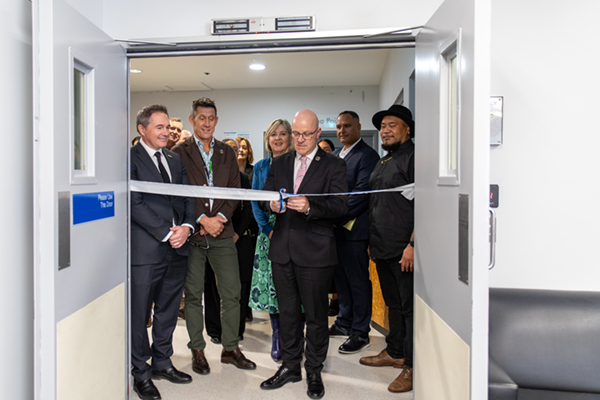 Ten new forensic inpatient beds have been made available at the Regional Forensic Psychiatric Service at Waikato Hospital to expand forensic mental health capacity for adults in prison or on remand in Health New Zealand’s Midland region.
|
| 18 May |
Strong gains in two-year immunisation target for Tamariki MāoriHealth New Zealand is welcoming a significant increase in Māori immunisation rates, with full immunisation at 24 months rising from just over 60 per cent in late 2024 to 71.5 per cent at the end of last month. |
| 15 May |
New global report shows empowering nurses is key to saving lives and strengthening health systemsAs the world marks International Nurses Day, the International Council of Nurses (ICN) is calling for urgent investment in nursing, supported by a major new global report, Our Nurses. Our Future. Empowered Nurses Save Lives, that presents seven key nursing powers. |
| 14 May |
Lakes and Whanganui nurses still waiting for Holiday Pay a decade on
Photo by Fin Ocheduszko-Brown at Whanganui Chronicle Nurses at Lakes and Whanganui districts are calling on Te Whatu Ora to explain why after a decade of redress, they still don’t know when they will receive their full Holiday Act remediation payments, NZNO says. |
| 13 May |
Recognising the extraordinary contribution of nursesInternational Nurses Day is an opportunity to recognise the extraordinary role nurses play in caring for New Zealanders at every stage of life, Health Minister Simeon Brown says. |
| 12 May |
Government’s decision to scrap fees free scheme will lead to further student exodusThe Coalition Government’s decision to scrap the fees free policy for third year tertiary students has left nursing tauira outraged |
| 30 Apr |
BroPilot grounding digital tools in whānau, culture, and care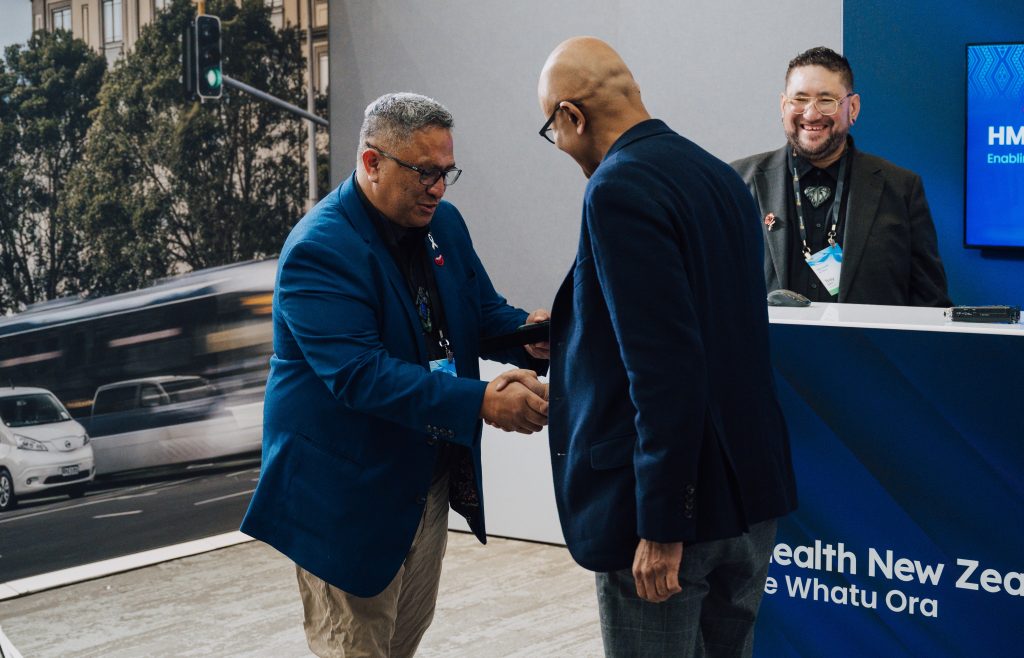 A passion for his Māori culture and a desire to make AI accessible to everyone inspired Troy Baker, Senior ICT Specialist, Health New Zealand to develop BroPilot – a culturally grounded way of working with Microsoft Copilot that reflects Māori values, whakaaro, and real lived experience.
|
| 29 Apr |
Heartbreaking tragedies were avoidable - NZNOAnalysis by a media outlet, published today, finding health care staff shortages were contributing factors in the deaths of 11 babies is a national and avoidable tragedy, NZNO says. |
| 28 Apr |
CTU launches Roving Health and Safety Representatives policy on Workers’ Memorial DayThe New Zealand Council of Trade Unions Te Kauae Kaimahi has today launched our Roving Health and Safety Representatives policy at the Workers’ Memorial Day commemoration in Wellington, with further events held across the motu in Manawatū, Christchurch, and Otago. |
| 24 Apr |
“The 80s Calling”: New national campaign challenges outdated HIV stigmaAssociate Health Minister Matt Doocey today launched Health New Zealand’s “The 80s Calling”; a provocative new campaign designed to reduce stigma, normalise conversations about HIV, and support people living with HIV. |
| 23 Apr |
Government’s attack on Māori health raised at the UNConcerns over the Coalition Government’s active reversal of policies designed to improve Māori health outcomes were raised at the United Nations in New York this morning. |
| 16 Apr |
Tribute to Professor Lester Levy’s service to healthcareHealth New Zealand Chief Executive Dr Dale Bramley is paying tribute to Health NZ Board Chair Professor Lester Levy, who finishes in the role at the end of the month. |
| 10 Apr |
Chronic health care assistant short staffing harming vulnerable patientsTe Whatu Ora’s attempt to cut costs by requiring health care assistants to carry out cohort patient watches is harming vulnerable patients and staff, NZNO says. |
| 9 Apr |
New group education clinics speeding up knee and hip surgery careHealth New Zealand is rolling out a new group education approach for people waiting for hip and knee surgery in north and west Auckland, resulting in more patients being seen sooner. |
| 25 Mar |
National Diabetes Roadmap launched to improve care, prevention, and quality of lifeHealth New Zealand has launched a new National Diabetes Roadmap (‘the Roadmap’) to improve care, strengthen prevention, and support better health outcomes and quality of life for people living with diabetes. |
| 24 Mar |
ACT should leave nursing to professionals and medical evidenceTōpūtanga Tapuhi Kaitiaki o Aotearoa NZNO Kaiwhakahaere Kerri Nuku says ACT MP Todd Stephenson has dismissed the Nursing Council’s draft code of conduct - which proposes strengthening cultural safety, whānau-centred care and te Tiriti o Waitangi obligations - as political ideology. |
| 23 Mar |
UK report reflects ICN warnings on international recruitment ripoff — now countries must act togetherThe International Council of Nurses (ICN) warmly welcomes a new report from the UK All Party Parliamentary Group (APPG) on Global Health and Security that recognizes the huge sums saved by high-income countries who recruit abroad and acknowledges the severe harms caused by unethical recruitment from fragile source countries left without nurses. |
| 20 Mar |
HPV self-test boosts cervical cancer screening ‘across the board’, new study confirmsMaking human papillomavirus (HPV) self-testing available to all women increases the number of people screened for cervical cancer, a new study led by researchers from Te Herenga Waka—Victoria University of Wellington has confirmed. |
| 19 Mar |
ICN at CSW70: Violence against nurses is a gendered crisis threatening global healthThe International Council of Nurses (ICN) has warned that violence against nurses is a global gendered crisis that threatens health systems, patient safety and workforce sustainability |
| 17 Mar |
Additional winter health care workers a drop in the ocean of needThe Government’s announcement today of 378 extra staff to help hospitals cope with winter demand is a drop in the ocean of what patients need, NZNO says. |
| 12 Mar |
Funding change will ensure more consistent emergency care for New ZealandersA simple change in how ambulance medicines are funded is set to create more consistent emergency care. |
| 9 Mar |
Questions over dilapidated and cramped renal unit forced to ration dialysisThe Health Minister must explain why after years of concerns from nurses about Christchurch Hospital’s barely functioning dialysis unit, he only stepped in late yesterday when life-saving treatment had to be rationed, NZNO says. |
| 3 Mar |
Hospitals and health workers should never be targetsThe right of health care workers to provide care during international conflicts must be protected, Tōpūtanga Tapuhi Kaitiaki o Aotearoa NZNO says. |
| 2 Mar |
Public and Mental Health Nurses settle collective agreementHealth New Zealand welcomes the ratification of the two Public Service Association (PSA) Public and Mental Health Nurses collective employment agreements for Auckland and the Rest of New Zealand. |