


|
ABSTRACTAim: The aim of this research was to explore the experiences of participants in a health education programme designed specifically for Māori males, Tāne Takitu Ake (men standing together), delivered by community health workers and a nurse. Background: For primary health care nurses, engaging with some of the most at-risk men to make positive, achievable lifestyle changes poses a great challenge, even after repeated education interventions using a traditional Western health-centre consultation room and educational approaches. Methodology: A qualitative descriptive methodology was used, with thematic analysis of data from a focus group cohort. The research was conducted in multiple environments, including outdoor activities and classroom-like environments for teaching sessions. All participants were Māori males aged 38 to 55 years, and all but one were unemployed. All had been referred to the programme via social and/or health services. Data were gathered from a focus group during a 10-week kaupapa Māori programme involving cultural and clinical educational sessions. The programme consisted of two to three sessions per week where the participants met with a variety of clinical and community facilitators. Findings: The findings showed the men participating in this programme benefited in terms of health literacy and behaviour modification, and formed genuine relationships while supporting each other. Working in non-traditional health environments provided excellent opportunities for engagement. The key theme in the findings was that the learning environment created self-growth and self-identity. Most participants demonstrated a better understanding of their health and well-being. Conclusion: This research showed how using non-traditional environments which connect the men with Māori culture is integral for Māori men’s health education. Integrating cultural protocol with health education can support positive nursing interventions while providing a safe place for Māori men to engage. |
|||
KEYWORDSMāori men, kaupapa Māori programme, cultural environment, health education, primary care |
||||
 Timothy Ryan
INTRODUCTION
PRIMARY HEALTH CARE NURSING involves building long-term relationships, providing health messages and reassurance and using evidence-based practice (Muller, Ward, Winefield, Tsourtos & Lawn, 2009). Building rapport is integral to helping patients improve their health and well-being (Wilson, Kendall, & Brooks, 2006). One of the challenges in primary health care nursing is getting at-risk people to engage with the health service, so nurses can deliver health education to improve their health literacy and well-being. This can be even more of a challenge with Māori men, who may not be comfortable in a traditional Western-style health-care centre environment (Balls-Berry, et al, 2015; Ministry of Health, 2015b).
BACKGROUND
Primary health care aims to promote health through the provision of culturally safe and socially acceptable services that are affordable and accessible for the populations they serve (McElmurry, 1999). Disease prevention and health education are important aims of primary care – to achieve these aims, we need to adapt the way we deliver services to suit all service users, in particular high-risk patients (Coulter & Rozansky, 2004). However, the literature shows that Māori men are less willing to engage with existing health services or health education (Johnson, Huggard, & Goodyear-Smith, 2008; Ministry of Health, 2013). Māori men feature high in the health statistics for late presentations, early deaths and risky behaviours. When Māori men do engage with health services, it is often for a specific reason, and very rarely for health education (Came, McCreanor, Doole, & Simpson, 2017; Ministry of Health, 2013/14). Lack of motivation and feeling culturally unsafe can be behind the reluctance of some ethnicities to engage with health services (Ratima et al, 1999; Schommer et al, 2002; Rigby et al, 2011; Warbrick, Wilson, & Boulton, 2016).
Evidence suggests that early, appropriate and timely interventions, produce good health outcomes. However, engaging men generally and proactively in primary health can be challenging for health professionals. As a result, men’s health continues to be generally poorer than women’s, and for Māori men even worse than for non-Māori (Ministry of Health, 2015a; Ministry of Health, 2015b). Data shows the leading causes of mortality for both Māori and non-Māori men are cardiovascular disease, diabetes, suicide and lung cancer (Ministry of Health, 2013/14, 2015a). Engaging with those most at risk can be a challenge for primary health professionals, and those most at risk are often living with long-term conditions. Long-term conditions are defined as diabetes, cancer, cardiovascular diseases, respiratory diseases, mental illness, chronic pain and chronic kidney disease (Ministry of Health, 2016). Poorer health outcomes for Māori tāne (men) with long-term conditions can be attributed to the social determinants of health, such as income, social supports, skills, education and literacy, and access to health services (Marmot, 2005). The prevalence of long-term conditions such as diabetes is increasing substantially (Ministry of Health, 2016), which puts pressure on the health services whose job is to clinically manage these patients.
The health and well-being of New Zealand Māori has historically been, and continues to be, unequal to that of Pākehā (New Zealander of European descent). Although the life expectancy for both Māori and non-Māori has increased in the last 10 years, mortality remains higher and life expectancy lower for Māori than for other ethnicities (Ministry of Health, 2015b). Some New Zealanders have lower health status than others, which can be connected to their socio-economic status, ethnic identity and gender (Arroll, Goodyear-Smith, & Lloyd, 2002; Ministry of Health, 2015b; Sporle, Davis, & Pearce, 2002; Westbrooke, Baxter, & Hogan, 2001). Therefore, it is important to deliver services that incorporate the values of, and are appropriate to, these sections of the community.
Environments for health education such as marae, churches, the outdoors or other community settings which are familiar to a targeted group, have been shown to work well because they allow these people to feel comfortable, which promotes positive engagement (Signal & Ratima, 2015). Traditional European settings can lack the values-based atmosphere that Māori patients feel more comfortable in (Simmons & Voyle, 2003). Research has shown that using male-friendly environments increases the engagement of men with their health professionals (Balls-Berry et al, 2015; Jordon, 2015).
In summary, the literature shows there is a discrepancy in primary health outcomes for Māori, and for Māori males. Engagement can be improved by using appropriate environments. This study explores the experiences of a group of men over a 10-week period while they participated in an innovative health and well-being programme designed for Māori men, namely Tāne Takitu Ake.
RESEARCH APPROACH/METHODS
This qualitative research study explored the experiences of nine Māori males participating in the Tāne Takitu Ake health and well-being programme. Data was collected using a focus group approach (Cresswell, 2014; Moule & Goodman, 2009). This method was selected because it encourages participants to voice their experiences using their own words, allowing the interview to focus on the participant’s personal experiences and world-view (Stewart & Shamdasani, 2015). The focus group was held in a closed board room. The nine participants were seated around a table with a single moderator. Over the course of the programme, the group had formed a close relationship, resulting in a familiarity with each other which allowed genuine discussion to occur. A topic guide, consisting of four questions, was used by the moderator to encourage frank and open conversation. The focus group discussion was audio-recorded and then transcribed verbatim. Following the group interview, lunch was provided as a koha for their participation. The transcript was given to the moderator and one of the participants – both of them Māori – for comment and feedback on its accuracy. Thematic analysis was used to identify patterns in the participants’ conversations. Braun and Clarke (2006) define thematic analysis as “a method for identifying, analysing and reporting patterns (themes) within the data” (p79).
TĀNE TAKITU AKE (MEN STANDING TOGETHER)
The Tāne Takitu Ake programme is based at Korowai Aroha Health Centre, in Rotorua, and has been running since 2013. It takes in four cohorts a year, and so far 288 tāne have gone through the programme. Participants are predominantly Māori but have included Pākehā and Pacific Island men. Tāne Takitu Ake combines cultural, physical and clinical interventions to provide a balanced programme focused on building cultural competency, increasing health literacy and providing tools to improve well-being. Health literacy, as defined in this programme, is the ability to understand long-term conditions – specifically cardiovascular disease, diabetes, mental health and cancer – and how to seek information on managing these conditions. Tāne Takitu Ake uses a kaupapa (plan or purpose) Māori approach, as described by Kapuaahiwalani-Fitzsimmons (2015). The kaupapa Māori approach means operating with a Māori world view, using protocol and procedures recognised by Māori. In doing so, the programme aims to educate men on lifestyle changes to improve their health, and to equip them with tools to restore ownership of and direction in their lives. Tāne Takitu Ake targets men who are either at risk of developing a long-term condition or who already have one, or who are struggling with social issues. The target group are tāne in the Rotorua region, aged 25 to 65 years, who were referred to the programme by a mix of non-government community organisations, hospital and general practice. The programme has three stages: tāne whakapiripiri (joining together), tāne te waiora (health and well-being) and tāne tokorangi (standing tall). The Tāne Takitu Ake programme relies on a strong commitment from and collaboration between community services in the Rotorua region such as Queen Elizabeth Health (a holistic wellness centre), Te Utuhina Manaakitanga (a kaupapa Māori drug and alcohol counselling service), the Heart Foundation, the Cancer Society and others. The programme combines Māori cultural values and beliefs with clinical interventions.
It is important that the relationship between participants and facilitators is established early – this is in keeping with the kaupapa of the programme. Whakawhanaungatanga (developing relationships) is accomplished in the first two weeks of the programme – this is the tāne whakapiripiri stage. In this stage, the men are exposed to the wider concept of wairua (spirituality) through kōrero (story-telling) in the context of whakapapa (genealogy). In the next stage of six weeks, tāne te waiora, the men are given tools to help them maintain their physical and mental well-being. This includes a strong emphasis on hinengaro (psychological health) through the sense of being Māori, using traditional Māori settings and Māori paewhiriwhiri (specialised community health workers). The final two weeks, tāne tokorangi, focus on sustaining newly-formed lifestyle behaviours. During all stages, the men are free to interact, speak and contribute to discussions, while at the same time internalising their thoughts and behaviour. The connection to the environment through activities such as walking in the ngahere (forest) while gathering kai from the whenua (land), or on a waka in a lake, encourages a spiritual relationship to the land, of kaitiakitanga (guardianship). Each session or activity begins and closes with a karakia (prayer).
When research involves Māori, special considerations are required (Hudson, Milne, Reynolds, Russell, & Smith, 2010). The ethics application included consultation with the kaumātua of the marae that was used on the programme, the ethics consultant from Lakes District Health Board and a supporting letter from the senior management team at Korowai Aroha Health Centre. Finally, ethical approval for this study was granted by the University of Auckland human participants ethics committee.
RESULTS
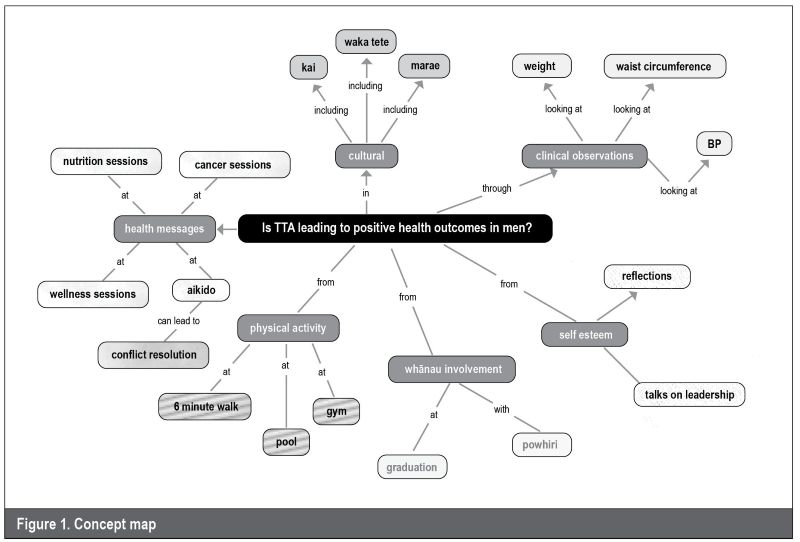
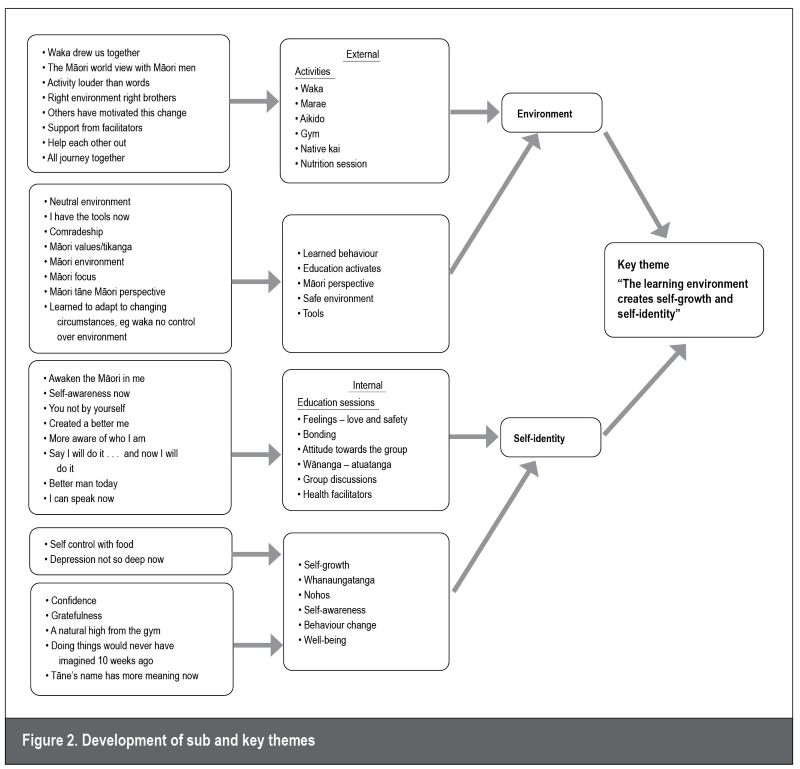
Key words were identified in the text of the transcript which were relevant to tāne from a cultural, values and educational perspective. This involved examining the text for patterns and repeated ideas, which were coded using a cut and paste method (Stewart & Shamdasani, 2015). The codes were then grouped to form categories by focusing on areas that had repetitive concepts (Creswell, 2014). The categories were then further refined into two sub-themes and then a key theme. The sub-themes were “environment” and “self-identity”, from which the key theme emerged: “The learning environment creates self-growth and self-identity.” A concept map (see Figure 1) helped categorise the narratives into groups that guided the themes.
Code words from the narrative were identified and grouped into categories. These categories were refined further into two categories – external (those activities that attributed to learning new behaviours, such as waka tete), and internal (those narratives related to their self-concept) (see Figure 2). Once this process was completed, the researcher then applied both tacit and academic knowledge about what was relevant to men’s health and well-being to generate the sub-themes and key theme.
Of interest were the thoughts of the moderator and a focus group participant. Each was asked to read the narrative transcript and comment on what they identified as important to the group. Their comments are supported by the participants’ narrative and are summarised in four points:
1) A supportive environment that is non-judgmental, honest, sharing, co-operative and bonding.
“The environment which the course offers is an environment which everyone should have access to.” (PK)
Focus group participant MD describes paddling a waka tete (a Māori fishing canoe with a carved figurehead and vertical stern piece) and how the waka activity affected him:
“It was all new to me and the waka was amazing. The outcome wasn’t the one we would have liked [tipped out], it happened, and we dealt with it, and if anything, it brought us closer together, which was what it was supposed to do, I think. That’s what the waka was all about.” (MD)
2) Self-realisation, with an awareness of one’s responsibility to one’s self and one’s whānau.
“It is like a whānau, whānau forever, no-one can change that.” (PD)
“. . . I probably would have killed myself if I wasn’t on this course . . . you are in a world of darkness by yourself.” (PK)
3) An increase in health literacy and looking after oneself holistically.
“Going into the bush looking for food instead of going down to the takeaways . . . the nearest thing I got to cooking anything was just a boil-up in the kitchen.” (MD)
4) An embrace of the kaupapa Māori well-being philosophy.
“ . . . being amongst a Māori environment in a Māori focus with Māori tāne, that’s been a real game changer for me.” (KP)
These four points support the concepts of “environment” and “self-identity” which emerged from the focus group discussions. The focus group narrative also made it clear how significant group dynamics were in changing behaviour, encouraging personal growth and establishing identity. Comments from the tāne using words such as “comradeship”, “fellowship”, “bonding” and “safe”, illustrated the relationship they felt with each other. Another example of the strong connection in the group was the number of times the word “brother” was used – this word was mentioned 12 times in the narrative. This bond they had formed may have made a significant contribution to the behaviour changes the participants made.
“Coming from a background of gang members and drug users and just horrible people until I came to this programme and realised that I am not the only one out there struggling, so this environment for me has brought me to a group of like-minded men that come from different backgrounds in life, but we all struggle together.” (KP)
The link between the sub-themes and the key theme, “The learning environment creates self-growth and identity”, was the relationships the participants had formed in their group. The particular environment the course offered acted as a catalyst for self-acceptance and for breaking down barriers to learning new skills. The data showed them applying healthy lifestyle skills:
“The environment which the course offers is an environment which everyone should have access to.” (PK)
“Aikido taught me to defuse a situation, defuse your environment. You know if you are in a negative environment or confronting environment to defuse it and just let it go by you, don’t react.” (ES)
“Big effects on just what I have learned here, the cooking was a big impression on the missus anyway.” (ES)
“We know how to make a frittata.” (MD)
“When we first started the process, Te Whare Tapa Whā [the four pillars] I have used that a lot to help.” (MD)
This study has shown that using a kaupapa Māori approach, and environments outside of health centres, makes adopting healthy behaviours possible. Other benefits included increased health literacy, understanding of self-identity/ko wai ahāu (who am I), and the rediscovery of culture. The combination of the group dynamic and the physical environment allowed the men to have positive experiences of well-being. For this cohort of patients, this could be an alternative to engaging with the nurse in a traditional health-care centre. It offers an alternative health-education environment which promotes a therapeutic relationship with their nurse. While the educational methods that are the focus of this research would not suit all males, it is likely there will be a portion of the population for whom this culturally focused learning style is beneficial.
“It’s changed me a lot. I was a couch-sitter prior to this course, but now I get up and catch buses to the Aquatics, come to the gym, go to courses, which is great, and I have learned a lot from it.” (PD)
DISCUSSION
Providing an alternative environment to traditional primary health care centres, in which Māori tāne can engage positively with their primary care nurse, is an opportunity to improve their health and well-being. Men are at particular risk of poor health literacy (Davey, Holden, & Smith, 2015). The Health Quality & Safety Commission (2017) defines health literacy as the degree to which individuals can obtain, process and understand health information and services they need to make appropriate health decisions. Improving health literacy can reduce a person’s dependence on health resources while having a positive impact on their health, potentially freeing up valuable health funds (Ministry of Health, 2015a; Walsh, Shuker, & Merry, 2015). Targeting long-term condition patients and those at high risk of poor health will give the greatest return on investment (Eckermann, Dawber, Yeatman, Quinsey, & Morris, 2014). The Tāne Takitu Ake programme offers the men the opportunity to learn about health literacy and well-being through a kaupapa Māori lens while incorporating Western health practices (Simon, Flett, & Babbage, 2014). Māori health expert Mason Durie’s Te Whare Tapa Whā model (1985) is used to explain to the men how well-being is a whare (house) supported by four pillars – taha wairua (spiritual health), taha hinengaro (mental health), taha tinana (physical health) and taha whānau (family health). Using this model, and other cultural activities they can relate to, produced a familiarity that seemed to make the men feel safe. For example, the tāne in this study seemed to relate well to a discussion linking well-being and goal setting, while paddling a waka tete. They talked about who you needed on your waka to help you attain personal well-being goals. Delivering clinical information in an environment that speaks to them, improves the relevance and adherence of the health education message.
The programme uses both cultural and clinical interventions to introduce the men to health and well-being. The nurse works collaboratively with specialised community health-care workers (paewhiriwhiri). When such collaboration is used to deliver health interventions, patients have shown increased participation in health education (Warbrick et al, 2016). The purposely-structured environment used in the programme helps the participants to think about the relevance of what they are learning to their health and well-being (Hemming, Levine, & Gallo, 2017; Ratima et al, 1999). The clinical component of Tāne Takitu Ake programme helps ensure the safety of the participants, while allowing closer monitoring of, and education about, their medical conditions. This study highlights the benefits of developing a health programme focused on Māori men’s health education needs – looking at what will relate to them that will help them learn healthy behaviours while improving their therapeutic relationship with the nurse. The challenges facing the future resourcing of primary health care – workforce shortages, increasing health burdens, funding concerns, inequality issues and political changes – may require a paradigm shift in how we deliver health services. Nurses have a role, when working with Māori men, to improve engagement, particularly with those most at risk of not engaging well with primary health, those with high health needs and those at potential risk of mortality.
Prevention is always better than cure, so while the health sector needs to service the unwell, an important aim of primary health care is the prevention of illness. Because it is located in the community, primary health care is in a unique position to engage with people to provide health education and improve well-being. This can be taken a step further by providing communities, particularly Māori tāne, with opportunities to take part in an alternative style of programme for well-being education and disease prevention.
The environment of a traditional primary health care centre can play a part in missed opportunities for health professionals to engage with at-risk patients (Balls-Berry et al, 2015). Some of the barriers to engagement are cost, transport, unfavourable past experience with health services or fear of hearing bad news. Health professionals face a challenge to turn these missed opportunities into proactive engagement in health literacy and well-being education (Schumacher et al, 2013). Finding environments in which Māori men feel comfortable about seeking information on healthy behaviours may reduce these missed opportunities. The Tāne Takitu Ake programme has provided opportunities for patient and nurse to engage outside traditional health settings (Balls-Berry et al, 2015). In doing so, it enables the participants to feel safe and not whakama (embarrassed) about health education.
Primary health care services have an obligation to find ways to reach all cohorts of the population. The health statistics of Māori men require interventions to make a more equitable system (Ministry of Health, 2015). The health education programme Tāne Takitu Ake creates an environment that allows men to discuss and share in a unique way with their nurse, and often starts them on their well-being journey. The literature review looked at the reasons why men do not fully engage with health services, and showed there was an alarming disparity between Māori and non-Māori in engaging with general practice (Jansen, Bacal, & Buetow, 2011). This research found that when health interventions were tailored specifically for Māori tāne, they were better able to relate to what they had learnt about their health and well-being.
Engaging with Māori in primary care requires an environment that enables relationships to be formed (Pitama et al, 2011). From this research, it is evident that Māori tāne need to feel comfortable and safe, with opportunities for conversation. When tāne begin to talk freely, they will often reveal the issues that are behind their clinical symptoms, which can flow into positive clinical interventions. Environments such as marae, waka, hikoi, gathering native kai in the bush, all help discussion to flow (Jordon, 2015). These environments also have deep cultural significance, which is a point of difference this programme has in promoting free discourse on relevant health issues between the tāne and nurses. Perhaps the most important environment is the structured group (Moore, 2015) where bonding, fellowship and whanaungatanga help create a strong relationship between the men. Their identity is confirmed or reshaped by their engagement in the group. This strengthens their self-esteem and allows open discussion with health professionals on relevant health issues.
Nurses are equipped to be agents of change and can respond to cultural demands in the workplace (Durie, 1985; Muller et al, 2009; Rigby et al, 2011). The therapeutic nursing relationship can be put to use with groups of Māori tāne in a way which helps them understand themselves and their values (Nahon & Lander, 2013). A nurse’s ability to innovate is an advantageous skill when engaging with those most at risk. This is not necessarily about coming up with an original idea, but more about how to put innovation into practice.
RECOMMENDATIONS
This study proposes the following recommendations for nurses working in primary health care with Maori tāne:
- Ensure primary care nursing staff are aware of the barriers some Māori tāne may encounter when engaging with primary health care services.
- Ensure health-care centres have a cultural focus that is welcoming to Māori tāne, and a culturally safe learning environment.
- Provide environments in primary health care that are friendly to Maori tāne, using male health-care workers.
- Target high-risk Māori tāne through health education programmes that use kaupapa Māori group participation, collaborating with community health services and nurses.
- Advocate for the use of environments outside traditional health-care centres to strengthen Māori tāne engagement with nurses delivering clinical education.
LIMITATIONS
This study has several limitations. The sample size of nine men was small, with data collected from one focus-group interview. While initial results showed the participants had learnt new skills in a relatively short period of time, measuring and gauging the sustainability of these skills would require further research, to increase our understanding of the long-term gains of the programme. The researcher is Pākehā and therefore limited in a deeper appreciation of Māori world-views. The world-views of Māori and Pākehā involve different assumptions, due to different experiences and cultural histories. The researcher has not been exposed to the same elements of cultural connection that most Māori experience, for example using te reo, or experiencing Māori kaitiakitanga for the land.
CONCLUSION
Primary health care services have an obligation to find ways to reach all cohorts of the population. The health statistics for Māori tāne require interventions to make a more equitable health system. For men, the environment in which services are delivered can influence their level of engagement with primary health care. The kaupapa Māori approach to holistic well-being, through culture, and through spiritual, whānau, mental and physical elements of health, is essential to understanding health and well-being of Māori tāne. When this approach is combined with nursing interventions and collaboration with community health workers, it can produce positive engagement and outcomes.
Engaging with patients in primary care can be both challenging and rewarding. It is challenging, because primary care requires health professionals to engage holistically with patients to help them make effective choices to help themselves. It is rewarding in the sense that we, as health professionals, are privileged when patients invite us to help them with their health and well-being journey. Using innovative approaches to deliver health messages to at-risk groups supports positive health outcomes. This research has shown how the therapeutic relationship can be enriched by working in a culturally-focused health-care environment. An example is using the waka tete as a learning tool for well-being via a tangible learning experience. Combining cultural responsiveness with positive engaging environments is about using nursing innovation and expanding the role of the nurse.
ACKNOWLEDGMENTS
I would like to acknowledge the supportive staff at Korowai Aroha Health Centre, especially the management team.
To those participants who took part in the study, I acknowledge your time and honesty in supporting this exploration of how we can improve engagement in primary health education.
To my colleagues Tracy Ormsby, Stormy Hohepa, Aaron Randel, Kevin Pahina and Richard Rautjoki – without your knowledge, insight and commitment, none of the outcomes from this programme would have been achievable.
I would also like to acknowledge the other services and individuals who gave their time and expertise to help deliver quality sessions for the well-being of the participants.
Finally, I acknowledge the financial support of the McCutchan Trust Scholarship that enabled this study to be undertaken.
REFERENCES
Arroll, B., Goodyear-Smith, F., & Lloyd, T. (2002). Depression in patients in an Auckland general practice. New Zealand Medical Journal, 115(1152), 176-179.
Balls-Berry, J., Watson, C., Kadimpati, S., Crockett, A., Mohamed, E., Brown, I., & Davis, O. (2015). Black men’s perceptions and knowledge of diabetes: A church-affiliated barbershop focus group study. Journal of Racial and Ethnic Health Disparities, 2(4), 465-472. https://doi.org/10.1007/s40615-015-0094-y
Braun, V., & Clarke, V. (2006). Using thematic analysis in psychology. Qualitative Research in Psychology, 3(2), 77-101.
Came, H. A., McCreanor, T., Doole, C., & Simpson, T. (2017). Realising the rhetoric: Refreshing public health providers’ efforts to honour Te Tiriti o Waitangi in New Zealand. Ethnicity and Health, 22(2), 105-108.
Coulter, A., & Rozansky, D. (2004). Full Engagement In Health: Needs To Begin In Primary Care. British Medical Journal, 329(7476), 1197-1198.
Creswell, J. W. (2014). Research design: qualitative, quantitative, and mixed methods approaches (4th ed). Thousand Oaks, CA: Sage.
Davey, J., Holden, C. A., & Smith, B. J. (2015). The correlates of chronic disease-related health literacy and its components among men: a systematic review. BMC Public Health, 15, 589.
Durie, M. (1985). A Māori perspective of health. Social Science & Medicine, 20(5), 483-486.
Eckermann, S., Dawber, J., Yeatman, H., Quinsey, K., & Morris, D. (2014). Evaluating return on investment in a school based health promotion and prevention program: The investment multiplier for the Stephanie Alexander Kitchen Garden National Program. Social Science & Medicine, 114, 103-112.
Health Quality & Safety Commission. (2017). Health literacy.
Hemming, P., Levine, R. B., & Gallo, J. J. (2017). “Conversational Advice”: A mixed-methods analysis of medical residents’ experiences co-managing primary care patients with behavioral health providers. Patient Education and Counselling, 101(1), 85-89.
Hudson, M., Milne, M., Reynolds, P., Russell, K., & Smith, B. (2010). Te ara tika guidelines for Māori research ethics: a framework for researchers and ethics committee members.
Jansen, P., Bacal, K., & Buetow, S. (2011). A comparison of Māori and non-Māori experiences of general practice. The New Zealand Medical Journal (online), 124(1330), 24-9.
Johnson, L., Huggard, P., & Goodyear-Smith, F. (2008). Men’s health and the health of the nation. The New Zealand Medical Journal, 121(1287), 69-76.
Jordon, M. (2015). Nature and therapy: understanding counselling and psychotherapy in outdoor spaces. East Sussex, United Kingdom: Routledge.
Kapuaahiwalani-Fitzsimmons, M. (2015). Critical success factors in Kaupapa Māori AOD residential treatment: Māori youth perspectives (unpublished master’s dissertation). Dunedin, New Zealand: University of Otago.
Marmot, M. (2005). Social determinants of health inequalities. Lancet, 365(9464), 1099–1104.
McElmurry, J. B. (1999). Primary Health Care. Annual Review of Nursing Research, 17(1), 241-268.
Ministry of Health. (2013). Primary care data and stats.
Ministry of Health. (2013/14). Annual update of key results 2013/14 New Zealand health survey: Respiratory disease.
Ministry of Health. (2015a). Health literacy review: A guide.
Ministry of Health. (2015b). Tatau Kahukura: Māori health chart book.
Ministry of Health. (2016). New Zealand Health Strategy 2016.
Ministry of Health. (2015/16). Mental Health and Addiction: Service Use 2015/16.
Moore, J. (2015). Men’s sheds and intergenerational mentoring in New Zealand (unpublished master’s thesis). Auckland, New Zealand: University of Auckland.
Moule, P., & Goodman, M. (2009). Nursing research: an introduction. Los Angeles, CA: SAGE 2009.
Muller, R., Ward, P. R., Winefield, T., Tsourtos, G., & Lawn, S. (2009). The importance of resilience to primary care practitioners: An interactive psycho-social model. Australasian Medical Journal, 1(1), 1-15.
Nahon, D., & Lander, N. R. (2013). Working with Men in Groups from an Integrity Model Perspective. Journal of Men’s Studies, 21(2), 162-177.
Pitama, S., Wells, J. E., Faatoese, A., Tikao-Mason, K., Robertson, P., Huria, T., . . . Cameron, V. A. (2011). A Kaupapa Māori approach to a community cohort study of heart disease in New Zealand. Australian & New Zealand Journal of Public Health, 35(3), 249-255.
Ratima, M. M., Slater, T., D’Souza, J. W., Pearce, N. E., Te Karu, H., Gemmell, T., & Fox, C., (1999). Long-term benefits for Māori of an asthma self-management program in a Māori community which takes a partnership approach. Australian and New Zealand Journal of Public Health, 23(6), 601-605.
Rigby, W., Duffy, E., Manners, J., Latham, H., Lyons, L., Crawford, L., & Eldridge, R. (2011). ‘Closing the gap’: Cultural safety in indigenous health education. Contemporary Nurse: A Journal for the Australian Nursing Profession, 37(1), 21-30.
Schommer, J. C., Byers, S. R., Pape, L. L., Cable, G. L., Worley, M. M., & Sherrin, T. (2002). Interdisciplinary medication education in a church environment. American Journal of Health-System Pharmacy, 59(5), 423.
Schumacher, J. R., Hall, A. G., Davis, T. C., Arnold, C. L., Bennett, R. D., Wolf, M. S., & Carden, D. L. (2013). Potentially preventable use of emergency services: the role of low health literacy. Medical Care, 51(8), 654-658.
Signal, L., & Ratima, M. M. (2015). Promoting health in Aotearoa New Zealand. Dunedin, New Zealand: Otago University Press.
Simon, T. B., Flett, A. R., & Babbage, R. D. (2014). Culturally adapted cognitive behaviour therapy for Māori with major depression. The Cognitive Behaviour Therapist, 7(20), 1-16.
Simmons, D., & Voyle, J. A. (2003). Reaching hard-to-reach, high-risk populations: piloting a health promotion and diabetes disease prevention programme on an urban marae in New Zealand. Health Promotion International, 18(1), 41-50.
Sporle, A., Davis, P., & Pearce, N. (2002). Social class mortality differences in Māori and non-Māori men aged 15-64 during the last two decades. New Zealand Medical Journal, 115(1150), 127-131.
Stewart. D. W., & Shamdasani. P. N. (2015). Focus groups: Theory and practice (3rd ed). Thousand Oaks, CA: Sage.
Walsh, C., Shuker, C., & Merry, A. (2015). Health literacy: from the patient to the professional to the system. The New Zealand Medical Journal, 128(1423), 10-16.
Warbrick, I., Wilson, D., & Boulton, A. (2016). Provider, father, and bro. Sedentary Māori men and their thoughts on physical activity. International Journal for Equity in Health, 15(1), 22.
Westbrooke, I., Baxter, J., & Hogan, J. (2001). Are Māori under-served for cardiac interventions? The New Zealand Medical Journal, 114(1143), 484.
Wilson, P. M., Kendall, S., & Brooks, F. (2006). Nurses’ responses to expert patients: The rhetoric and reality of self-management in long-term conditions: A grounded theory study. International Journal of Nursing Studies, 43(7), 803-818.
Daily doses – uncut news
| 5 Oct |
Labour's pay rise a first step, but pay equity needs a full settlementTōpūtanga Tapuhi Kaitiaki o Aotearoa NZNO has welcomed Labour's promised pay rise for care and support workers as a first step. It says care and support workers now need a full settlement of their pay equity claim and a workable pay equity system for all of its members. |
| 1 Oct |
Health NZ releases first national report on serious adverse eventsHealth New Zealand has published its first national Serious Adverse Event Report, acknowledging the serious harm experienced by patients and whānau and outlining the improvements identified and actions underway to strengthen patient safety. The report covers serious adverse events reported in Hospital and Specialist Services between 1 July and 31 December 2025. |
| 25 Sept |
380 more health care workers at the end of winter too little too lateAn announcement of 380 additional nurses, midwives and health care assistants for hospitals around the country at the end of winter is too little too late, NZNO says. |
| 23 Sept |
Auckland University research finds nurse shortages increase post-surgery deaths and complicationsNew research by Auckland University has found addressing nurse shortages in post-operative care may save 182 lives a year because short-staffed wards have higher rates of potentially preventable deaths and complications after their surgeries. |
| 21 Sept |
Whanganui Hospital ED averaged 680% capacity over a week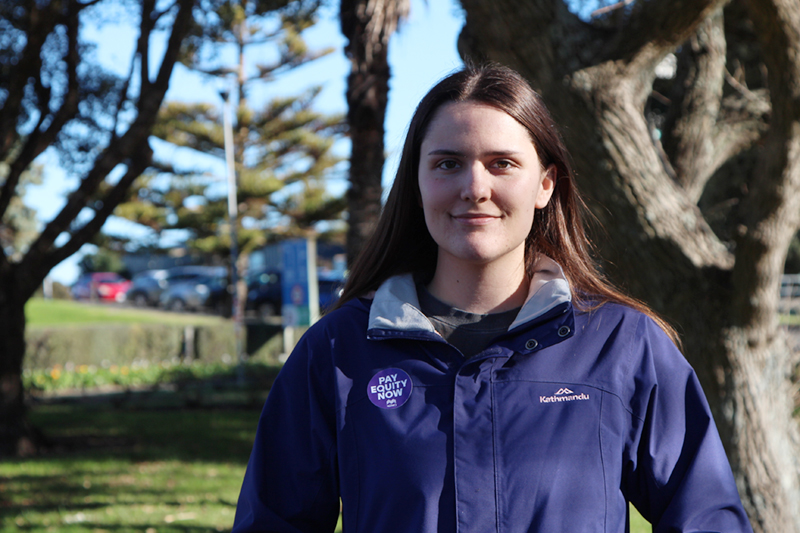 Working in an overcrowded emergency department (ED), up to 680% capacity over a week, makes staff feel overwhelmed with the pressure, Tōpūtanga Tapuhi Kaitiaki o Aotearoa NZNO says.
|
| 14 Sept |
WellSouth's Newborn Enrolment Kahu Taurima Programme a finalist at the Primary Care Awards 2026WellSouth's Newborn Enrolment Kahu Taurima Programme is a finalist at the Primary Care Awards for the HALEO Best Supplier Service, Product or Campaign category. Winners will be announced on 17 October. |
| 14 Sept |
Global Study: Nursing Shortages Require Workforce Policy Solutions, Not Recruitment Campaigns AloneWhy people choose nursing, and why they leave, comes down to the same factors. The global nursing shortage cannot be solved simply by encouraging more people to enter the profession, according to a new evidence brief. |
| 8 Sept |
Overworked, understaffed Gisborne ED staff strike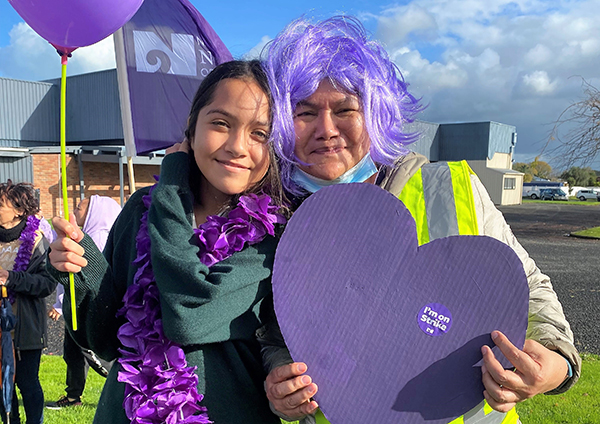 Health and safety concerns arising from unsafe staffing levels have forced nurses at Gisborne Hospital’s emergency department (ED) to go on strike.
|
| 4 Sept |
Strong growth in wāhine Māori and Pacific women’s cervical screening rates highlights success of self-testing programmeCervical screening participation has increased significantly for both wāhine Māori and Pacific women, reflecting the strong impact of self-testing, Screening Services and the dedicated efforts of health providers working alongside their communities. |
| 4 Sept |
Government must adopt Wai 2713 recommendations on disability systemThe Coalition Government must urgently adopt new recommendations from the Waitangi Tribunal which has found significant parts of the disability system prejudice tāngata whaikaha Māori (Māori with disabilities), NZNO says. |
| 31 Aug |
Employing graduate nurses will help keep them in nursing and the countryA new proposal that will require Te Whatu Ora to offer all eligible graduate nurses jobs in the public health system will help keep them in nursing and in Aotearoa New Zealand, NZNO says. |
| 26 Aug |
Health Minister’s claim Winter Plan ‘managing well’ delusionalHealth Minister Simeon Brown’s claim that hospitals are ‘managing well’ because of the Government’s Winter Plan is delusional, NZNO says. |
| 25 Aug |
Hospital data shows nursing shortages continue to put patients at riskTe Whatu Ora data released today shows patients are continuing to be put at risk by the Coalition Government’s deliberate failure to safely staff hospital wards, NZNO says. |
| 24 Aug |
Fed-up North Shore ED staff declare state of emergencyNZNO members working in the emergency department (ED) at North Shore Hospital have declared a state of emergency due to unsafe staffing levels resulting in ongoing overcrowding. |
| 19 Aug |
What happened to the winter health plan?The $25 million 2026 Winter Plan launched by Health Minister Simeon Brown in March to erase pressure on the health system has been an unmitigated disaster, Tōpūtanga Tapuhi Kaitiaki o Aotearoa NZNO says. |
| 11 Aug |
Applications open for advanced nursing education programmesHealth New Zealand is encouraging registered nurses to apply for two advanced education programmes that support nurses to further develop their clinical skills and expand access to care in communities across New Zealand. |
| 3 Aug |
Health New Zealand welcomes settlement of NZRDA collective agreementHealth New Zealand welcomes the vote by New Zealand Resident Doctors Association (NZRDA) members to settle their collective agreement. |
| 30 Jul |
Backing our frontline rural health workforceRural communities across New Zealand will benefit from three new investments that will support the rural health workforce and help more people access care closer to home, Associate Health Minister Matt Doocey says. |
| 22 Jul |
Te Whatu Ora must disclose staffing levels at time of tragic deathTe Whatu Ora must disclose whether the Waikato emergency department (ED) was short-staffed at the time a man tragically died in the waiting room, NZNO says. |
| 6 Jul |
Reflecting on IND 2026Looking back on last month’s International Nurses Day 12 May 2026 (IND 2026), the impact of this year's theme "Our Nurses. Our Future. Empowered Nurses Save Lives" continues to resonate across the world. ICN’s landmark IND 2026 report defined seven key powers of nursing and this message has been strengthened with nurses in every region celebrating, naming, and owning their powers throughout May. |
| 3 Jul |
Health New Zealand acknowledges Ombudsman statement on Wakari Ward 10AHealth NZ welcomes the independent investigation by the Ministry of Health into Ward 10A. On Wednesday the Health NZ board agreed to close Wakari Ward 10a as a forensic intellectual disability (ID) unit, with the future use of the ward yet to be determined. |
| 2 Jul |
New programme to fast track bowel cancer care and cut colonoscopy waitlistsHealth New Zealand is today launching a national initiative, designed to fast track bowel cancer care and reduce colonoscopy waitlists by up to 30 per cent. |
| 1 Jul |
Six new Co-Response Team locations announced to strengthen support for people in mental distressThe next six locations for Health New Zealand and NZ Police Co-Response Teams have been confirmed, expanding a model that helps people experiencing mental distress receive timely, wraparound support that better meets their health needs. |
| 29 Jun |
Mental health and addiction targets progress continuesHealth New Zealand continues to make important progress against its mental health and addiction targets, meeting four out of five national targets this quarter. |
| 25 Jun |
Access to care continuing to improve across a range of health indicatorsNew health data released today shows continued improvement in access to care across a range of health indicators. |
| 18 Jun |
Funding "boost" continues dangerous under-funding of aged careThe Health Minister’s funding "boost" for aged residential care continues underfunding to the sector and will continue unsafe practices and short staffing, which is putting vulnerable residents at risk, NZNO says. |
| 16 Jun |
Labour to make maternity scans freeLabour will add free maternity scans to the Medicard alongside three free doctor’s visits a year, so every pregnant woman gets the care she needs. |