


About the authors:Cilla Wyllie-Schmidt, RN, MProfPrac, is the clinical nurse coordinator for the hospital opportunistic immunisation service, Waikato District Health Board, Hamilton, New Zealand. Zoë Tipa, RN, MPhil, PhD candidate AUT, is a principal lecturer at the Centre for Health and Social Practice, Waikato Institute of Technology, Hamilton, New Zealand. Patricia McClunie-Trust, RN, PhD, is a principal lecturer, at the Centre for Health and Social Practice, Waikato Institute of Technology, Hamilton. This article was accepted for publication in September 2019. |
ABSTRACTAim: The research reported in this article explored factors affecting access to immunisation of under-five-year-olds. In particular, it aimed to illuminate potential obstacles for whānau1 that might have an impact on timely immunisation of tamariki2. Background: Immunisations are effective in preventing communicable diseases. The 2017 New Zealand national immunisation schedule offers free protection to children under 18 years of age against 13 vaccine-preventable diseases. A proportion of New Zealand children under five years old have either had missed or delayed vaccinations. Methodology: An integrative review approach was used to aggregate and examine the findings of published international research on factors affecting timely immunisation of tamariki. An inductive thematic analysis, drawing on techniques from constructivist grounded theory, guided analysis of data. Findings: “How people live”, “how people understand”, and “how people access health services” were key themes identified in the examined research. Challenges families experience internationally seem consistent with those potentially encountered by whānau in New Zealand. Child poverty is an intrinsic barrier to immunisations for tamariki. The level of education of whānau directly affects health literacy. There may also be links between formal education, income, and accessibility of health services. Conclusions: Health-service providers need to consider how to facilitate timely immunisations for all tamariki. Helping whānau recognise and overcome the obstacles they face may improve access. Promoting community engagement may also create more equitable access to immunisation services. |
||||
KEYWORDSimmunisation, communicable disease, prevention, children, tamariki |
|||||
 Cilla
Cilla  Zoë Tipa
 Patricia
INTRODUCTION
A TIMELY IMMUNISATION PROGRAMME is a vital public health intervention to prevent communicable diseases among tamariki (children). In line with World Health Organization (WHO)recommendations, New Zealand has an endorsed national immunisation schedule that offers free, well-timed protection from serious vaccine-preventable diseases to all tamariki in New Zealand (MOH, 2017a). Despite this, many tamariki are reported as under-vaccinated, an issue of concern to nurses working in primary care and child health-care services (MOH, 2018b). The purpose of this integrative review was to explore published international research to understand more about what influences whānau in accessing timely immunisations for tamariki in Aotearoa New Zealand.
BACKGROUND
Immunisation is one of the most effective interventions to prevent disease worldwide (Plotkin et al, 2012). The New Zealand national immunisation schedule offers free protection to children under 18 years of age against 13 harmful vaccine-preventable diseases: Diphtheria, pertussis, tetanus, rotavirus, haemophilus influenza type b (Hib), polio, hepatitis B, pneumococcal disease, measles, mumps, rubella, varicella and human papilloma virus (MOH, 2017a). The inclusion of the specific vaccines on the schedule and the stipulated timing of immunisation events is consistent with WHO recommendations (2013, 2017a, 2017b).
The recommended timings of immunisation events, according to the 2017 national immunisation schedule for children, are at age: six weeks; three, five and 15 months; then at four and 11 years of age.
The purpose of a schedule is to ensure tamariki are fully protected against vaccine-preventable diseases at an early age when they are most at risk of severe disease. Delayed or missed vaccinations (Grant et al, 2016; Mueller et al, 2012; Turner et al, 2017) make tamariki susceptible to disease, and the potential impact of that disease on both tamariki and whānau (Corbett, 2013). The Institute of Environmental Science and Research (ESR, 2017) reported on the following vaccine-preventable disease cases in children under five years of age in 2016: invasive pneumococcal disease (46 cases), measles (29 cases, half of which were in children less than one year of age), pertussis (177 cases), rubella (one case). There was one case each of diphtheria, tetanus and haemophilus influenza b.
Immunisation coverage is measured as a percentage of the eligible population that have received the immunisations by a particular age. As an indicator of timeliness, Aotearoa New Zealand has an immunisation target of 95 percent for all tamariki turning eight months of age to have completed their first three immunisation events (MOH, 2017a). At the end of 2017, the immunisation coverage for infants receiving the first three immunisation events on time by eight months of age was 92.2 percent (MOH, 2018a). The coverage rate can be affected by those that opt off the national immunisation register, and by whānau who delay or decline immunisations. Immunisation coverage in Aotearoa New Zealand is consistently reported as lower among some populations and in some geographical areas (Gilbert & Wrigley, 2009; Grant et al, 2010; Kiedrzynski, Bissielo, Suryaprakash, & Bandaranayke, 2015; Pal, Goodyear-Smith, & Exeter, 2014). According to the MOH (2018a), at the end of 2017, immunisation coverage for people who identify as New Zealand European was 93.2 percent, compared to coverage for Māori at 88.7 percent and Pacific people at 94 percent. In New Zealand, primary-care health providers have the major responsibility to deliver national immunisation schedule vaccines. As Wilson (2009, p9) noted, “the majority of under-immunisation in New Zealand does not arise from opposition to vaccination and those in greatest need of immunisation are missing out”. Unfortunately, there are many whānau and tamariki in Aotearoa New Zealand who do not have equitable access to primary health care.
METHODS
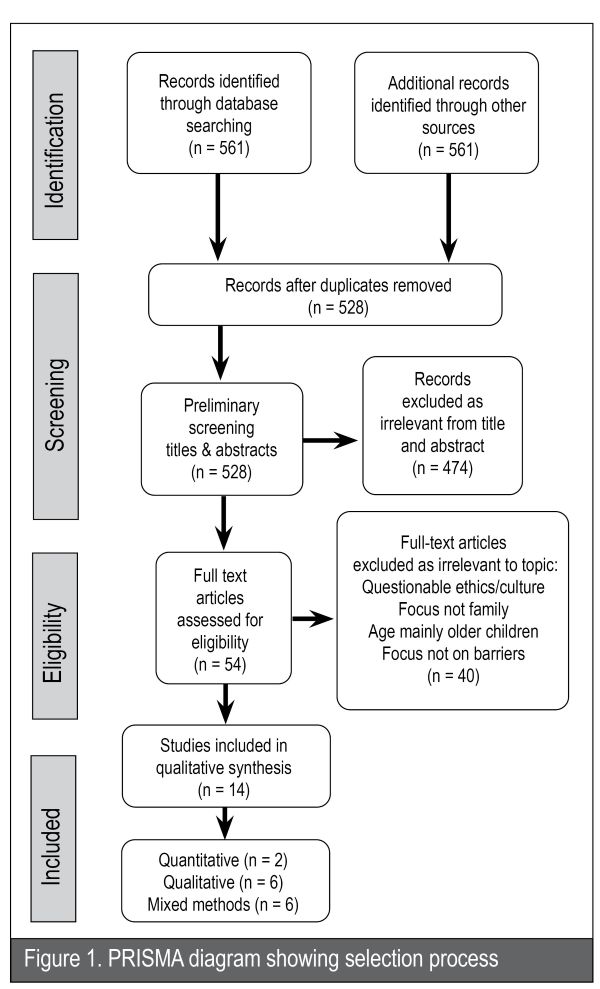
A qualitative integrative review approach was used to synthesise published research and other literature on factors affecting access to immunisation of under-five-year-olds. The integrative review method enables researchers to synthesise research from a variety of methodological approaches (Whittemore & Knafl, 2005). The research question was: “What are the factors affecting access for whānau who seek to immunise their under-five-year-olds?”
Stages of the integrative review
There are five stages to the integrative review process, including problem identification, location of the studies, evaluation of the studies, collection of data, and finally, data analysis and presentation (Evans, 2007). The first stage, problem identification, ensured the focus of the review was defined. In the second stage, a large number of citations for published research were reviewed to identify a relatively small number of relevant articles. Databases searched for this review included Pubmed/MEDLINE, Mednar, DOAJ, Ebscohost, ProQuest, ScienceDirect and Gale. Key search terms (shown below in Table 1) were used in various combinations and collectively as phrases.
Table 1: Key search terms
| Immunis/zation | Under-5-year-olds | Whānau | Factors |
|---|---|---|---|
| immunize* (immunise) | children | parents | challenges |
| vaccine* | infant | caregivers | barriers |
| babies | family | obstacles |
The third stage involves evaluation of the studies. Selected articles were screened using a CASP (critical appraisal skills programme) qualitative review evaluative tool (CASP, 2017). The aim of the critical appraisal at this stage was to ensure only rigorous studies were included in the review. The fourth stage, data collection, involved accurate and complete documentation of all relevant findings from the identified studies (Evans, 2007). The fifth stage was data analysis and presentation of findings from the review. An inductive thematic approach to data analysis was informed by constructionist grounded theory research methodology (Guest, MacQueen, & Namey, 2012).
FINDINGS
Three key themes emerged as obstacles for immunisation – “how people live”, “how people understand”, and “how people access health services”. This section uses the terms “children” and “families” consistently with the way they are used in the reviewed research.
How people live
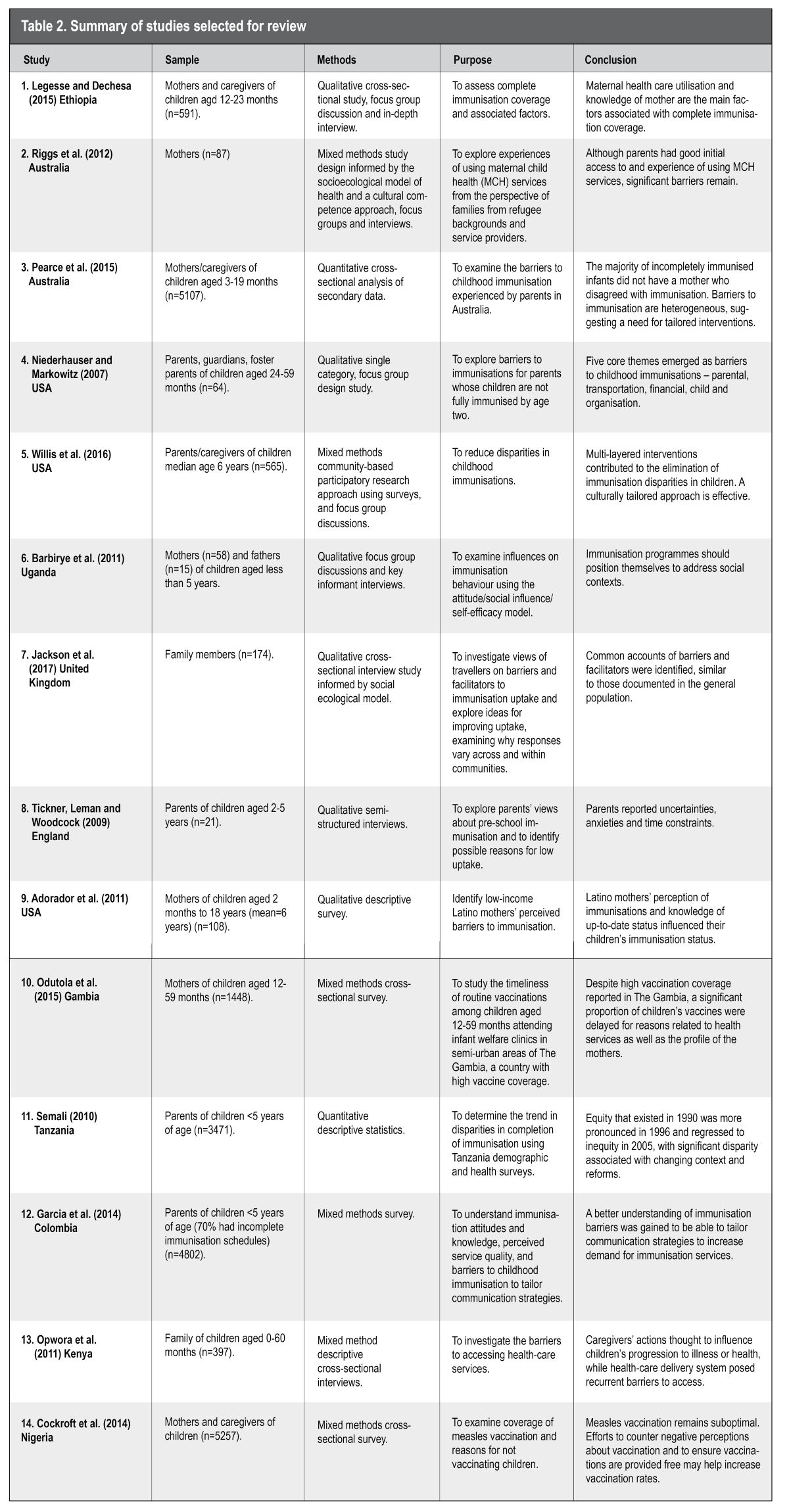
The main elements of the theme “how people live” included lack of support, financial struggles, number of children in family, transient or moving since birth, lack of time and work commitments. Lack of support was identified in many studies [1, 2, 3, 4, 5, 6] as low social contact, or lack of help from the father or other family and the wider community, which were barriers to getting children immunised. One study [6] found mothers felt “stigmatized and bullied by other women” for not having “presentable clothing” to attend appointments. Low income was identified as a significant barrier in half of the studies [1, 3, 6, 9, 10, 13, 14]. For example, participants in study 6 spoke of having to choose between food and other provisions and paying for transport to get their children immunised.
Birth order and location of birth were factors that also affected access to immunisations – immunisations decreased with each successive birth in some families. The location of birth was important, with more children being immunised when born in a birth facility than those born at home [2, 10, 14], and fewer children being immunised the more moves a family had made since the birth of a child [2, 3, 4, 7, 9]. Work commitments were another significant barrier to getting children immunised. This included: being unable to miss work due to the resulting loss of income or work; what employers would think of their absence; and lack of time because of working. Half the studies reported competing commitments – such as caring for other family members and increased responsibilities at home – as barriers to getting children immunised [2, 4, 7, 8, 9, 12, 14].
How people understand
Parents’ or caregivers’ level of knowledge affected their engagement with many aspects of the immunisation process and was a significant barrier for many parents. Health literacy, or the ability to understand information provided by health-care providers (this included immunisation support people, nurses and doctors) was important when parents or caregivers were making decisions about whether to vaccinate. Having less education affected parents’ or caregivers’ knowledge of vaccine-preventable diseases and the importance of vaccines [1, 3, 4, 5, 7, 9, 10, 11, 12, 13, 14]. Often, low literacy equated with low health literacy. Health literacy was identified as an issue in four studies [4, 5, 7, 14], and in particular when “medical jargon” was used by health-care providers.
Knowledge of vaccine-preventable diseases and immunisation schedules (number of doses, what diseases they protected for, why they were needed) was reported as absent or incorrect among participants in eight studies [1, 2, 4, 5, 8, 9, 10, 14]. One study [2] also reported lack of knowledge about what immunisation services were available as a barrier. Being connected to, and having a “good experience” with health-care providers was important in facilitating immunisation [1, 2, 5, 7, 8, 9, 12, 13], while lack of trust in the health-care provider was identified as a barrier [6]. Three studies [5, 6, 7] reported participants feeling judged by health-care providers, including “feeling discriminated” against “and marginalized” [7].
Who was responsible for the decision to vaccinate varied across the studies. Four studies found this decision was the mother’s responsibility [5, 7, 8, 10], while three others identified fathers as the decision-maker [6, 7, 14]. Two reported a joint or collective decision [6, 14] and some reported that older-generation family members were responsible [6, 7]. The person responsible for making the decision could be a barrier to immunisation as sometimes decisions were made not to vaccinate. One study reported that parents were not always in agreement about whether to immunise [6]. An intergenerational decision-making process was sometimes a barrier, where parents or caregivers may have wanted to vaccinate, but older family members did not support or agree with immunisation. Religious beliefs were also cited as a barrier to immunising children [4]. Lack of information from health- care providers was identified in two studies [8, 12].
How people access health services
The main issues found in the studies relating to how people accessed health services were the presence and location of the health services and the quality of service provided. Eleven studies reported attendance at a health service was challenged by lack of transport, location or distance [1, 2, 3, 4, 5, 6, 9, 10, 12, 13, 14]. Transport barriers ranged from: having no transport, requiring walking long distances, to having to use public transport, which could be unreliable and/or required multiple changes to get to the health service. Parking difficulties when using private transport were also identified as a barrier. Distance from the service, in terms of the amount of time required to travel there and back, ranged from minutes to hours. The number of transport service changes needed to arrive at the health service ranged from one to multiple changes (actual number not stated). Some families reported not being able to afford two cars, with the family member at work taking the car during the day.
Health-service barriers included: appointment times not being convenient; long waiting times for appointments; not having a vaccination card; or the health-care provider and/or the vaccines not available. Work commitments (necessity to work) were also identified as a barrier. The suitability of appointment times was cited in four studies as a barrier [4, 5, 7, 12]. The length of time, including waiting time, to be seen, was important in six studies [1, 4, 10, 12, 13, 14]. One study [4] mentioned being required to be checked by a doctor before being vaccinated, which contributed to the time required for the whole event. It was not always a cultural norm for participants to have appointments [7], and two studies [2, 10] noted participants forgetting appointments or having difficulty making appointments. Not having a “vaccination card”, or the equivalent, was a barrier in four studies [1, 10, 12, 13]. Finally, many studies cited lack of a health-care provider and/or vaccines as a barrier [1, 6, 8, 10, 12, 13, 14]. In several cases, caregivers had travelled to the facility only to learn there was no vaccine available. In one instance, the appointment time for vaccination was limited to a specific day and time [8].
DISCUSSION
The themes identified in this review are congruent with the literature on access to whānau health services in New Zealand (MOH, 2013; Tipa, Wilson, Neville, & Adams, 2015; Turner et al, 2017). The New Zealand Health Strategy (MOH, 2016) and Māori Health Strategy (MOH, 2017b) seek to improve whānau engagement through “embedding the improvement of Māori health across organisations” (MOH, 2018b, para. 2). However, there are many challenges for whānau, especially those living in high-deprivation areas and those with low income or low educational levels, all of which have an impact on the lives of tamariki.
Cultural safety
How people live, their lifestyle, sociodemographic factors and socioeconomic status, and whether there are adequate support systems (from family, whānau and the wider community) all influence whether tamariki are immunised. Factors that influence the health and well-being of tamariki are interconnected – each factor affects the others. Socioeconomic inequalities were prevalent in the data from the reviewed overseas studies, and such inequalities have also been identified in New Zealand studies (Baker et al, 2012; Petousis-Harris et al, 2005; Turner et al, 2017).
The New Zealand Health Strategy acknowledges there are many factors that influence health and wellness over the course of a person’s life which influence whether they receive equitable care (MOH, 2016). These factors, many of which were also identified in the reviewed studies, include: home environments, work commitments, transport issues, lack of social support, educational level and financial strain. “Wai ora”, a concept in the Māori Health Strategy/He Korowai Oranga, captures the notion that the environments people live in have a significant impact on their health and well-being (MOH). The impact of wai ora on health was unmistakably evident in the findings of this review.
Lack of support is a factor undermining the ability to access immunisation for children. Support is considered necessary to facilitate access to health services (Babirye et al, 2011; Legesse & Dechasa, 2015; Niederhauser & Markowitz, 2007; Pearce et al, 2015; Riggs et al, 2012; Willis et al, 2016). The New Zealand Health Strategy theme “one team/kotahi te tīma” includes an emphasis on strengthening whānau and communities as carers. However, competing interests, such as government targets, can affect health services’ ability to collaborate with whānau (Turner et al, 2017).
For whānau to feel connected and willing to engage with health services, they need to have positive relationships with health providers. Whānau who have trust and confidence in providers are more likely to engage with health services (Petousis-Harris et al, 2005). Conversely, where health services display discriminatory attitudes towards whānau, negative associations are the result (Babirye et al, 2011; & Jackson et al, 2017; Willis et al, 2016). Discrimination or racism is associated with inequality in health-service provision (Reid, Cormack & Crowe, 2014). The judgmental attitude of a health provider can directly affect whānau engagement.
Child poverty as a barrier to immunisation
Poverty as a barrier to accessing health services was identified in the majority of the studies reviewed. In the Aotearoa New Zealand context, tamariki living in social deprivation are less likely to be fully immunised and are therefore more vulnerable to vaccine-preventable diseases. Poverty is not simply about having less, it is also about not having enough of the basic provisions for living a full life (Boston, 2014). Tamariki living in poverty experience greater disparities in health outcomes and have reduced opportunities to be protected from disease (Adorador et al, 2011; Babirye et al, 2011; Cockroft et al, 2014; Legesse & Dechasa, 2015; Odutola et al, 2015; Opwora et al, 2011; Pearce et al, 2015). Such disparity often results in negative health outcomes, exacerbated by a greater incidence of illness and increased hospitalisations (Boston, 2014). Nearly a third (27 percent) of tamariki living in Aotearoa New Zealand have been identified as living in poverty (Boston; Simpson et al, 2016). Boston suggests that half of these tamariki are of Māori or Pacific ethnicity.
Many whānau report transportation issues are a barrier to getting children immunised (Turner et al, 2017). Simpson et al (2016) reported that almost a quarter (21.5 percent) of tamariki (0-14 years old) had unmet needs for primary-care services. This study also reported that Māori and Pacific children were more than three times more likely to experience transport problems to get to primary-health services than non-Māori. Providing immunisation services “closer to home” can help to address the widely reported barriers of time and transport. For some whānau, taking time away from other family responsibilities, such as caring for older family members, was a significant barrier to taking a child for immunisations (Adorador et al, 2011; Cockcroft et al, 2014; Garcia et al, 2014; Jackson et al, 2017; Riggs et al, 2012; Tickner et al, 2009). Taking time off work may not be feasible, due to the impact of lost income and unwillingness of employers to allow absence from work to attend appointments. Transiency, often linked to poverty, creates a further challenge for health-care providers to connect with whānau, as location and contact details may change frequently (Turner et al, 2017). Temporary or transient living situations also make it difficult for continuity of relationships with health-care providers (Niederhauser & Markowitz, 2007).
Whānau-centred engagement
Whānau is a vital influencing factor in tamariki receiving immunisations on time. Education levels have an impact on health literacy, and on the awareness of the importance of timely immunisations and the understanding of how immunisations prevent disease (Simpson et al, 2016). Inability to understand health information due to the language used was also identified as a barrier, not only in relation to immunisations but also in regard to other aspects of health care. The direct result was a lack of a connection with health providers. This lack of connection can lead to loss of engagement with health-care providers if whānau do not understand or feel understood. Health-care providers can strive to work with whānau in a “culturally responsive” manner (Doutrich, Dekker, Spuck, & Hoeksel, 2014). Providing information that is both meaningful to whānau, and in line with their beliefs, is important, and the importance of connectedness and collaboration with whānau should not be undervalued. The attitude and approach of all health-care providers (including non-clinical staff) is a significant factor in encouraging whānau to engage with health services. Having an awareness of who influences the decision-making within whānau is also important. Establishing trust with all those involved in decision-making about immunisation enables whānau to feel sufficiently informed and have a sense of security about the process of engaging with health services.
LIMITATIONS
Research conducted in other countries may have limited application to the Aotearoa New Zealand context, owing to differences in the delivery of health services and other contextual factors. However, this review provided background information for future research. While research in Aotearoa New Zealand has explored a health-service perspective on barriers to immunising, consideration could be given to looking at the perspectives of whānau from specific population groups in New Zealand which have higher levels of delayed immunisation.
CONCLUSION
Timely immunisations play a significant role in reduction of disease, illness and hospitalisation. Equitable access for all tamariki is instrumental in achieving immunisation coverage targets (WHO, 2017a). Improving access to immunisations, increasing coverage and improving community protection are all positive drivers for everyone living in Aotearoa New Zealand. However, work needs to be done to address disparities in health outcomes for Māori tamariki. Health-care providers have an ethical obligation to facilitate timely immunisations, as tamariki are dependent and therefore not able to actively access care (Davies et al, 2010). Implementing strategies to overcome barriers, such as providing support to whānau and understanding the challenges or obstacles they face in attempting to immunise tamariki may improve access. To take action now is to improve outcomes for future generations. Providing positive, supportive, engaging immunisation services should lead to wider community engagement and a reduction in health disparities.
RECOMMENDATIONS
Health-service delivery models need to be more accommodating and efficient, making the best use of time for both whānau and health-care providers.
- Nurses and other health-care providers could contemplate offering flexible, joint or combined services to whānau to save time and resources, such as travel costs.
- Nurses and other health-care providers need to work more closely with wider community agencies to identify which whānau need help to get tamariki immunised on time.
- Collaborative strategies are needed to improve whānau engagement with health services through more culturally focused and flexible services, ensuring the rights of whānau are respected.
- Nurses and other health-care providers in all acute-care facilities and emergency clinics should be encouraged to provide opportunistic immunisations to appropriate tamariki to improve immunisation uptake.
Footnotes:
1. The Māori word whānau is used in this article to refer to caregivers, parents and families.
2. Tamariki is the Māori name for children.
REFERENCES
Adorador, A., McNulty, R., Hart, D., & Fitzpatrick, J. J. (2011). Perceived barriers to immunizations as identified by Latino mothers. American Academy of Nurse Practitioners, 23(9), 501-508.
Babirye, J., Rutebemberwa, E., Kiguli, J., Wamani, H., Nuwaha, F., & Engebretsen, I. MS. (2011). More support for mothers: A qualitative study on factors affecting immunisation behaviour in Kampala, Uganda. BMC Public Health, 11(1), 723-733.
Baker, M. G, Barnard, L. T., Kvalsvig, A., Verrall, A., Zhang, J., Keall, M.,… Howden-Chapman, P. (2012). Increasing incidence of serious infectious diseases and inequalities in New Zealand: A national epidemiological study. The Lancet, 379(9821), 1112-1119.
Boston, J. (2014). Child poverty in New Zealand: Why it matters and how it can be reduced. Educational Philosophy and Theory, 46(9), 962-988.
Cockcroft, A., Usman, M. U., Nyamucherera, O. F., Emori, H., Duke, B., Umar, N. A., & Anderson, N. (2014). Why children are not vaccinated against measles: A cross-sectional study in two Nigerian states. Archives of Public Health, 72(1), 48-58.
Corbett, T. (2013). Recommendations to enhance general practice to improve access of tamariki to immunisations. GlaxoSmithKline Vaccines.
Critical Appraisal Skills Programme (CASP). (2017). CASP qualitative research checklist.
Davies, E., Crothers, C., & Hanna, K. (2010). Preventing childhood poverty: Barriers and solutions. New Zealand Journal of Psychology, 39(2), 20-31.
Doutrich, D., Dekker, L., Spuck, J., & Hoeksel, R. (2014). Identity, ethics and cultural safety: Strategies for change. Whitireia Nursing and Health Journal, 21, 15-21.
Environmental Science and Research [ESR]. (2017). Science for communities.
Evans, D. (2007). Overview of methods. In C. Webb & B. Roe (Eds.), Reviewing research evidence for nursing practice (pp. 137-148). Oxford, United Kingdom: Blackwell Publishing.
Garcia, D. A., Velandia-Gonzalez, M., Trumbo, S. P., Pedreira, M. C., Bravo-Alcantara, P., & Danovaro-Holliday, M. C. (2014). Understanding the main barriers to immunization in Colombia to better tailor communication strategies. BMC Public Health, 14(1), 2148-2173.
Gilbert, R., & Wrigley, K. (2009). Opportunistic immunisation of paediatric inpatients at Rotorua Hospital: Audit and discussion. New Zealand Medical Journal, 122(1298), 25-30.
Grant, C. C., Chen, M., Bandara, D. K., Marks, E. J., Gilchrist, C. A., Lewycka, S., . . . Morton, S. M. B. (2016). Antenatal immunisation intentions of expectant parents: Relationship to immunisation timeliness during infancy. Vaccine, 34, 1379-1388.
Grant, C. C., Turner, N. M., York, D. G., Goodyear-Smith, F., & Petousis-Harris, H. A. (2010). Factors associated with immunisation coverage and timeliness in New Zealand. British Journal of General Practice, 60(572), 113-120.
Guest, G., MacQueen, K. M., & Namey, E. E. (2012). Applied thematic analysis. Thousand Oaks, CA: SAGE.
Jackson, C., Bedford, H., Cheater, F. M., Condon, L., Emslie, C., Ireland, L., . . . Dyson, L. (2017). Needles, jabs and jags: A qualitative exploration of barriers and facilitators to child and adult immunisation uptake among Gypsies, Travellers and Roma. BMC Public Health, 17(1), 254-271.
Kiedrzynski, T., Bissielo, A., Suryaprakash, M., & Bandaranayke, D. (2015). Whooping cough – where are we now? A review. New Zealand Medical Journal, 128(1416), 21-27.
Legesse, E., & Dechasa, W. (2015). An assessment of child immunization coverage and its determinants in Sinana District, Southeast Ethiopia. BMC Pediatrics, 15(1), 31-45.
Ministry of Health (MOH). (2013). Audience research: Delayers of infant immunisation. Litmus.
Ministry of Health (MOH). (2016). New Zealand Health Strategy: Future direction.
Ministry of Health (MOH). (2017a). Immunisation handbook.
Ministry of Health (MOH). (2017b). He korowai oranga/Māori health strategy.
Ministry of Health (MOH). (2018a). National and DHB immunisation data.
Ministry of Health (MOH). (2018b). Māori health.
Mueller, S., Exeter, D. J., Petousis-Harris, H., Turner, N., O’Sullivan, D., & Buck, C. D. (2012). Measuring disparities in immunisation coverage among children in New Zealand. Health & Place, 18, 1217-1223.
Niederhauser, V., & Markowitz, M. (2007). Barriers to immunizations: Multiethnic parents of under- and unimmunized children speak. Journal of the American Academy of Nurse Practitioners, 19(1), 15-23.
Odutola, A., Afolabi, M. O., Ogundare, E. O., Yamu Ndow, L.-J., Worwui, A., Okebe, J., & Ota, M.O. (2015). Risk factors for delay in age-appropriate vaccinations among Gambian children. BMC Health Services Research, 15(1), 1-9.
Opwora, A. S., Laving, A. MR., Nyabola, L. O., & Olenja, J. M. (2011). Who is to blame? Perspectives of caregivers on barriers to accessing healthcare for the under-fives in Butere District, Western Kenya. BMC Public Health, 11(1), 272-281.
Pal, M., Goodyear-Smith, F., & Exeter, D. (2014). Factors contributing to high immunisation coverage among New Zealand Asians. Journal of Primary Health, 6(4), 304-311.
Pearce, A., Marshall, H., Bedford, H., & Lynch, J. (2015). Barriers to childhood immunisations: Findings from the longitudinal study of Australian children. Vaccine, 33(29), 3377-3383.
Petousis-Harris, H., Goodyear-Smith, F., Turner, N., & Soe, B. (2005). Family practice nurse views on barriers to immunizing children. Vaccine, 23(21), 2725-2730.
Plotkin, S., Orenstein, W., & Offit, P. (2012). Vaccines (6th ed). Elsevier.
Reid, J., Cormack, D., & Crowe, M. (2016). The significance of relational continuity of care for Māori patient engagement with predominantly non-Māori doctors: Findings from a qualitative study. Australian and New Zealand Journal of Public Health, 40(2), 120-125.
Riggs, E., Davis, E., Gibbs, L., Block, K., Szwarc, J., Casey, S., . . . Waters, E. (2012). Accessing maternal and child health services in Melbourne, Australia: Reflections from refugee families and service providers. BMC Health Services Research, 12(1), 117-132.
Semali, I. A. (2010). Trends in immunization completion and disparities in the context of health reforms: The case study of Tanzania. BMC Health Services Research, 10(1), 299-307.
Simpson, J., Duncanson, M., Oben, G., Wicken, A., & Gallagher, S. (2016). Child poverty monitor: Technical report. Dunedin, New Zealand: New Zealand Child and Youth Epidemiology Service, University of Otago.
Tickner, S., Leman, P. J., & Woodcock, A. (2009). Parents’ views about pre-school immunization: An interview study in southern England. Child: Care, Health and Development, 36(2), 190-197.
Tipa, Z., Wilson, D., Neville, S., & Adams, J. (2015). Cultural responsiveness and the family partnership model. Nursing Praxis in New Zealand, 31(2), 35-49.
Turner, N. M., Charania, N. A., Chong, A., Stewart, J., & Taylor, L. (2017). The challenges and opportunities of translating best practice immunisation strategies among low performing general practices to reduce the equity gaps in childhood immunisation coverage in New Zealand. BMC Nursing, 16, 1-9.
Whittemore, R., & Knafl, K. (2005). The integrative review: Updated methodology. Journal of Advanced Nursing, 52(5), 546-553.
Willis, E., Sabnis, S., Hamilton, C., Xiong, F., Coleman, K., Dellinger, M., . . . Simpson, P. (2016). Improving immunization rates through community-based participatory research: Community health improvement for Milwaukee’s children program. Progress in Community Health Partnerships, 10(1), 19-30.
Wilson, E. (2009). Immunisation in hospital: An opportunity repeatedly missed. New Zealand Medical Journal, 122(1298), 8-10.
World Health Organization (WHO). (2013). Global vaccine action plan 2011-2020.
World Health Organization (WHO). (2017a). Assessment report of the global vaccine action plan. Geneva, Switzerland: Strategic Advisory Group of Experts on Immunisation (SAGE).
World Health Organization (WHO). (2017b). Engagement of private/nongovernmental health providers in immunization service delivery: Considerations for national immunization programmes.
Daily doses – uncut news
| 5 Oct |
Labour's pay rise a first step, but pay equity needs a full settlementTōpūtanga Tapuhi Kaitiaki o Aotearoa NZNO has welcomed Labour's promised pay rise for care and support workers as a first step. It says care and support workers now need a full settlement of their pay equity claim and a workable pay equity system for all of its members. |
| 1 Oct |
Health NZ releases first national report on serious adverse eventsHealth New Zealand has published its first national Serious Adverse Event Report, acknowledging the serious harm experienced by patients and whānau and outlining the improvements identified and actions underway to strengthen patient safety. The report covers serious adverse events reported in Hospital and Specialist Services between 1 July and 31 December 2025. |
| 25 Sept |
380 more health care workers at the end of winter too little too lateAn announcement of 380 additional nurses, midwives and health care assistants for hospitals around the country at the end of winter is too little too late, NZNO says. |
| 23 Sept |
Auckland University research finds nurse shortages increase post-surgery deaths and complicationsNew research by Auckland University has found addressing nurse shortages in post-operative care may save 182 lives a year because short-staffed wards have higher rates of potentially preventable deaths and complications after their surgeries. |
| 21 Sept |
Whanganui Hospital ED averaged 680% capacity over a week Working in an overcrowded emergency department (ED), up to 680% capacity over a week, makes staff feel overwhelmed with the pressure, Tōpūtanga Tapuhi Kaitiaki o Aotearoa NZNO says.
|
| 14 Sept |
WellSouth's Newborn Enrolment Kahu Taurima Programme a finalist at the Primary Care Awards 2026WellSouth's Newborn Enrolment Kahu Taurima Programme is a finalist at the Primary Care Awards for the HALEO Best Supplier Service, Product or Campaign category. Winners will be announced on 17 October. |
| 14 Sept |
Global Study: Nursing Shortages Require Workforce Policy Solutions, Not Recruitment Campaigns AloneWhy people choose nursing, and why they leave, comes down to the same factors. The global nursing shortage cannot be solved simply by encouraging more people to enter the profession, according to a new evidence brief. |
| 8 Sept |
Overworked, understaffed Gisborne ED staff strike Health and safety concerns arising from unsafe staffing levels have forced nurses at Gisborne Hospital’s emergency department (ED) to go on strike.
|
| 4 Sept |
Strong growth in wāhine Māori and Pacific women’s cervical screening rates highlights success of self-testing programmeCervical screening participation has increased significantly for both wāhine Māori and Pacific women, reflecting the strong impact of self-testing, Screening Services and the dedicated efforts of health providers working alongside their communities. |
| 4 Sept |
Government must adopt Wai 2713 recommendations on disability systemThe Coalition Government must urgently adopt new recommendations from the Waitangi Tribunal which has found significant parts of the disability system prejudice tāngata whaikaha Māori (Māori with disabilities), NZNO says. |
| 31 Aug |
Employing graduate nurses will help keep them in nursing and the countryA new proposal that will require Te Whatu Ora to offer all eligible graduate nurses jobs in the public health system will help keep them in nursing and in Aotearoa New Zealand, NZNO says. |
| 26 Aug |
Health Minister’s claim Winter Plan ‘managing well’ delusionalHealth Minister Simeon Brown’s claim that hospitals are ‘managing well’ because of the Government’s Winter Plan is delusional, NZNO says. |
| 25 Aug |
Hospital data shows nursing shortages continue to put patients at riskTe Whatu Ora data released today shows patients are continuing to be put at risk by the Coalition Government’s deliberate failure to safely staff hospital wards, NZNO says. |
| 24 Aug |
Fed-up North Shore ED staff declare state of emergencyNZNO members working in the emergency department (ED) at North Shore Hospital have declared a state of emergency due to unsafe staffing levels resulting in ongoing overcrowding. |
| 19 Aug |
What happened to the winter health plan?The $25 million 2026 Winter Plan launched by Health Minister Simeon Brown in March to erase pressure on the health system has been an unmitigated disaster, Tōpūtanga Tapuhi Kaitiaki o Aotearoa NZNO says. |
| 11 Aug |
Applications open for advanced nursing education programmesHealth New Zealand is encouraging registered nurses to apply for two advanced education programmes that support nurses to further develop their clinical skills and expand access to care in communities across New Zealand. |
| 3 Aug |
Health New Zealand welcomes settlement of NZRDA collective agreementHealth New Zealand welcomes the vote by New Zealand Resident Doctors Association (NZRDA) members to settle their collective agreement. |
| 30 Jul |
Backing our frontline rural health workforceRural communities across New Zealand will benefit from three new investments that will support the rural health workforce and help more people access care closer to home, Associate Health Minister Matt Doocey says. |
| 22 Jul |
Te Whatu Ora must disclose staffing levels at time of tragic deathTe Whatu Ora must disclose whether the Waikato emergency department (ED) was short-staffed at the time a man tragically died in the waiting room, NZNO says. |
| 6 Jul |
Reflecting on IND 2026Looking back on last month’s International Nurses Day 12 May 2026 (IND 2026), the impact of this year's theme "Our Nurses. Our Future. Empowered Nurses Save Lives" continues to resonate across the world. ICN’s landmark IND 2026 report defined seven key powers of nursing and this message has been strengthened with nurses in every region celebrating, naming, and owning their powers throughout May. |
| 3 Jul |
Health New Zealand acknowledges Ombudsman statement on Wakari Ward 10AHealth NZ welcomes the independent investigation by the Ministry of Health into Ward 10A. On Wednesday the Health NZ board agreed to close Wakari Ward 10a as a forensic intellectual disability (ID) unit, with the future use of the ward yet to be determined. |
| 2 Jul |
New programme to fast track bowel cancer care and cut colonoscopy waitlistsHealth New Zealand is today launching a national initiative, designed to fast track bowel cancer care and reduce colonoscopy waitlists by up to 30 per cent. |
| 1 Jul |
Six new Co-Response Team locations announced to strengthen support for people in mental distressThe next six locations for Health New Zealand and NZ Police Co-Response Teams have been confirmed, expanding a model that helps people experiencing mental distress receive timely, wraparound support that better meets their health needs. |
| 29 Jun |
Mental health and addiction targets progress continuesHealth New Zealand continues to make important progress against its mental health and addiction targets, meeting four out of five national targets this quarter. |
| 25 Jun |
Access to care continuing to improve across a range of health indicatorsNew health data released today shows continued improvement in access to care across a range of health indicators. |
| 18 Jun |
Funding "boost" continues dangerous under-funding of aged careThe Health Minister’s funding "boost" for aged residential care continues underfunding to the sector and will continue unsafe practices and short staffing, which is putting vulnerable residents at risk, NZNO says. |
| 16 Jun |
Labour to make maternity scans freeLabour will add free maternity scans to the Medicard alongside three free doctor’s visits a year, so every pregnant woman gets the care she needs. |