


|
|
About the author:Raewyn Lesa, RN, MN, PhD, is a lecturer at the Centre for Postgraduate Nursing Studies, University of Otago, |
||
Abstract
Case studies are increasingly used as a research approach in the social sciences. A research case study differs from a teaching case study because it follows a rigorous process of design, data collection, analysis and reporting. Drawing on personal experience of using a case study for my doctorate, this paper presents practical insights into the process of designing a credible research case study. The case for my doctoral study was the experiences of third-year nursing students in simulation and clinical practice.
Key words
case study, research methodology, simulation, nursing students’ experiences
Introduction
THIS PAPER DRAWS ON my doctoral experience to offer beginner researchers some practical insights into the process of designing a research case study. It presents a brief overview of my research and a discussion as to why case study was selected. For a novice researcher, this discussion may be helpful as a research case study can be confusing. This is because it differs from the clinical cases used by educators to generate discussion among learners. A section about designing a study to promote trust in the research outcomes concludes the paper.
The research
My experiences as a lecturer of undergraduate nursing students informed my doctoral study, which commenced in 2014. Two incidents in the simulation environment led to the research inquiry. First, a student with excellent feedback from her clinical placements burst into tears during a debriefing session. When talking with her after this incident, she explained she experienced extreme anxiety in simulation and believed she could not demonstrate her knowledge in this environment. The second incident occurred towards the end of another simulation. The patient [simulator] was crying, saying she did not want to have another operation. One objective of this simulation was for the student to provide comfort to a distressed patient. However, two students stood back and hesitantly observed the patient. When we reflected on their reaction to the distressed patient, they explained that comforting a manikin felt awkward.
At a similar time, nurse educators were beginning to explore the potential of substituting a proportion of a student’s hours spent in the clinical environment with simulations. However, based on my involvements as an educator and nurse, students’ experiences differed between the simulation and clinical environments. Consequently, I became increasingly interested in students’ experiences in simulation and how these compared to their clinical experiences.
My doctoral study considered two research questions:
1) How do nursing students experience simulation as an environment for learning?
2) How do nursing students’ learning experiences in simulation and clinical practice influence their development of clinical judgment skills?
Why case study?
Case studies are increasingly used as a research approach in the social sciences (Yin, 2017). A research case study differs from a teaching case study because it is a research inquiry that follows a rigorous process of design, data collection, analysis and reporting (Stake, 1995). Yin (2017) suggests that “what” or “how” questions fit a case study design because the researcher is seeking to explore or explain a phenomenon (for my case study, this was students’ experiences). The findings from a case study can add knowledge about a programme, process or social unit (Merriam, 1998) that is of interest to a researcher’s area of practice (Daniel & Harland, 2017).
A case study may be a “single holistic design” or a “multiple embedded design” (Yin, 2017, p. 46). While designing my study, I considered whether to select a single case at one nursing school or choose multiple cases at several nursing schools. A single case was chosen because simulations are implemented differently in New Zealand nursing schools (Lesa & Daniel, 2016). Selecting a single case removed curriculum variables and enabled focus on students’ experiences in one simulation programme and one year level to provide a “rich and holistic account” of their experiences (Merriam, 2009, p. 49).
The purpose of a research case study may be descriptive, exploratory or explanatory (Yin, 2017). My case study was both descriptive and exploratory, as the aim was to describe and explore the students’ experiences within the contexts of simulation and clinical practice. Case study research may also use qualitative, quantitative or mixed-method approaches (Stake, 1995) and this is guided by the overall aim of the research. A qualitative approach was chosen for my case study for two reasons. First, my epistemological view is that nursing students experience multiple realities. Capturing these different realities requires interactions with the students to understand how they experience simulation and the meaning they ascribe to the learning experience. Second, different realities mean students’ realities may differ from those who design and facilitate simulations. A qualitative approach could highlight the student voice to raise awareness of what it is like to be a nursing student in simulation and thus enhance future simulation practices.
Case-study design also offered the opportunity to collect data from multiple sources, to view students’ experiences through different lenses (Yin, 2017). For example, the case for my research was the experiences of 12 third-year nursing students in one nursing programme. These students were observed participating in simulations, interviewed twice (after their simulations and after clinical placement) and they provided stories from their clinical practice. Documents pertinent to the simulations were also reviewed. This data could then be analysed together to provide a comprehensive understanding of the students’ experiences (Merriam, 1998).
Data analysis
Several researchers provide recommendations on how to analyse case-study data (Merriam, 1998; Stake, 1995; Yin, 2017). For my study, a general inductive approach (Thomas, 2006) was selected to analyse the data. This approach aligns with a qualitative inquiry seeking to present descriptive themes. The aim of a general inductive approach is to categorise and derive key themes from the raw data. The research questions are kept at the forefront of the analysis and the researcher decides which data is important and relevant to answer these questions. The process of deriving themes commences with labelling categories from the data, describing what these categories mean and then illustrating the meaning of the category by assigning text. The categories are then linked according to commonalities and themes, which may be incorporated into a model, theory or framework (Thomas, 2006).
For my case study, the first broad level of data coding from the two interviews resulted in 42 codes. These codes were developed from the simulation literature and the meaning I ascribed to the text. Each initial code was then reviewed with other codes for commonality in meaning, significant or frequent themes, and contradictory points of view. During this process, the interview transcripts were revisited to check the context of the student’s comment. The clinical stories were tabled into a document according to the situation and the meaning I attributed to the story. The stories were then brought together with the interview codes to derive key themes. The final themes were the result of a continual refining process, which involved looking for similarities in meanings and possible hierarchies. The result was the creation of 11 themes and nine subthemes, which summarised the key findings in relation to the research questions.
The findings highlighted that learning in simulation is complex and influenced by what the student brings to the experience, the facilitation of the simulation, and the learning context. The students’ experiences in clinical and simulation settings were quite different, yet both environments offered valuable learning. Educators must therefore continue to explore effective teaching and learning practices in both the simulation and clinical environments to provide the best possible learning outcomes for nursing students.
Designing a credible research case study
Case study as a research approach is not without its critics. For example, case studies are thought to require an extended amount of time and the case may provide large amounts of data that is difficult to manage and analyse (Yin, 2009). Yet, as Yin contends, a researcher can produce a quality case study without using time-consuming methods such as ethnographic or observational studies. Collecting data via the telephone, surveys or the internet may be sufficient. There may also be a misunderstanding that case studies are more useful in the beginning stages of the research process to generate a hypothesis, and less useful for building theory (Flyvbierg, 2006). However, Flyvbierg counters this notion by explaining a case study provides an in-depth investigation and context-specific knowledge, which is useful to the human sciences.
Another criticism aimed at case-study design relates to the notion that one cannot generalise from a single case, so it “cannot contribute to scientific development” (Flyvbjerg, 2006, p. 1). However, a qualitative inquiry does not seek to generalise, and as Flyvbjerg points out, readers may underestimate the strength of a single case. Other criticisms of a qualitative case study are similar to that of most qualitative inquiries in that because the researcher collects and interprets the data, there is the potential to confirm prior notions, which may compromise the integrity of the findings (Flyvbjerg, 2006; Stake, 1995). However, this potential exists in all forms of research inquiries, which is why reflexivity, credibility and trustworthiness throughout the research process are essential.
The concepts of reflectivity, credibility and trustworthiness were quite difficult to understand at the beginning of my doctoral journey. However, as the research progressed, the importance of these concepts to promote trust in the research outcomes became clearer. To establish trust in my case study, I applied the four qualitative dimensions of trustworthiness, auditability, credibility and dependability (TACT) (Daniel & Harland, 2017).
Trustworthiness: In qualitative research, trustworthiness requires the researcher to demonstrate reflexivity (Daniel & Harland, 2017). The main purpose of reflexivity is to help the researcher bring to consciousness what they believe, and be mindful of potential assumptions during the analysis and interpretation of the research findings. Lincoln and Guba (2002) describe this process as reflecting critically on yourself as a researcher. One way for a researcher to practise reflexivity is to describe the circumstances that led them to the research inquiry and therefore their possible assumptions (Daniel & Harland, 2017). For example, in my case study I described an incident during my nursing training that shaped my teaching and learning philosophy, and the influence of this on my motivation to set up a simulation suite. This reflection was helpful during interpretation of the data because it enabled me to remain open about the meaning of the data and consider alternative explanations. By me acknowledging that my personal beliefs (“a teacher must be positive and supportive”) and experiences as an educator informed and shaped the research inquiry, the reader can decide for themselves if the research findings are trustworthy.
Another way qualitative researchers seek to enhance trustworthiness is to position the findings within the view of the participants, and with enough detail, so that the conclusions make sense (Merriam, 1998; Daniel & Harland, 2017). To demonstrate this in my case study, the themes in the findings chapters of the research report were supported by appropriate quotations from the students’ transcripts and clinical stories, to illustrate their perspectives.
Auditability: Auditability is the process of documenting the research process in enough detail to help the reader understand the conclusions from the research and how these align with the research design (Daniel & Harland, 2017). Auditability requires the researcher to describe clearly each step of the research process. The research design is usually presented in either the methods section of a paper, or a chapter in a thesis. All data collected from the study should also be stored securely and be retrievable if required.
Credibility: Credibility requires the researcher to show the findings are “credible, relevant and congruent” (Daniel & Harland, 2017, p. 116). One way to establish credibility is to triangulate data sources during analysis to interpret and confirm findings (Yin, 2017). The data collected in my case study was triangulated during interpretation, analysis, and reporting of the data. An example of this triangulation in the case of one student, was that the interview and observational data supported the finding that she enjoyed role play. Another student’s experience in clinical practice was triangulated with the objectives on the simulation design template, and this raised questions about whether she had transferred her simulation learning into clinical practice.
Another way credibility was addressed in my case study was that students were interviewed twice, which enabled member validation (Guba & Lincoln, 1994). For example, in the first interview, my observation notes were discussed with the student. In the second, they were given a copy of their transcript from their first interview and asked if they wanted to add anything or if any initial thoughts had changed. The students were also invited to read their summarised transcript and make contact if they wished to clarify anything or, if they were concerned about the portrayal of their data.
Transferability: While qualitative research is not intended to be statistically generalised, the study should be presented with enough detail so readers can decide if the research applies to their situation (Merriam, 1998). This concept is referred to as transferability (Daniel & Harland, 2017). For my case study, detailed descriptions of the nursing school’s simulation programme and student demographics were presented. The purpose for this was to offer readers the opportunity to determine if the principles underlying the themes in my case study could be transferred to their educational setting.
Conclusion
Employing a case-study design for my doctoral study offered the opportunity to explore in depth the experiences of third-year nursing students from one nursing programme. Multiple sources of data were collected and triangulated to offer those in the simulation field insights about students’ experiences and in doing so, add to the body of knowledge about simulation practices. A key lesson from my case study was the importance of promoting trust in the research outcomes. This was particularly important for my case study because I brought to the research a significant amount of educational experience in both simulation and clinical practice. This insider position was both a strength and a potential limitation of the research (Patton, 2002). It was a strength because my experience provided context to interpretation of the data; it was a limitation in that insider experience could cast doubt on the credibility of the research findings if not acknowledged (Merriam, 1998). Therefore, critically reflecting on myself as a researcher was necessary to design a credible and trustworthy case study.
References
Daniel, B. K., & Harland, T. (2017). Higher Education Research Methodology: A Step-by-Step Guide to the Research Process. Routledge.
Flyvbjerg, B. (2006). Five misunderstandings about case-study research. Qualitative Inquiry, 12(2), 219-245.
Guba, E. G., & Lincoln, Y. S. (1994). Competing paradigms in qualitative research (Vol. 2). Sage.
Lesa, R., & Daniel, B. (2016). Simulations in undergraduate nursing programmes in New Zealand: Current status and next steps. BMJ Simulation and Technology Enhanced Learning, 2(4), 118-123.
Lincoln, Y., & Guba, E. (2002). The only generalization is: There is no generalization. In R. Gomm, M. Hammersley, & P. Foster (Eds.), Case study method (pp. 27-44). Sage.
Merriam, S. B. (1998). Qualitative Research and Case Study Applications in Education. Jossey-Bass.
Merriam, S. B. (2009). Qualitative case study research. Jossey-Bass.
Patton, M. (2002). Qualitative research & evaluation methods. Sage.
Stake, R. E. (1995). The art of case study research. Sage.
Thomas, D. R. (2006). A general inductive approach for analyzing qualitative evaluation data. American Journal of Evaluation, 27(2), 237-246.
Yin, R. K. (2009). Case study research: Design and methods (applied social research methods). Sage.
Yin, R. K. (2017). Case study research and applications: Design and methods. Sage.
Daily doses – uncut news
| 5 Oct |
Labour's pay rise a first step, but pay equity needs a full settlementTōpūtanga Tapuhi Kaitiaki o Aotearoa NZNO has welcomed Labour's promised pay rise for care and support workers as a first step. It says care and support workers now need a full settlement of their pay equity claim and a workable pay equity system for all of its members. |
| 1 Oct |
Health NZ releases first national report on serious adverse eventsHealth New Zealand has published its first national Serious Adverse Event Report, acknowledging the serious harm experienced by patients and whānau and outlining the improvements identified and actions underway to strengthen patient safety. The report covers serious adverse events reported in Hospital and Specialist Services between 1 July and 31 December 2025. |
| 25 Sept |
380 more health care workers at the end of winter too little too lateAn announcement of 380 additional nurses, midwives and health care assistants for hospitals around the country at the end of winter is too little too late, NZNO says. |
| 23 Sept |
Auckland University research finds nurse shortages increase post-surgery deaths and complicationsNew research by Auckland University has found addressing nurse shortages in post-operative care may save 182 lives a year because short-staffed wards have higher rates of potentially preventable deaths and complications after their surgeries. |
| 21 Sept |
Whanganui Hospital ED averaged 680% capacity over a week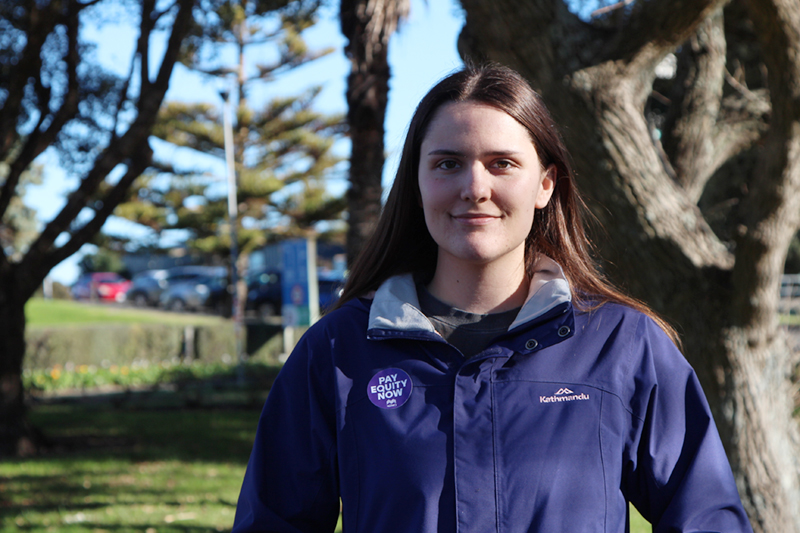 Working in an overcrowded emergency department (ED), up to 680% capacity over a week, makes staff feel overwhelmed with the pressure, Tōpūtanga Tapuhi Kaitiaki o Aotearoa NZNO says.
|
| 14 Sept |
WellSouth's Newborn Enrolment Kahu Taurima Programme a finalist at the Primary Care Awards 2026WellSouth's Newborn Enrolment Kahu Taurima Programme is a finalist at the Primary Care Awards for the HALEO Best Supplier Service, Product or Campaign category. Winners will be announced on 17 October. |
| 14 Sept |
Global Study: Nursing Shortages Require Workforce Policy Solutions, Not Recruitment Campaigns AloneWhy people choose nursing, and why they leave, comes down to the same factors. The global nursing shortage cannot be solved simply by encouraging more people to enter the profession, according to a new evidence brief. |
| 8 Sept |
Overworked, understaffed Gisborne ED staff strike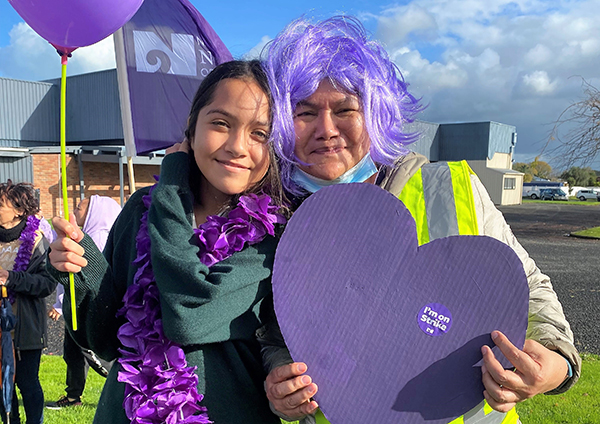 Health and safety concerns arising from unsafe staffing levels have forced nurses at Gisborne Hospital’s emergency department (ED) to go on strike.
|
| 4 Sept |
Strong growth in wāhine Māori and Pacific women’s cervical screening rates highlights success of self-testing programmeCervical screening participation has increased significantly for both wāhine Māori and Pacific women, reflecting the strong impact of self-testing, Screening Services and the dedicated efforts of health providers working alongside their communities. |
| 4 Sept |
Government must adopt Wai 2713 recommendations on disability systemThe Coalition Government must urgently adopt new recommendations from the Waitangi Tribunal which has found significant parts of the disability system prejudice tāngata whaikaha Māori (Māori with disabilities), NZNO says. |
| 31 Aug |
Employing graduate nurses will help keep them in nursing and the countryA new proposal that will require Te Whatu Ora to offer all eligible graduate nurses jobs in the public health system will help keep them in nursing and in Aotearoa New Zealand, NZNO says. |
| 26 Aug |
Health Minister’s claim Winter Plan ‘managing well’ delusionalHealth Minister Simeon Brown’s claim that hospitals are ‘managing well’ because of the Government’s Winter Plan is delusional, NZNO says. |
| 25 Aug |
Hospital data shows nursing shortages continue to put patients at riskTe Whatu Ora data released today shows patients are continuing to be put at risk by the Coalition Government’s deliberate failure to safely staff hospital wards, NZNO says. |
| 24 Aug |
Fed-up North Shore ED staff declare state of emergencyNZNO members working in the emergency department (ED) at North Shore Hospital have declared a state of emergency due to unsafe staffing levels resulting in ongoing overcrowding. |
| 19 Aug |
What happened to the winter health plan?The $25 million 2026 Winter Plan launched by Health Minister Simeon Brown in March to erase pressure on the health system has been an unmitigated disaster, Tōpūtanga Tapuhi Kaitiaki o Aotearoa NZNO says. |
| 11 Aug |
Applications open for advanced nursing education programmesHealth New Zealand is encouraging registered nurses to apply for two advanced education programmes that support nurses to further develop their clinical skills and expand access to care in communities across New Zealand. |
| 3 Aug |
Health New Zealand welcomes settlement of NZRDA collective agreementHealth New Zealand welcomes the vote by New Zealand Resident Doctors Association (NZRDA) members to settle their collective agreement. |
| 30 Jul |
Backing our frontline rural health workforceRural communities across New Zealand will benefit from three new investments that will support the rural health workforce and help more people access care closer to home, Associate Health Minister Matt Doocey says. |
| 22 Jul |
Te Whatu Ora must disclose staffing levels at time of tragic deathTe Whatu Ora must disclose whether the Waikato emergency department (ED) was short-staffed at the time a man tragically died in the waiting room, NZNO says. |
| 6 Jul |
Reflecting on IND 2026Looking back on last month’s International Nurses Day 12 May 2026 (IND 2026), the impact of this year's theme "Our Nurses. Our Future. Empowered Nurses Save Lives" continues to resonate across the world. ICN’s landmark IND 2026 report defined seven key powers of nursing and this message has been strengthened with nurses in every region celebrating, naming, and owning their powers throughout May. |
| 3 Jul |
Health New Zealand acknowledges Ombudsman statement on Wakari Ward 10AHealth NZ welcomes the independent investigation by the Ministry of Health into Ward 10A. On Wednesday the Health NZ board agreed to close Wakari Ward 10a as a forensic intellectual disability (ID) unit, with the future use of the ward yet to be determined. |
| 2 Jul |
New programme to fast track bowel cancer care and cut colonoscopy waitlistsHealth New Zealand is today launching a national initiative, designed to fast track bowel cancer care and reduce colonoscopy waitlists by up to 30 per cent. |
| 1 Jul |
Six new Co-Response Team locations announced to strengthen support for people in mental distressThe next six locations for Health New Zealand and NZ Police Co-Response Teams have been confirmed, expanding a model that helps people experiencing mental distress receive timely, wraparound support that better meets their health needs. |
| 29 Jun |
Mental health and addiction targets progress continuesHealth New Zealand continues to make important progress against its mental health and addiction targets, meeting four out of five national targets this quarter. |
| 25 Jun |
Access to care continuing to improve across a range of health indicatorsNew health data released today shows continued improvement in access to care across a range of health indicators. |
| 18 Jun |
Funding "boost" continues dangerous under-funding of aged careThe Health Minister’s funding "boost" for aged residential care continues underfunding to the sector and will continue unsafe practices and short staffing, which is putting vulnerable residents at risk, NZNO says. |
| 16 Jun |
Labour to make maternity scans freeLabour will add free maternity scans to the Medicard alongside three free doctor’s visits a year, so every pregnant woman gets the care she needs. |