

‘The section’s mission is to advance nursing practice and improve patient outcomes through rigorous research and evidence-based strategies relevant to Aotearoa, New Zealand.’

THE NZNO NURSING Research Section – now also known as Te Wāhanga Rangahau Tapuhi – began life almost 50 years ago, in 1975. It was one of NZNO’s first sections (known then as special interest groups) for professional nursing members (Litchfield, 2009).
Mission
The section’s mission is to advance nursing practice and improve patient outcomes through rigorous research and evidence-based strategies relevant to Aotearoa, New Zealand.
Membership and evolution
The Nursing Research Section has always attracted nurses interested in research, whether as active researchers themselves or as readers who wished to learn more about the research process and apply research findings to their nursing practice.
Initially, the section’s members were primarily academics and educators. While this group remains, the membership is now broader and more democratic, as research is recognised as part of every nurse’s role in caring for patients.
Aims
The section’s aims are to:
- Promote cooperation and collaboration between nurse researchers, both nationally and internationally.
- Liaise with authorities on social, health and eductional issues relevant to nursing research in Aotearoa, New Zealand.
- Facilitate links between Te Wāhanga Rangahau Tāpuhi and other NZNO colleges and sections.
- Provide a platform to bring together nurses interested in sharing knowledge and ideas to enhance evidence-based nursing practice across Aotearoa, New Zealand.
Membership growth and stability
Te Wāhanga Rangahau Tāpuhi membership has grown over the years and now remains relatively stable at around 377 members. While the goals of valuing, promoting, and encouraging research and researchers have never changed, the way these goals are met has evolved.
Honouring Te Tiriti o Waitangi and embracing change
An example of this evolution happened in 2021 when the section was honoured with a new name, Te Wāhanga Rangahau Tāpuhi, gifted by NZNO kaumātua Keelan Ransfield. The new name was developed in consultation with the kaumātua to reflect the goals of the section, and the mana of the new name was passed on to the section’s new logo. The new logo was created by design student Ying Zhou following a national public competition. It features a rito (the young shoot of the harakeke – New Zealand flax), a koru symbolising the eye of a ruru (morepork owl), and a magnifying glass in green.
Also in 2021, the section’s then-chair, Louise Chan, led a discussion on equity, kaupapa Māori research, and the section’s commitment to giving effect to Te Tiriti o Waitangi through its work. This led to the section developing a partnership with Te Poari – the committee which administers the Māori wing of NZNO – and since 2023 the section committee has included a permanent representative of Te Poari.
Recent activities and future plans
Te Wāhanga Rangahau Tapuhi’s committee comprises eight dedicated volunteers. A highlight of this year’s work was a research forum held in Tamaki Makaurau, Auckland, in early October with the theme, Hoki whakamuri, kia anga whakamua – “Look at the past to help forge the future.” This means understanding that older knowledge still has relevance and can evolve for use in the future. The hui attracted 50 participants who came to hear a wide variety of current nursing research from Aotearoa. The abstracts from many of these research projects are featured below.
In keeping with the hui theme of evolving knowledge, the committee has some fresh and exciting ideas for 2025 and beyond – further hui and mentorship, among others.
Report by Te Wāhanga Rangahau Tapuhi’s committee
Reference
Litchfield, M. (2009). To advance health care. The origins of nursing research
in New Zealand. New Zealand Nurses Organisation.
Featured abstracts from the forum
The following abstracts showcase the work of five researchers who presented their work at Te Wāhanga Rangahau Tapuhi’s recent research forum:
-
Achieving whanaungatanga-centred care in the acute mainstream hospital:
A culturally informed grounded theory study
Author: Bobbie Pene
Bobbie Pene is a part-time nurse consultant in cultural safety in practice at Health NZ, Te Whatu Ora – Counties Manukau, and a PhD candidate at the University of Auckland. Her research interests are in the relational aspects of health care, where she has explored patient and whānau experiences of care, and Māori staff experiences of working in a mainstream health-care service. Her PhD focuses on reorienting relational practice with a te ao Māori lens.
Supervisors: Assoc Prof Julia Slark, Prof Merryn Gott, Prof Terryann Clark.
Abstract
Aim: To explore relational practice in an acute mainstream hospital in New Zealand from the perspective of Māori health-care professionals and recipients of care.
Background: Relational practice is an ethic of care that is often overlooked in time-limited contexts such as acute health-care settings. Local evidence suggests a relational mode of practice is needed to better meet the needs of our Māori community.
Methods: This study used a kaupapa Māori with grounded theory design. We conducted interviews with Māori staff and recipients of care. Data were analysed using Birks and Mills’ (2023) essential grounded theory methods and a concept-mapping approach similar to the whakapapa analytic framework (Ware et al., 2018).
Findings: We identified four themes that lay the foundation for our culturally informed grounded theory: 1) whakapapa (origins), 2) tikanga mahi (work ethic), 3) tikanga manaakitanga (cultural and social responsibility), and 4) tikanga whanaungatanga (belonging and inclusion).
Implications for practice: The culturally-informed grounded theory sets out the aspirations and direction for achieving a culture of whanaungatanga in the acute mainstream hospital. This study has the potential to reorient patient care from being task-driven, to having a relational focus that prioritises the needs of individuals and their whānau.
-
Was virtual communication technology effective in increasing the knowledge and skills of health professionals as part of continuous professional development during the COVID-19 pandemic?
Author: Audrey Gandhi
Audrey Gandhi is an RN of almost 20 years’ experience, working as a surgical nurse educator for outpatients and the elective surgery centre at Counties Manukau Health.
Supervisor: Rosemary Frey was supervisor for the author’s dissertation submitted as part of a masters in nursing qualification.
Abstract
Aim: The research aim was to conduct an integrative literature review on the use of video-conferencing technology during the COVID-19 pandemic by health professionals to continue education or professional development (CPD).
Background: With the need to socially distance due to restrictions during the COVID-19 pandemic, there was a shift in how education was conducted. Most education institutes and organisations switched to online learning to continue education. Health professionals also took part in online learning as part of continuing professional development. This study aimed to identify whether virtual communication technology effectively increased health professionals’ knowledge and skills as part of continuing professional development during the pandemic.
Methods: Databases including CINAHL, ERIC and Medline OVID were searched for relevant articles. The studies were limited to the English language only and within the period between January 2019 and May 2022. Twelve articles were selected for inclusion in the study.
Results: Thematic analysis of the articles led to the following key findings: 1) participants increased their knowledge after online sessions, 2) the importance of the study design when planning online sessions, and 3) the relationship between health professionals’ online learning and patient outcomes.
Conclusions: The evidence indicated that online learning increased participants’ knowledge. However, the evidence also led to the conclusion that face-to-face teaching is required to improve skills. Incorporating the “community of inquiry” framework is also important when planning online content. With increased knowledge, there is an improvement in outcomes for health-care professionals, including job satisfaction and retention, and in patient outcomes, particularly increased quality of care.
Implications for nursing: This review revealed that online learning is not the preferred method of delivery of CPD for students, compared to face-to-face teaching, even though it has many benefits.
-
Implementing the Fundamentals of Care framework in clinical practice
Authors: Kim Monteiro, clinical lead medical devices, PHARMAC
Assoc Prof Dr Julia Slark, head of the School of Nursing, University of Auckland
Assoc Prof Dr Cathleen Aspinall, Peninsular Health and Monash University
Abstract
Introduction: Since 2017, fundamental care has been audited at the selected New Zealand regional health services provider using the Fundamentals of Care audit. The Fundamentals of Care framework underpins the Fundamentals of Care audit. Furthermore, the selected regional health services provider proposed having the Fundamentals of Care framework as the conceptual framework underpinning the nursing care delivered there.
Aim: This qualitative study explores the nurses’ perceptions of the Fundamentals of Care framework as the conceptual framework underpinning nursing practice at a New Zealand regional health services provider.
Methods: The study gathered data by interviewing a purposive sample of nurses working at the selected regional health services provider using individual semi-structured interviews and analysed the interview transcripts using Braun and Clarke’s reflexive thematic analysis. Video and poster interventions were used during the research interviews.
Findings: The 16 study participants included bedside nurses, clinical coaches, nurse educators, specialty and specialist nurses, nurse clinicians, and senior nurse leaders. Around 30 per cent of the participants self-identified as New Zealand Māori. The study found that most participants did not know or understand the framework before the intervention. The three central themes generated were a) a useful framework to learn fundamental care delivery, b) a familiar framework, c) supporting the adaptation of the framework for practice.
Conclusion: Adaptation of the Fundamentals of Care framework for use at the studied New Zealand regional health services provider will require addressing gaps in knowledge about the framework. This will involve providing information on the definition and practical application of framework concepts and addressing gaps in the framework by incorporating culture, whānau involvement and spirituality. Integrating the Fundamentals of Care framework into the regional health delivery environment requires the organisation to support the education and practice of fundamental care delivery.
-
Empowering nurses with conceptual clarity: Defining occupational distress to enhance self-assessment
Authors: Jai Chung is a PhD candidate at the University of Otago.
Chris Moir, Department of Nursing, University of Otago and Ryman Healthcare, Christchurch, New Zealand.
Jennifer Jordan, Department of Psychological Medicine, University of Otago, Christchurch, New Zealand
Abstract
Aims: Nursing research identified occupational distress as a major issue in the nursing workforce, encompassing various concepts and definitions. This integrative literature review explored how nursing research has applied conceptual definitions of occupational distress to assess conceptual clarity.
Background: Research on occupational distress in nursing mainly focused on six concepts: burnout, moral distress, compassion fatigue, moral injury, post-traumatic stress disorder and moral injury. These conditions harm nurses’ well-being and contribute to absence, leading to staffing shortages and potentially nurses leaving their careers. Undermining nursing wellness threatens the quality of care provided to patients and undermines the entire health system.
Methods: The five-stage integrative review process included problem identification, literature searches, data evaluation, analysis and presentation of findings. The author searched for appropriate literature written in English from CINAHL, PsyInfo, Scopus, ProQuest, and Web of Science databases. The search identified 433 articles. After screening and removing duplication, 68 relevant articles were included in the review, covering six different conceptual definitions of occupational distress, from 2000 to 2023.
Findings: Sixty-eight eligible articles represented key themes of occupational distress. The first finding was that the majority of articles used six different occupational distress definitions interchangeably. They also employed signs and symptoms as conceptual definition. Lastly, inconsistent applications of concepts caused challenges in identifying occupational distress accurately.
Conclusion/Implications for nursing: More conceptual consistency is needed to improve understanding of occupational distress. Clear conceptual definitions of specific types of occupational distress can aid nurses in identifying, coping with and preventing it more effectively.
-
Ōritetanga paerewa: Culturally safe communication and de-escalation practices/strategies for clinicians working with tangata whaiora Māori in acute adult mental health inpatient units
Author: Rachelle Weber
Abstract
Aims: The aim was to identify what culturally safe communication and de-escalation strategies are effective for staff working with Māori who are acutely distressed or agitated within adult mental health inpatient units.
Background: Seclusion is the process where mental health consumers who are considered high risk to others are locked in a room alone against their will. This is a traumatising process and Māori consumers are five times more likely to be secluded than non-Māori. Concerns have been raised as to whether unconscious bias and racism may play a part in this. The elimination of seclusion had been identified as a national priority; however there is very limited evidence regarding alternatives to seclusion for Māori, such as culturally safe de-escalation practices.
Methods: This was a kaupapa Māori qualitative study. Nine semi-structured interviews were undertaken with experienced Māori inpatient staff across four adult mental health units. A focus group hui was then held with seven of the original participants.
Results: Five main themes were identified: mana enhancing (personal power), whakawhanaungatanga (relationships), pono (honesty), kanohi ki te kanohi (communication) and huarahi (approaches).
Discussion: Participants felt that there was a better way to work with Māori; however they are hampered by existing attitudes, ward cultures and environments that support the use of restrictive practices.
Conclusion: This study contributes new evidence on culturally safe de-escalation strategies for Māori who are experiencing agitation or distress within inpatient mental health settings. The use of such strategies may contribute to reducing the high seclusion rates for Māori.
Daily doses – uncut news
| 23 Oct |
National’s hiring freeze puts lives at riskLast night’s warnings from doctors at Wairau Hospital that patients may die if they don’t get more staff is yet another example of the damage National’s hiring freeze has done to our health system. |
| 23 Oct |
Recognition of need to fix primary care crisis good for patientsRecognition of the need to fix the crisis in primary health care is good for patients but stops short of a much-needed overhaul of the sector, NZNO says. |
| 20 Oct |
Winners of the 2026 NZ Primary Healthcare Awards | He Tohu Mauri Ora announced Over 600 supporters of primary care gathered at the Auckland's Viaduct Events Centre on Saturday night for a glittering gala dinner for the 2026 New Zealand Primary Healthcare Awards | He Tohu Mauri Ora.
|
| 19 Oct |
Te Whatu Ora must fully staff vital Starship Children's Hospital wardsTe Whatu Ora must fully staff all wards at Starship Children's Hospital including four vital wards which are short of a total of 18 full-time nurses, NZNO says. |
| 16 Oct |
Paid placements policy will help boost nursing workforceA policy to pay nursing students a weekly allowance while they're on clinical placements will help them graduate and boost Aotearoa New Zealand's homegrown nursing workforce, NZNO says. |
| 5 Oct |
Labour's pay rise a first step, but pay equity needs a full settlementTōpūtanga Tapuhi Kaitiaki o Aotearoa NZNO has welcomed Labour's promised pay rise for care and support workers as a first step. It says care and support workers now need a full settlement of their pay equity claim and a workable pay equity system for all of its members. |
| 1 Oct |
Health NZ releases first national report on serious adverse eventsHealth New Zealand has published its first national Serious Adverse Event Report, acknowledging the serious harm experienced by patients and whānau and outlining the improvements identified and actions underway to strengthen patient safety. The report covers serious adverse events reported in Hospital and Specialist Services between 1 July and 31 December 2025. |
| 25 Sept |
380 more health care workers at the end of winter too little too lateAn announcement of 380 additional nurses, midwives and health care assistants for hospitals around the country at the end of winter is too little too late, NZNO says. |
| 23 Sept |
Auckland University research finds nurse shortages increase post-surgery deaths and complicationsNew research by Auckland University has found addressing nurse shortages in post-operative care may save 182 lives a year because short-staffed wards have higher rates of potentially preventable deaths and complications after their surgeries. |
| 21 Sept |
Whanganui Hospital ED averaged 680% capacity over a week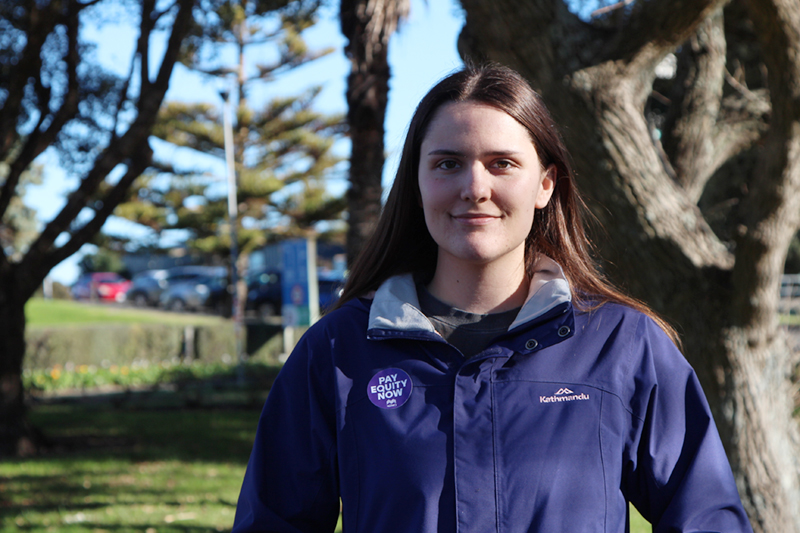 Working in an overcrowded emergency department (ED), up to 680% capacity over a week, makes staff feel overwhelmed with the pressure, Tōpūtanga Tapuhi Kaitiaki o Aotearoa NZNO says.
|
| 14 Sept |
WellSouth's Newborn Enrolment Kahu Taurima Programme a finalist at the Primary Care Awards 2026WellSouth's Newborn Enrolment Kahu Taurima Programme is a finalist at the Primary Care Awards for the HALEO Best Supplier Service, Product or Campaign category. Winners will be announced on 17 October. |
| 14 Sept |
Global Study: Nursing Shortages Require Workforce Policy Solutions, Not Recruitment Campaigns AloneWhy people choose nursing, and why they leave, comes down to the same factors. The global nursing shortage cannot be solved simply by encouraging more people to enter the profession, according to a new evidence brief. |
| 8 Sept |
Overworked, understaffed Gisborne ED staff strike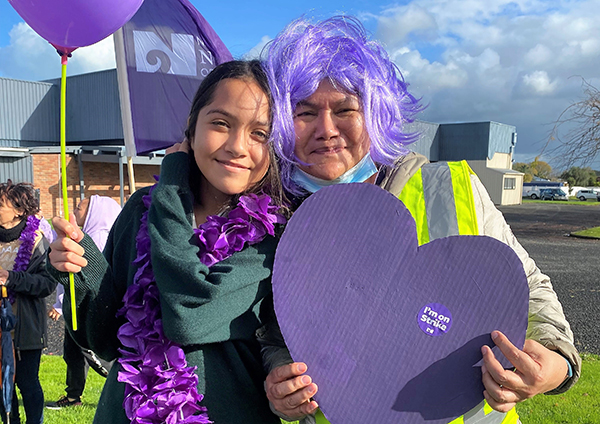 Health and safety concerns arising from unsafe staffing levels have forced nurses at Gisborne Hospital’s emergency department (ED) to go on strike.
|
| 4 Sept |
Strong growth in wāhine Māori and Pacific women’s cervical screening rates highlights success of self-testing programmeCervical screening participation has increased significantly for both wāhine Māori and Pacific women, reflecting the strong impact of self-testing, Screening Services and the dedicated efforts of health providers working alongside their communities. |
| 4 Sept |
Government must adopt Wai 2713 recommendations on disability systemThe Coalition Government must urgently adopt new recommendations from the Waitangi Tribunal which has found significant parts of the disability system prejudice tāngata whaikaha Māori (Māori with disabilities), NZNO says. |
| 31 Aug |
Employing graduate nurses will help keep them in nursing and the countryA new proposal that will require Te Whatu Ora to offer all eligible graduate nurses jobs in the public health system will help keep them in nursing and in Aotearoa New Zealand, NZNO says. |
| 26 Aug |
Health Minister’s claim Winter Plan ‘managing well’ delusionalHealth Minister Simeon Brown’s claim that hospitals are ‘managing well’ because of the Government’s Winter Plan is delusional, NZNO says. |
| 25 Aug |
Hospital data shows nursing shortages continue to put patients at riskTe Whatu Ora data released today shows patients are continuing to be put at risk by the Coalition Government’s deliberate failure to safely staff hospital wards, NZNO says. |
| 24 Aug |
Fed-up North Shore ED staff declare state of emergencyNZNO members working in the emergency department (ED) at North Shore Hospital have declared a state of emergency due to unsafe staffing levels resulting in ongoing overcrowding. |
| 19 Aug |
What happened to the winter health plan?The $25 million 2026 Winter Plan launched by Health Minister Simeon Brown in March to erase pressure on the health system has been an unmitigated disaster, Tōpūtanga Tapuhi Kaitiaki o Aotearoa NZNO says. |
| 11 Aug |
Applications open for advanced nursing education programmesHealth New Zealand is encouraging registered nurses to apply for two advanced education programmes that support nurses to further develop their clinical skills and expand access to care in communities across New Zealand. |
| 3 Aug |
Health New Zealand welcomes settlement of NZRDA collective agreementHealth New Zealand welcomes the vote by New Zealand Resident Doctors Association (NZRDA) members to settle their collective agreement. |
| 30 Jul |
Backing our frontline rural health workforceRural communities across New Zealand will benefit from three new investments that will support the rural health workforce and help more people access care closer to home, Associate Health Minister Matt Doocey says. |
| 22 Jul |
Te Whatu Ora must disclose staffing levels at time of tragic deathTe Whatu Ora must disclose whether the Waikato emergency department (ED) was short-staffed at the time a man tragically died in the waiting room, NZNO says. |
| 6 Jul |
Reflecting on IND 2026Looking back on last month’s International Nurses Day 12 May 2026 (IND 2026), the impact of this year's theme "Our Nurses. Our Future. Empowered Nurses Save Lives" continues to resonate across the world. ICN’s landmark IND 2026 report defined seven key powers of nursing and this message has been strengthened with nurses in every region celebrating, naming, and owning their powers throughout May. |
| 3 Jul |
Health New Zealand acknowledges Ombudsman statement on Wakari Ward 10AHealth NZ welcomes the independent investigation by the Ministry of Health into Ward 10A. On Wednesday the Health NZ board agreed to close Wakari Ward 10a as a forensic intellectual disability (ID) unit, with the future use of the ward yet to be determined. |
| 2 Jul |
New programme to fast track bowel cancer care and cut colonoscopy waitlistsHealth New Zealand is today launching a national initiative, designed to fast track bowel cancer care and reduce colonoscopy waitlists by up to 30 per cent. |
| 1 Jul |
Six new Co-Response Team locations announced to strengthen support for people in mental distressThe next six locations for Health New Zealand and NZ Police Co-Response Teams have been confirmed, expanding a model that helps people experiencing mental distress receive timely, wraparound support that better meets their health needs. |
| 29 Jun |
Mental health and addiction targets progress continuesHealth New Zealand continues to make important progress against its mental health and addiction targets, meeting four out of five national targets this quarter. |
| 25 Jun |
Access to care continuing to improve across a range of health indicatorsNew health data released today shows continued improvement in access to care across a range of health indicators. |
| 18 Jun |
Funding "boost" continues dangerous under-funding of aged careThe Health Minister’s funding "boost" for aged residential care continues underfunding to the sector and will continue unsafe practices and short staffing, which is putting vulnerable residents at risk, NZNO says. |
| 16 Jun |
Labour to make maternity scans freeLabour will add free maternity scans to the Medicard alongside three free doctor’s visits a year, so every pregnant woman gets the care she needs. |