


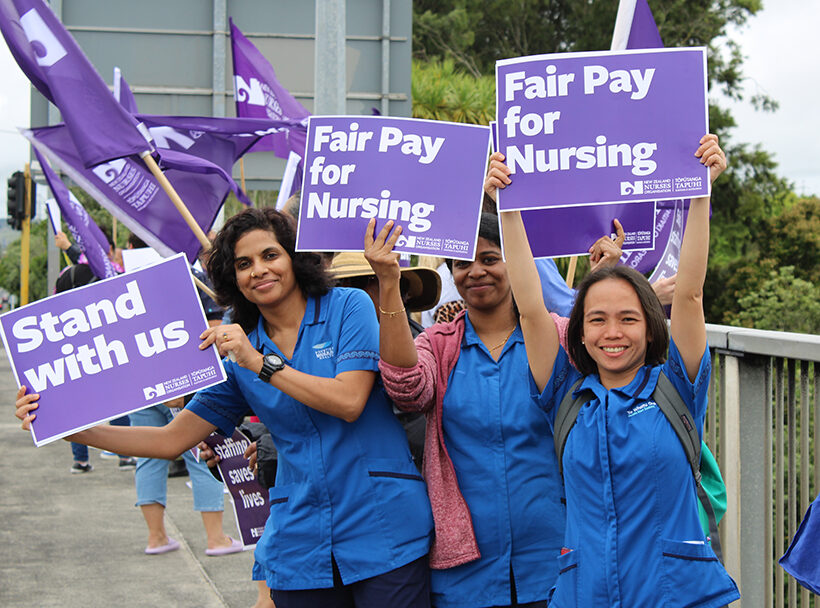
The results released on Tuesday of an NZNO survey gauging Te Whatu Ora members’ appetite to continue bargaining has given a simple response – press ahead.

Members made it clear they wanted the bargaining team to continue to fight for their claims in bargaining and continue to campaign to achieve them. This would include industrial and political action when needed.
It came ahead of the latest round of bargaining set down for Thursday and Friday this week.
Bargaining team vice-chair Rachel Thorn said they were happy to hear a strong message from members to keep going.
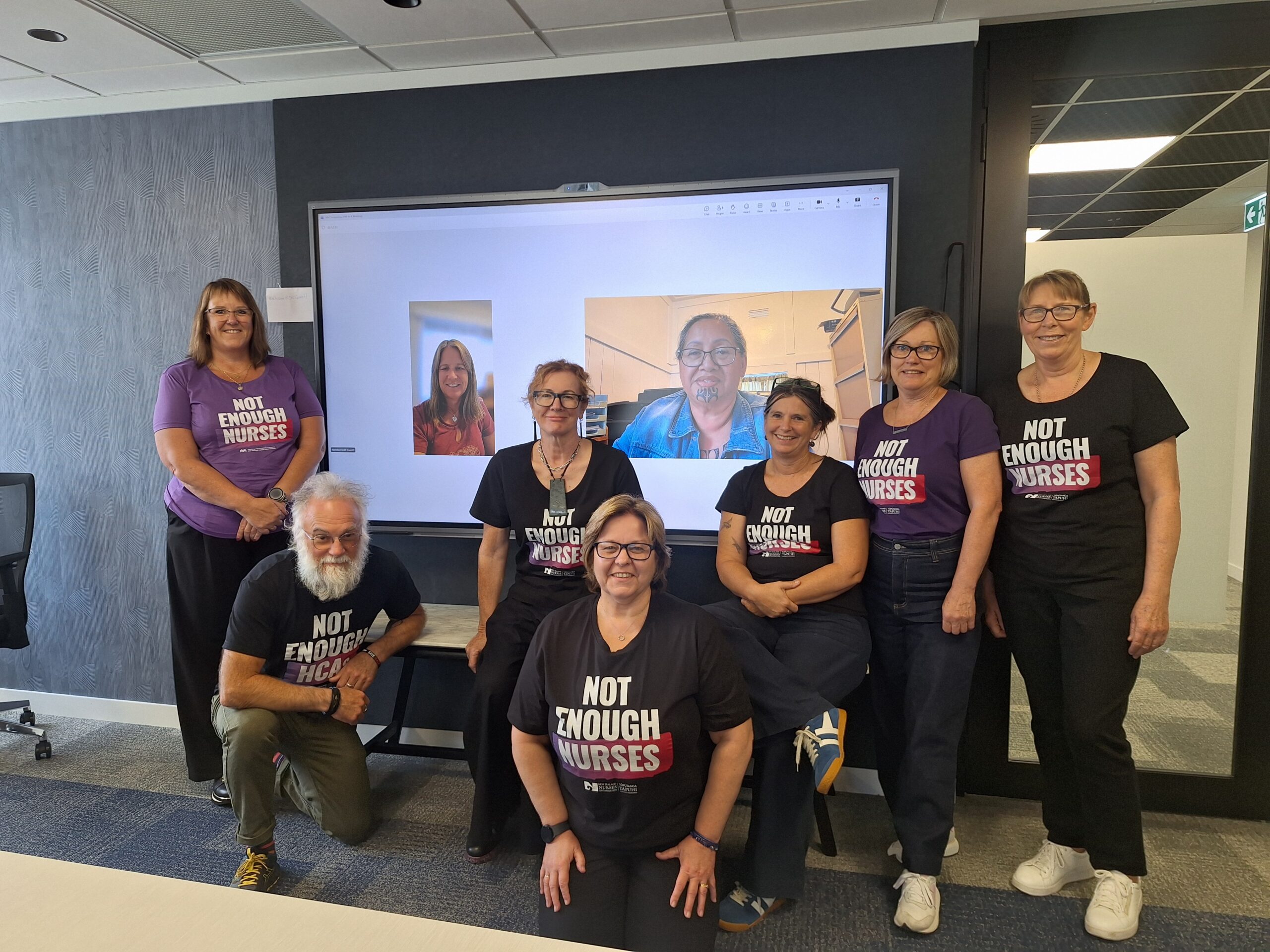
“We’ve achieved a lot over the last 16 months with all the strikes . . . but we need to make sure that we finish it.”

The 2025/26 collective bargaining kicked off in September 2024 — to date it has included 42 days of negotiations for the bargaining team.
Thorn said there were still key claims the team was hoping to get across the line — including tikanga allowances for members who provide cultural support, and a kaupapa Māori resolution process: both missing in last year’s June 30 offer, angrily rejected by members.
The team was keen to push for a pay boost for senior nurses, and better wage offer overall, said Thorn.
“We’ve achieved a lot over the last 16 months with all the strikes . . . but we need to make sure that we finish it.”
“And safe staffing obviously — that’s massive. We have to get something for safe staffing because that’s what members have been fighting for more than anything I would say.”
Thorn said the every part of the country was now feeling the impact of understaffing.
“I keep saying it, they’re deliberately understaffing to meet their budget . . . everything comes down to money . . . ‘yes we’d love to do safe staffing, but it has to meet the budget’.”
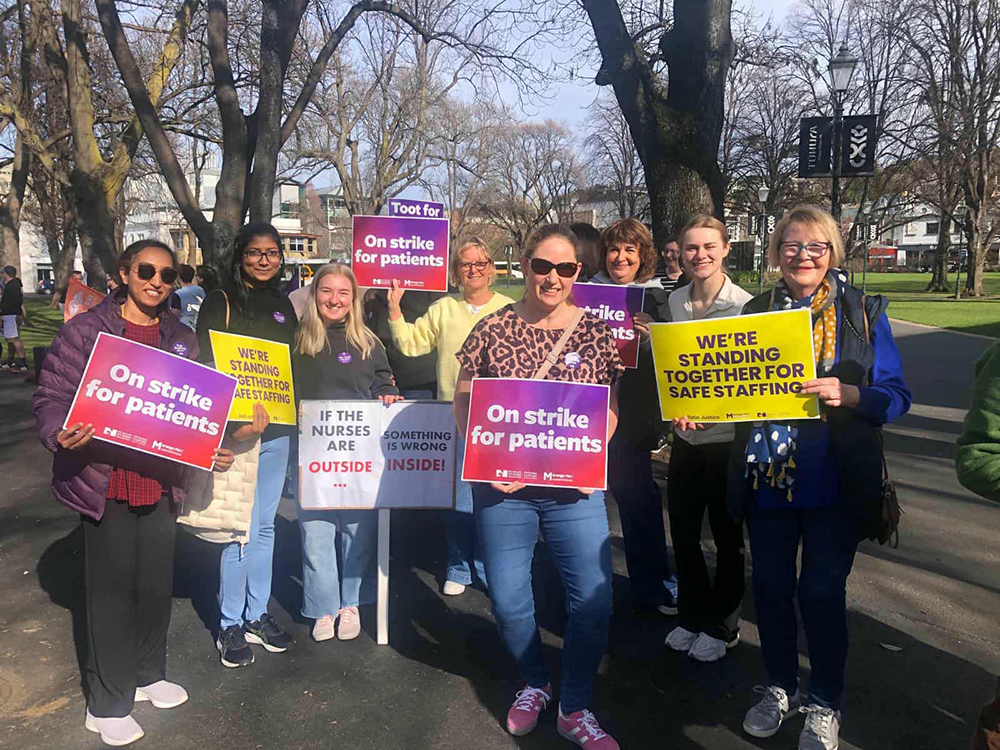
Bargaining had reached an important moment, said Thorn, “and we’re glad the members are behind us”.
“It’s been a long haul but we’re honoured to do it for the members. It’s a privilege to represent the members.”
Don’t forget primary health, aged care
Thorn said when bargaining eventually wrapped up, she hoped Te Whatu Ora members switched their election-year focus to other health sectors.
“We need to move that fight into the primary health arena. Because primary health nurses, aged-care nurses, iwi health nurses are not paid anywhere near the hospital nurses’ rate. And yet they are the single most important reason why people do or don’t come to hospital.”

Thorn said the entire point of NZNO’s Maranga Mai campaign was to bring the sectors together to fight for good healthcare in New Zealand.
“We need to start thinking of ourselves as a whole community . . . I don’t want it to just all fall off a cliff, all this enthusiasm and pressure.”
Industrial action to date has included an historic mega strike in October, as well as more novel approaches such as clothing strikes.
Core sticking points
- An enforceable commitment by Te Whatu Ora to recruit to need, as defined by safe staffing programme CCDM (care capacity demand management).
- Implementing culturally appropriate nurse-to-patient ratios within an agreed time-frame.
- Embedding Te Tiriti o Waitangi with kaupapa Māori dispute processes and tikanga allowances for members who provide cultural support.
- Full employment for new nursing graduates.
- A pay rise that reflects the high cost of living.
- A further pay rise for designated senior nurses to restore pay relativity compared to RNs.