


About the authors:Jacqui Wynne-Jones, RN, MHlthPrac, GradCertNursing (critical care), BHSc, is the clinical nurse director – surgery, anaesthesia, perioperative and critical care complex, Counties Manukau Health, Auckland, New Zealand. Margot Martin-Babin, BHSc, BCom, is an evaluation officer at Ko Awatea, Counties Manukau Health, Auckland, New Zealand. Brooke Hayward, MAppPsych, is a senior evaluation officer at Ko Awatea, Counties Manukau Health, Auckland. Luis Villa, MB, ChB, MPH, is the research and evaluation manager at Ko Awatea, Counties Manukau Health, Auckland. This article was accepted for publication in October 2020. |
ABSTRACTAim: This evaluation, undertaken in 2019, aimed to assess the impact of a patient safety leadership walk rounds (PSLWR) programme implemented in a hospital in Auckland, New Zealand, and to provide useful recommendations for programme improvement. Background: A PSLWR is a safety initiative that aims to connect leaders with the frontline services of their hospitals, raising visibility of challenges in frontline care. This PSLWR programme involved senior leaders and other departmental representatives going out to wards to conduct staff and patient interviews to capture experiences, alongside an environmental assessment. Method: This non-experimental outcome evaluation design applied a mixed-methods approach. This included an international literature search, semi-structured interviews with 25 staff, analysis of programme data, action follow-up assessments and evaluative observations of the PSLWRs. Findings: Findings showed that PSLWRs have the potential to have a significant positive impact on some areas of patient and staff experiences of care. These include promoting awareness of and accountability for patient and staff safety, building safer ward environments, promoting a positive culture of monitoring and evaluation, and increasing visibility of people and processes. PSLWRs are also a useful tool to help organisations identify and address problems persisting in their care environment, but they cannot be completed in isolation from other organisational monitoring and without dedicated leadership time. Conclusion: The overall effectiveness of a PSLWR programme very much depends on the way it is implemented. Eight recommendations are presented which should help to inform the development and implementation of similar programmes across the patient safety sphere. |
||||
KEYWORDS |
|||||
 Jacqui
 Margot
 Brooke Hayward
 Luis Villa
INTRODUCTION
SAFETY ROUNDS, EXECUTIVE WALK rounds, patient safety walk rounds and many other terms refer to the process of senior leaders from across a health organisation coming together to review the frontline to “connect senior leadership to patient safety and to inculcate safety ideas into the health care system” (Frankel et al., 2003, pg. 17). A nurse-led patient safety leadership walk round (PSLWR) programme was designed and implemented at Counties Manukau Health (CM Health) in Auckland, New Zealand. This article presents this PSLWR programme, along with findings and insights from an evaluation of the programme after five years of implementation.
BACKGROUND
The primary goal of PSLWRs is to improve patient safety culture across staff and services. “Safety culture encompasses a group’s shared values, assumptions, attitudes and patterns of behaviour regarding safety” (Singer & Tucker, 2014, p. 789). Safety culture is complex. It is typically characterised by multiple different subcultures and very much depends on local context (Hardy, 2013; Wailling et al., 2019). In health care, it is generally accepted that if staff perceive the organisation puts a high priority on safety, and that patient safety outcomes are positive, then there is a strong safety culture (Singer & Tucker, 2014).
There is clear evidence that “a strong culture of safety is necessary to deliver reliably safe care” (Singer & Tucker, 2014, pg. 789). Providing reliably safe care means there is consistent delivery of high-quality care that minimises risks of unnecessary harm. Hence, having an intervention that can potentially improve safety culture could be of immense value to the health-care sector. A number of systematic reviews indicated that reviewed PSLWRs were associated with improvements in reported patient safety culture (Girerd-Genessay & Michel, 2015; Morello et al., 2013; Sexton et al., 2014). Singer and Tucker (2014) state that “safety rounds not only offer opportunities to fix specific problems identified but also to improve safety culture more generally by building trust, understanding and accountability for safety up and down the organisational hierarchy” (p. 789). This indicates that PSLWRs have the potential to positively impact safety culture, reduce patient safety risks, and improve risk response actions at the hospital unit level (Schwendimann et al., 2013).
This PSLWR programme began in June 2014 across the clinical areas of Middlemore Hospital and its satellite sites. The PSLWRs were set up to better understand staff and patients’ experiences of care, and to increase visibility of care to senior leadership, in the wake of the Francis Report (2013), which detailed findings of extremely poor and concerning care at Mid Staffordshire Hospital in the United Kingdom (UK). Under direction from the Middlemore Hospital executive leadership team and the director of nursing, a working group of clinical nurse directors, charge nurse managers (CNMs), quality improvement specialists and a consumer representative was set up to develop and test a process for PSLWRs. The PSLWRs have been adapted in response to feedback across their years of operation.
The PSLWRs involve six to 10 staff coming together as a team of reviewers to see a pre-determined area on a set day and time. The composition of the team varies between PSLWRs; however, in principle, a mix of executive leaders, quality improvement staff, CNMs, and clinical and non-clinical managers are invited. The reviewers are briefed by the PSLWR coordinator and split into three groups. The first group interviews ward staff and the second group interviews patients. The questions were designed to understand people’s thoughts, feelings and experiences of working, or being cared for, on the ward. The third group reviews the ward environment, using a revised version of the UK National Health Service (NHS) 15 Steps Challenge tool. This tool was developed in response to a mother’s comment: “I can tell what kind of care my daughter is going to get within 15 steps of walking onto every new ward” (NHS England, 2017).
The PSLWR programme uses an appreciative inquiry framework to guide its interactions with staff and services. Appreciative inquiry focuses on a positive and strengths-based model of feedback and improvement to introduce change (Sandars & Murdoch-Eaton, 2017). Working with individuals and groups, appreciative inquiry focuses on what is already working well. Problems or weaknesses are framed into opportunities where strengths can be developed. Appreciative inquiry has been shown to increase engagement, positive attitudes and overall commitment to change (Sandars & Murdoch-Eaton). In the PSLWRs, feedback is given through this framework to ward managers and staff in a post-review huddle that occurs immediately after the walk round. In a review of existing PSLWR programmes internationally, the explicit use of an appreciative inquiry approach appears unique to this PSLWR initiative.
EVALUATION AIMS
An evaluation of this PSLWR programme was undertaken in 2019. The purpose of the evaluation was to assess the impact of PSLWRs and support and inform long-term decision-making about the programme.
The following five questions guided the evaluation:
1) Do PSLWRs contribute to improved patient and staff experiences of care?
2) Do PSLWRs contribute to increased sense of ownership among charge nurse managers (CNMs) for processes related to safety and culture?
3) To what extent do PSLWRs help reduce variation in quality processes among participating wards?
4) How have PSLWRs contributed to acceptance of a culture of monitoring and evaluation?
5) Do PSLWRs help increase visibility of care and ward management/operations for executive management?
METHODOLOGY
This non-experimental outcome evaluation design applied a mixed methods approach. Data collection methods included:
1) An international literature search to collect previous research on, and evaluation of other implementations of PSLWRs or other similar patient-safety initiatives.
2)Semi-structured interviews with 25 staff, including 10 CNMs, 10 PSLWR reviewers and 5 PSLWR coordinators and sponsors. These were face-to-face interviews, conducted onsite for approximately 45 minutes.
3) Collection and analysis of historical (2014-2018) and current (2019) PSLWR response data. This qualitative and quantitative response data was collected from patients, staff, and about the environment, during the PSLWRs themselves. The 19 wards that underwent a PSLWR in 2019 had their historical data entered.
4) CNM action follow-up (AFU) assessments. These occurred approximately one month after a PSLWR had occurred on a CNM’s ward. The action follow-up was a brief semi-structured phone interview. Any actions mentioned during the interview were verified by evaluators through checking documents, organisational logs and registers, as well as on-ward observational checks.
5) Evaluative observations of PSLWRs. An observation template was used to guide evaluators to assess the reception of the PSLWR monitoring and evaluation by the ward and its staff, alongside the way the PSLWRs were conducted. Four observations of 2019 PSLWRs were conducted.
Braun and Clarke’s (2012) six-step method for thematic analysis was used to identify, analyse and interpret qualitative data. Descriptive statistics were used for the quantitative data. Frequencies and proportions were presented at each time point, and trends were examined to see if there was any change from baseline. Chi-square and fisher exact tests were used to identify which groups differed significantly in their responses. Statistical significance of 5 percent level was used. Analysis was conducted using OpenEpi (Dean, Sullivan & Soe, 2013) and SAS version 9.4. (Cary, 2014). No wards or individuals are identified in this publication.
ETHICS
This evaluation was ethically reviewed and approved by the New Zealand Ethics Committee (NZEC Application 2019_15).
Though this research was non-interventional, particular risks concerning the vulnerability of staff participants when sharing criticisms, and the potential repercussions for their roles and relationships, were highlighted by the committee. Evaluators explained that criticisms of individual staff were excluded from evaluation findings and the participant information sheet (PIS) was modified to make clear to participants that the programme and general safety culture were the focus of the evaluation. If any clinical practice issues were raised, they had to be referred to the appropriate avenue, typically CNMs, for action and reporting. In the course of this evaluation, no issues pertaining to the clinical practice of staff requiring CNM involvement were raised.
Additionally, risks of staff being able to identify each other’s experiences were raised by the ethics committee. While the research participants were a small group, the total population of hospital staff was more than 7000. Evaluators argued that identifying roles was pertinent to evaluation discussion, and that staff anonymity could not be protected further. The risks were made clear to evaluation participants in the PIS and consent documentation.
FINDINGS
Quantities of data collected are outlined in Table 1 below. Findings from all data sources have been integrated and are presented in four sections which align with the evaluation questions.
Table 1: Quantities of data collected
| Data item | n |
|---|---|
| PSLWR 15 Steps templates | 77 |
| PSLWR staff templates | 449 |
| PSLWR patient templates | 371 |
| Action follow-ups | 14 |
| Interview | 25 |
| Observations of PSLWRs | 4 |
Patient and staff experiences of care
Staff experiences of care
PSLWR data findings show that perceived staff safety has significantly improved over the PSLWR implementation period, though with no significant differences across different staff roles (p=0.218). As illustrated in Figure 1 (below), staff were 2.56 times more likely to report feeling safe in their workplace in 2019 (81.6 percent), compared to 2014 (63.3 percent), (OR [95% CI] =2.56 [1.09, 6.03]; p=0.007). This suggests that the PSLWRs may have contributed to staff feeling safer in their workplace.
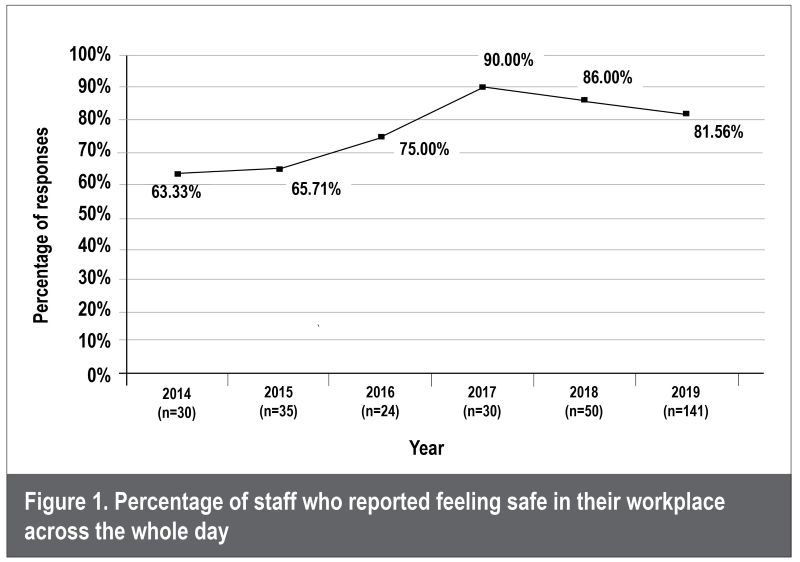
There were no other significant changes in staff experiences. Levels of staff satisfaction did not change significantly (p=0.454), ranging from a minimum of 68.0 per cent of staff feeling positive about coming into work in 2014, to a maximum of 88.5 per cent in 2015. Staff were 2.22 times more likely to feel positive about their grandmother or close relative being cared for in their area in 2019 than in 2014. However, the observed increase in positive responses is not significant (p=0.059).
Patient experiences of care
Patient responses to PSLWR interviews also showed some significant changes. Being cared for by a health-literate service that enables patients to understand their care and treatment is important for positive patient experiences. Patients were significantly more likely to report receiving an explanation that was understandable in 2019 (92.4 percent) when compared to 2014 (84.4 percent) (OR [95% CI] =2.25 [0.68, 7.42]; p=0.029):
“Every time the team sees me, they tell me what is happening with my treatment. This boosts me. I feel comfortable when they explain treatment decisions to me”. (PSLWR patient respondent)
There was no significant difference in responses by ethnicity (p=0.544).
There were also significant values that showed negative changes in patient experiences. Patients in 2019 were 44 per cent less likely (OR[95% CI] = 0.56 [0.24,1.34]; p=0.001) to report knowing who was caring for them than they were in 2014. Knowing who is caring for them is an important aspect of care and staff-patient relationships that helps patients have more positive experiences:
“I don’t know who is caring for me. I had three different people come in today”.
(PSLWR patient respondent)
A patient interviewed in 2019 was also 53 percent less likely (OR [95% CI] =0.47 [0.21, 1.06]; p=0.045) to describe a positive admission experience (40.8 percent) compared to patients interviewed in 2014 (59.4 percent). It is important to note that admission in itself is often a stressful and painful time for patients, depending on their situation and condition. However, a significant increase in the level of negative responses across both these indicators suggests there is a persisting issue.
Overall, there was variance in how PSLWRs affected staff and patient experiences of care. However, they do appear valuable in helping to identify issues that may not have previously been known about.
CNM ownership of safety and culture
Awareness and accountability
CNM interview participants emphasised that the PSLWR review process had improved their awareness of what was expected in terms of safety and quality of care at ward level. This awareness, in turn, made CNMs feel more accountable for ward-level initiatives such as posters, resource boards and patient-status boards. But CNMs feel this has not necessarily translated into actual changes in the work environment:
“I think they’ve given me a heightened awareness of the stuff that I’ve talked about around the quality side of things. I don’t think they’ve necessarily changed what I do; I think that they have perhaps maybe focused on some things that perhaps I wouldn’t have necessarily focused, so I guess that is probably the change”. (CNM)
An external perspective
CNM interview participants described how having external reviewers come into their areas helped them identify issues and improvements which might be overlooked in the mundanity of everyday ward management:
“I think it helps us. It’s a good thing. Because we’re here every day, there’s things we don’t really see that need changing, improvement; independent people from outside see things in a different light. Two of us can see exactly the same thing and have two different perspectives”. (CNM)
Some CNMs felt that having issues identified by external reviewers gave them a reason for requesting maintenance and escalating issues:
“… we could actually justify and say that we need our wall painted because the leadership … identified [it]”. (CNM)
But other CNMs favoured shifting towards a process based on peer review, indicating that sharing perspectives with fellow charge nurses and clinical staff would be more valuable to them. The appreciative inquiry approach was used in the review huddle of all four observed PSLWRs for the evaluation, and CNMs highlighted that having feedback delivered to them in this way made it easier to accept external perspectives and criticism.
Limited actionability and continuity of feedback
CNM interview participants felt the limited actionability of PSLWR recommendations restricted their ability to make positive change to their wards’ safety and culture. They felt that the PSLWRs were only a “one-off” interaction with their wards, without the continuity of long-term monitoring and support:
“It’s almost like, let’s go have a walk round, have a look, here’s your feedback and that’s it until such time”. (CNM)
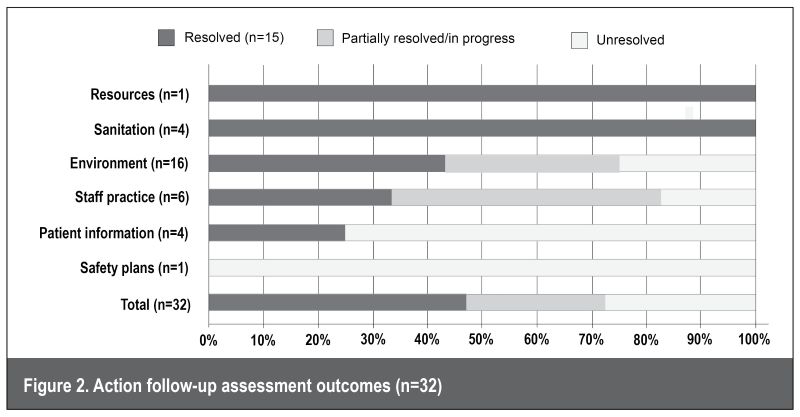
As illustrated in Figure 2 (below), of 32 improvement recommendations identified in the action follow-ups, 15 (47 percent) were fully resolved, eight (25 percent) in progress or partially resolved, and nine (28 percent) not actioned or resolved. Items were coded to aggregate common recommendations. Excluding single outcomes, sanitation (eg cleaning and having hand sanitiser available) and environment (eg repainting, fixing doors) items were the most frequently resolved. Conversely, recommendations about patient information (eg having the right information displayed and keeping patient notes secure) were the most unresolved items.
Feedback from wards about the implementation of recommendations was not always made available to the reviewers and coordinators, making it difficult to assess whether any changes had occurred because of the PSLWRs:
“I think there is not enough joining up of the observations across the organisation …There’s not an action plan with time frames and people responsible, and then a review of ‘did you manage to change things or not?’ ” (Reviewer)
Scope for merging with existing monitoring programmes was identified, to build a more comprehensive and useful picture of the quality and safety of care being provided in the organisation.
Ward quality processes
Ward quality processes help ensure safe, high-quality care is provided to patients. No specific ward quality processes or measures were provided by the programme team. Evaluators decided to use percentage of wards meeting the expectation of being safe and well-maintained as a measure of variability in ward quality processes.
A key expectation of wards is that they are safe and well-maintained. In a question introduced to the PSLWR 15 steps template in 2016, reviewers are asked to assess the ward and identify any obvious safety risks. The expectation is that no safety risks to patients or staff exist. Figure 3 (below) shows a significant (OR [95% CI] = 0.47 [0.21, 1.06]; p=0.004) decrease in the percentage of wards assessed that had an obvious safety risk identified by the PSLWR reviewers, from 87.5 percent in 2016 to 33.3 percent in 2019.
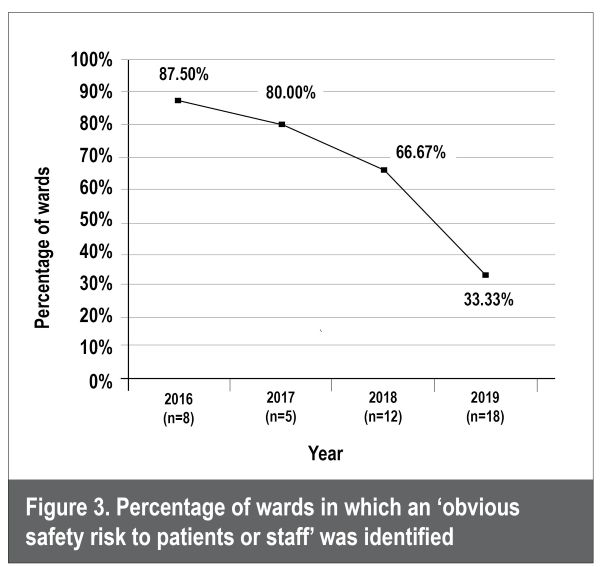
This suggests that the PSLWRs may have contributed to reducing variation in environmental safety processes across wards, helping wards become safer. However there was no significant difference in the percentage of wards that were described by reviewers as being well-maintained (p=0.844).
Though PSLWRs appear to promote better ward quality processes for environmental safety, further research into how they affect other ward quality processes is still needed.
Culture of monitoring and evaluation
Monitoring has been a positive experience
Qualitative findings suggest that overall, the monitoring and evaluation associated with the PSLWRs has been positively received. Participants from all three interview groups showed gratitude for the appreciative inquiry approach and discussed how important positively-framed feedback is. CNMs felt that having their feedback framed in such a positive manner made them feel safe, engaged, more amenable to feedback and more motivated to make changes:
“It’s a nice, safe environment to get the feedback, and how you sit in the room and the people that are giving the feedback give it in such a positive manner… they tell you what they really enjoyed, but [they] just say ‘if there was to be a slight improvement’, they choose the right words [so] that you’re quite receptive, rather than getting defensive”. (CNM)
The appreciative inquiry approach has helped initial feelings of uncertainty and fear amongst CNMs and ward staff to dissipate, and enabled the PSLWR to become a safe feedback process. Some CNMs felt the PSLWRs had made it easier to accept the monitoring associated with more extensive monitoring programmes:
“I must admit, if I’d had to do [other monitoring programme] before the walk round, I probably would’ve been unsure of what to do”. (CNM)
A widespread concern raised by interview and action follow-up participants was the authenticity of the PSLWR observations, given wards know when the PSLWR is scheduled:
“I know for a fact that my charge nurse is like ‘I’ve got walk around today, we’re busy tidying everything up, making sure it is all in the right place’. They let the staff know that they’re coming. From that perspective, it’s very staged; it’s like making sure the house is tidy because you know the visitors are coming”. (coordinator/sponsor)
CNMs felt that knowing when the PSLWRs were coming produced less feedback and improvement recommendations. All three participant interview groups preferred unannounced visits.
Retaining the positive and safe feedback process was important to participants and would need to be a key consideration in any modified or integrated version of the PSLWRs.
Organisational monitoring is burdensome
A significant point of discussion across all participants was the PSLWR’s relationship to other organisational monitoring. Participants, especially CNMs, stressed that the organisation placed a substantial burden on clinical staff and areas through monitoring:
“It is a lot sometimes … from mid last year to now we had lots of audits and lots of organisational walk rounds … it’s like, make sure that we are maintaining this, maintaining that” . (CNM)
The time burden associated with PSLWRs was reflected in the observations. Reviewers appeared to choose staff randomly, asking them first if they were free to talk for “five minutes”. However, the observed interviews were 10-15 minutes long. This included time (5-10 minutes) where some reviewers asked their own questions that were not on the PSLWR staff interview template.
CNM interview participants felt that duplication of data collection and the lack of integration across numerous monitoring initiatives meant their already limited clinical time was continuously being wasted. Though PSLWRs appear to positively contribute to a good culture of monitoring and evaluation, participant responses suggest that monitoring and evaluation would be more readily accepted if it were more efficient and effective, with clarity of purpose and no duplication of data collection across monitoring programmes.
Visibility of care and ward operations to executive management
Increased visibility across people and processes
Reviewers felt that having the opportunity to immerse themselves in the ward and clinical environments provided them with a new perspective and an understanding of the realities clinical areas are facing in the current health climate:
“… it’s really good to get back [to clinical areas] and see what’s going on, and to interact with patients and staff … [it] gives you different perspectives on what goes on in the organisation … ”. (Reviewer)
For reviewers in executive roles, hearing the thoughts and feelings of staff was of particular value. They commented that there is limited monitoring of staff satisfaction and culture across the organisation, and therefore the PSLWRs provide valuable insight into staff views.
Reviewers also highlighted how the PSLWRs supported their professional visibility as workplace leaders. This increase in professional visibility was mentioned by all the reviewers interviewed:
“… for me it is important because I get to get out and be visible as a leader”. (Reviewer)
Interacting with other staff was the primary reason stated by reviewers for their participation, and intention to continue to participate in the PSLWR programme. Reviewers described various benefits of increased professional visibility, including getting better staff engagement within their role, being recognised, and being “in touch” with their clinical areas. Charge nurse managers also indicated that they appreciated the increased visibility of leadership that PSLWRs facilitated:
“I do like the fact that we have people coming in to look at the ward that don’t usually visit the ward as well. Sometimes it’s those opportunities that you actually get to see the executive team, which is great; it keeps you in touch”. (CNM)
Leadership participation
How often executive managers actually take part in PSLWRs is a key consideration when looking at whether the walk rounds help increase the visibility of care and ward management/operations to these managers. However, as with many senior staff in health organisations, they have significant demands on their time.
Across the 75 PSLWRs examined in this study, there were 517 reviewers, with a median of seven reviewers per PSLWR. Of the 517 reviewers, 63 (12 percent) were from executive management. PSLWR data presented in Figure 4 (below) shows there were fewer PSLWRs with executive management reviewers in 2019 (53 percent of PSLWRs) compared to the first year of the programme (91 percnt of PSLWRs), (OR [95% CI] = 0.11 [0.012, 1.05]; p=0.02).
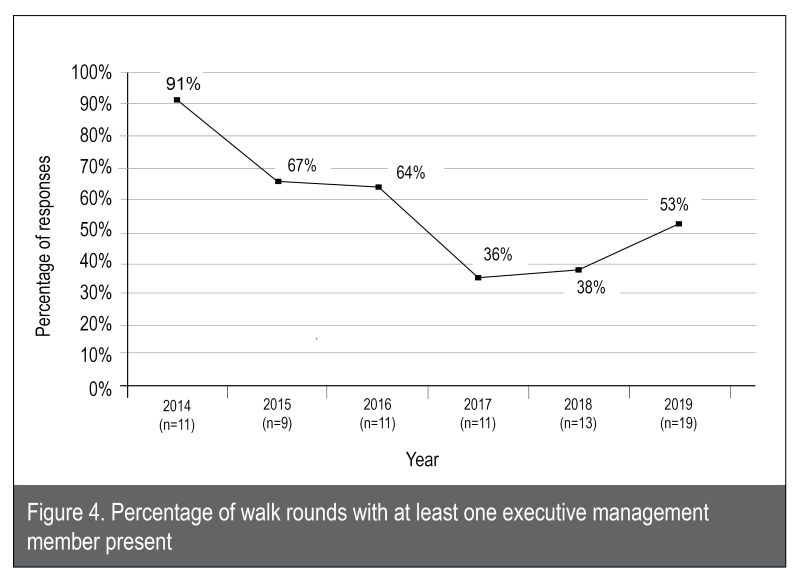
There was also a significant (OR [95% CI] = 0.238, [0.042, 1.36]; p=0.036) decrease in the number of unique executive management staff who participated in the PSLWR programme. These results account for changes in membership of reviewer teams across the five-year period. Although leaders described gaining some visibility and insights from the PSLWRs, decreasing participation likely diminishes this effect across executive management:
“I think it should continue because it’s really valuable [for] people at the front line … [but] you just get nurse educators, you get some [non-clinical staff] … but nurses need to see the managers, they need to see the CEO, they need to see the director of nursing, they need to see that somebody cared about them and came to the ward to check and talk to them.” (CNM)
Reviewers also suggested that more operational support was required to ensure long-term sustainability of the programme.
PSLWRs help make leaders more visible and provide them with better oversight of care and ward operations. However, it is crucial that the organisation ensures executive leaders have dedicated time to participate, so the right leaders experience the visibility benefits.
DISCUSSION
Established and emerging evidence, including that specifically related to PSLWRs, present theories and findings that are relevant to consider in the evaluation of this PSLWR programme.
Safety and the appreciative inquiry approach
Safety is one of the most dominant paradigms in health care. How a health-care organisation ensures the safety of its staff and patients can be challenging and complex. Safety-I and Safety-II are two alternative theories of creating safety. Safety-I considers safety purely as an absence of errors and failure. With health organisations and systems now more complex, contemporary theorists argue for a shift to Safety-II, which focuses on “creating successes rather than eliminating failures” (Smaggus, 2019, p. 667). Smaggus also argues that Safety-II builds a culture where the focus is on how clinical staff “create safe, high-quality care though adaptation, improvisation and dedication” (p. 667). The appreciative inquiry approach undertaken in this PSLWR programme aligns the programme with Safety-II theory.
As shown in the quotations in these findings, and in the literature, the appreciative inquiry approach has helped CNMs trust the organisation (McSherry et al., 2018) and increased their overall commitment to change (Sandars et al., 2017). Therefore, we argue that focusing on everyday success and achievement through the appreciative inquiry approach, in addition to exploring challenges and areas for improvement, is a step in the right direction. However, the appreciative inquiry framework has wider application to PSLWRs than just the positive language framework. It could be a valuable tool for developing solutions and implementing change in clinical areas.
Elements of the appreciative inquiry approach are also present in safety culture literature. Neto and colleagues (2017) point out that for an organisation to have positive safety culture, it must ensure that:
1) All workers take responsibility for their own safety, as well as for their colleagues, patients and family.
2) Security is prioritised over financial and operational goals.
3) Identification, reporting and resolution of security-related problems is encouraged and rewarded.
4) The organisation learns from safety incidents.
5) Resources, structure and accountability for effective maintenance of security are provided.
The PSLWRs present opportunities to deliver on items 1, 3, 4 and 5. Though there was some evidence of item 1 being implemented in this evaluation, increases in some negative patient experiences and no change in staff satisfaction suggests there is still work to be done. The appreciative inquiry approach successfully supports item 3; however, this evaluation has highlighted there is the opportunity to improve how organisational learning and accountability (items 4 and 5) is supported through the programme. Currently, it is likely that the same issues are being discretely identified and resolved in individual areas. If a PSLWR programme wants to work on the prevention of issues, then supporting organisational learning is a must (Tucker & Edmonson, 2003). Frankel and colleagues (2005) argue that implementing a system or process that supports allocation of responsibility and accountability for change, and enables monitoring of changes over time is key to effective PSLWRs. Implementing such a process in our PSLWR programme would enable collaboration on solutions and support organisational learning. However, consideration of the operational resources and support required to ensure programme sustainability is needed.
Considerations for successful PSLWRs
There are a number of factors that case studies and evaluations have highlighted as being critical to implementing successful PSLWRs. Together, Martin and colleagues (2014), Zimmerman and colleagues (2008) and Singer and Tucker (2014) give us a list of key considerations for effective PSLWRs:
1) Advanced scheduling to ensure consistent attendance in the face of competing demands.
2) High intensity of exposure to PSLWRs.
3) The willingness of frontline workers to speak up.
4) Having scripted questions provided to staff in advance to give them time to think about their answers.
5) Senior managers’ understanding and engagement with safety rounds.
6) Define a clear process and accountability for resolution of issues identified in the PSLWRs.
7) Giving areas the opportunity to communicate their actions and resolutions regarding issues raised in the PSLWRs to the conductors and wider organisation.
8) Provide easy-to-understand reporting to disseminate PSLWR findings and solutions.
Though not all these items have been raised in the evaluation findings, there are some key discussion points to be had.
Te Tiriti o Waitangi
Firstly, though it is not presented in PSLWR literature, in a New Zealand context it is pertinent that any health-care programme takes into consideration Te Tiriti o Waitangi, as outlined in the Ministry of Health’s (MoH) commitment to fulfilment (MoH, 2019). This evaluation did not identify any explicit consideration of Te Tiriti or te ao Mâori (the Mâori worldview) in the development or implementation of the PSLWRs. Collection of patient ethnicity in the most recent year of the programme (2019) provided some insights, but limited Mâori participation meant no significant conclusions could be drawn. Mâori review of the process, tools and data is necessary to ensure a programme that is dedicated to reducing inequities and meets our Crown obligations under Te Tiriti o Waitangi.
Balancing frequency and monitoring burden
Thomas et al (2005) suggest that a dose-response relationship exists between PSLWRs and safety culture; that PSLWRs “may need to be conducted more frequently, address a broader range of topics, address a larger audience during rounds, or occur for a longer duration … to have an impact on overall unit safety [culture]” (p.7). While this may be important to support follow-up and action on PSLWR recommendations, increased frequency of PSLWR visits in isolation is not an appropriate solution when staff already feel overburdened with monitoring. What needs to occur is the prioritisation and integration of multiple programmes across the patient-safety sphere to produce a coherent and effective programme that reduces the burden on clinical services, but ensures effective monitoring and evaluation of safety issues, recommendations and actions.
Implementing unannounced visits
Contrary to walk round literature, our evaluation has shown that having PSLWR and other monitoring programmes as unannounced visits may have some benefits, including offering a more realistic snapshot of the ward. This suggests that advanced scheduling may only be beneficial to reviewers. The UK National Health Service 15-Steps programme (on which the PSLWR 15 steps template is based) recommends unannounced visits (NHS, 2017). However, there needs to be consideration of how unannounced visiting could potentially impact on the burden of monitoring discussed by CNMs.
There is limited literature on unannounced visiting or auditing, particularly in a health context. A randomised control trial of announced and unannounced surveys in a hospital setting found no significant differences in each method’s effectiveness in detecting quality issues (Ehlers et al., 2017). A systematic review and exploratory study comparing unannounced and announced inspections in Dutch nursing homes (Klerks et al., 2013) stated that announced inspections are still the preferred option when assessing both the organisation and its preconditions for good care. However, unannounced visits make risks more visible and reduce the burden of monitoring for the organisation, and a combination of announced and unannounced visits is likely to provide the best overall view of care (Klerks et al.).
If there truly is no significant difference between announced and unannounced visits in their ability to identify quality issues, then other benefits should be considered. If unannounced visiting does reduce monitoring burden, unannounced visits may be the best choice. However, it remains to be seen if this is exclusively for the organisation, or also for the staff being monitored. Furthermore, research in aged residential care may not completely reflect the issues and demands of inpatient wards. Klerks and colleagues’ (2013) systematic review only identified three relevant articles, and the limited other research highlights a need for further study of the true differences between announced and unannounced visits. For now, codesigning a monitoring plan with staff, taking into consideration local context, is likely to create the best solution that works for both the organisation and its staff.
Leadership participation and team composition
Leadership attendance is also a pertinent issue in this discussion, as significant declines in leadership participation were found in this evaluation. In the hospital it investigated, the Francis Report (2013) identified an absence of systems and processes to enable leadership to be clearly aware of organisational performance against safety and quality standards. The aim of implementing PSLWRs at Middlemore Hospital was to ensure those processes were in place. Having executives actively participate in PSLWRs, demonstrating commitment to the programme and accountability for patient safety, is critical for PSLWRs to enact positive change (Singer & Tucker, 2014).
However, it should also be considered whether senior leaders are the right people to be participating if the goal of PSWLRs is to improve safety. In this evaluation, CNMs indicated they would prefer a peer-review approach. Additionally, the finding that executive leaders’ participation has decreased, but perceived staff safety has increased, suggests that the remaining middle management and peers who comprise the review team (as outlined in the background) are valuable in terms of building safety. The concept of distributed leadership suggests that leadership is associated with activities rather than roles and positions (Fitzgerald et al., 2013).The use of distributed leadership to enhance safety is well-evidenced across the literature, including in New Zealand (Horsley et al., 2019). Evaluating our organisation with a distributive leadership lens may provide insights into how to better build PSLWR review teams based on relevant activities, rather than roles and positions. But the value that CNMs described from seeing executive leaders on the frontline still needs to be considered.
CONCLUSION AND RECOMMENDATIONS
Evaluating this PSLWR programme has shown the overall effectiveness of PSLWRs very much depends on the way they are implemented. PSLWRs have the potential to have a positive impact on patient and staff experiences of care, to promote awareness and accountability for patient and staff safety, to build safer ward environments, to promote a positive culture of monitoring and evaluation, and to increase visibility of people and processes. PSLWRs are also a useful tool in helping organisations identify and address persisting problems in their care environment. However, PSLWRs cannot be completed in isolation from other organisational monitoring and evaluation, and leadership time needs to be set aside to ensure the visibility benefits are experienced by the right people. Established and emerging evidence, particularly that related to safety and preconditions for successful PSLWRs, will help inform programme development.
As a result of this study, evaluators propose the following recommendations for organisations currently implementing, or intending to implement, a PSLWR programme:
1) Ensure the PSLWR programme is sufficiently integrated with, or differentiated from, other similar programmes and initiatives.
2) Review who is relevant to be participating, using a distributive leadership lens and considering which leaders would benefit from this visibility, and commit this leadership support to the programme.
3) Develop a co-designed monitoring plan with staff that takes into consideration the local context and existing research on announced and unannounced visits.
4) Implement an appreciative inquiry approach in data collection and feedback, making sure to consider the whole of this approach and how it could be a valuable tool in working with clinical areas in developing solutions and implementing change.
5) Establish a process to record data that allows for assessment and prioritisation of issues and allocation of accountability, and implement regular follow-ups to assess actions undertaken.
6) Support the sharing of programme results to promote organisational learning.
7) Provide the programme with dedicated resources and support to ensure its sustainability.
8) Commit to Mâori review of the process, tools and data to work towards meeting equity and Te Tiriti o Waitangi obligations.
LIMITATIONS
As PSLWR forms were handwritten and typed up for analysis, legibility of forms was an issue that resulted in some responses being excluded. Also, staff and patient responses were recorded by reviewers, and then interpreted again by evaluators in the analysis. Hence, there is a greater risk that data has been misinterpreted, and it is not known what responses may have been excluded in reviewers’ initial recordings.
Existing research has highlighted that it is difficult to attribute any measured or observed change directly to PSLWRs (Morello et al, 2011; Girerd-Genessay & Michel, 2014) due to the concurrent impact of other factors and programmes. This should be considered in the findings reported from this evaluation.
Furthermore, PSLWRs have the potential to influence or be influenced by numerous factors, items and theories. Though authors have worked to try and include all relevant literature, the large scope of applicable literature and our focus on PSLWRs specifically may mean potentially relevant articles have been missed.
ACKNOWLEDGMENTS
The authors would like to recognise the owners of the Walk Rounds trademark, Alan Frankel and the Health Research and Educational Trust. They would also like to thank all those who have been involved in the PSLWRs since their initiation, including patients, staff, reviewers, and evaluation staff participants. Special thanks to Denise Kivell and Karyn Sangster for their passion and support for patient safety and nursing leadership, and to Dr Lynne Maher and Annie Fogarty for reviewing this article. Thank you also to Christin Coomarasamy (MPhil, MSc, BSc) for her statistical support and to Milly Athy-Timmins (BHSc) for completing data entry and transcription. Lastly, the authors would like to acknowledge the funding and review received from the Counties Manukau Health Tupu Fund and the New Zealand Ethics Committee.
REFERENCES
Braun, V., & Clarke, V. (2012). Thematic analysis. In H. Cooper, P. M. Camic, D. L. Long, A. T. Panter, D. Rindskopf, & K. J. Sher (Eds.), APA handbook of research methods in psychology, Vol. 2. Research designs: Quantitative, qualitative, neuropsychological, and biological (p. 57-71). American Psychological Association.
Cary, N. C. (2014). SAS Version 9.4. SAS Institute Inc.
Dean A. G., Sullivan K. M., & Soe M. M. (2013) OpenEpi: Open Source Epidemiologic Statistics for Public Health. Version 3.01.
Ehlers, L. H., Simonsen, K. B., Jensen, M. B., Rasmussen, G. S., & Olesen, A. V. (2017). Unannounced versus announced hospital surveys: a nationwide cluster-randomized controlled trial. International Journal for Quality in Health Care, 29(3), 406–411.
Fitzgerald, L., Ferlie, E., McGivern, G., & Buchanan, D. (2013). Distributed leadership patterns and service improvement: Evidence and argument from English healthcare. The Leadership Quarterly, 24(1), 227-239.
Francis, R. (2013). Report of the Mid Staffordshire NHS Foundation Trust Public Inquiry. The Stationary Office.
Frankel, A., Pratt, S., Graydon-Baker, E., Huber, C. N., Grenham, M., Console, P., O’Quinn, M., Thibault, G., & Gandhu, T. K. (2005). Patient Safety leadership Walkrounds at Partner Healthcare: learning from implementation. Joint Commission Journal on Quality & Patient Safety, 31(8), 423-37.
Frankel, A., Graydon-Baker, E., Neppl, C., Simmonds, T., Gustafson, M., Gandhi, T.K. (2003). Patient Safety Leadership Walkrounds. Joint Commission Journal on Quality & Safety, 29(1), 16-26.
Girerd-Genessay, I., & P. Michel. (2015). Faut-il mettre en place des rencontres de sécurité des soins? Revue de la littérature. Revue d’Épidémiologie et de Santé Publique, 63(5), 315-323. [Should we establish patient safety leadership walkrounds? A systematic review]
Hardy, L. (2013). How do district health boards respond to and use the serious and sentinel event report? (Master of Public Health). University of Otago.
Horsley, C., Hocking, C., Julian, K., Culverwell, P., & Zijdel, H. (2019). Team Resilience. In E. Hollnagel, R. Wears, & J. Braithwaite (Eds.), Delivering Resilient Healthcare (pp. 97-117). Routledge.
Joint Commission. (2017). New alert focuses on safety culture in health care. The Joint Commission Perspectives, 37(4), 8-13.
Klerks, M. C. J. L., Ketelaars, C. A. J., & Robben, P. B. M. (2013). Unannounced, compared with announced inspections: A systematic review and exploratory study in nursing homes. Health Policy, 111(3), 311-319.
Martin, G., Ozieranski, P., Willars, J., Charles, K., Minion, J., McKee, L., & Dixon-Woods, M. (2014). Walkrounds in practice: corrupting or enhancing a quality improvement intervention? A qualitative study. Joint Commission Journal on Quality & Patient Safety, 40(7), 303-10.
McSherry, R., Timmins, F., De Vries, J., & McSherry, W. (2018). A reflective qualitative appreciative inquiry approach to restoring compassionate care deficits at one United Kingdom health care site. Journal of Nursing Management, 26(8), 1108-1123.
Ministry of Health. (2019). Te Tiriti o Waitangi. Ministry of Health.
Morello, R. T., Lowthian, J. A., Barker, A. L., McGinnes, R., Dunt, D., & Brand, C. (2013). Strategies for improving patient safety culture in hospital: a systematic review. BMJ Quality & Safety, 22(1), 11-18.
Neto, A., Silva, M., De Medeiros, S., Barbosa, M., Salvado, P., & Santos, V. (2017). Patient Safety Culture In Health Organizations: Scoping Review. International Archives of Medicine, 10.
NHS England. (2017). The fifteen steps challenge: Quality from a patient’s perspective; an inpatient toolkit. NHS England.
Sandars, J., & Murdoch-Eaton, D. (2017). Appreciative inquiry in medical education. Medical Teacher, 39(2), 123-127.
Schwendimann, R., Milne, J., Frush, K., Ausserhofer, D., Frankel, A., & Sexton, J. B. (2013). A closer look at associations between hospital leadership Walkrounds and patient safety climate and risk reduction: a cross-sectional study. American Journal of Medical Quality, 28(5), 414-21.
Sexton, J. B., Sharek, P. J., Thomas, E. J., Gould, J. B., Nisbet, C. C., Amspoker, A. B., Kowalkowski, M. A., Schwendimann, R., & Profit, J. (2014). Exposure to Leadership Walkrounds in neonatal intensive care units is associated with a better patient safety culture and less caregiver burnout. BMJ Quality & Safety, 23(10), 814-22.
Singer, S. J. & Tucker, A. L. (2014). The evolving literature on safety Walkrounds: emerging themes and practical messages. BMJ Quality & Safety, 23(10), 789-800.
Smaggus, A. (2019). Safety-I, Safety-II and burnout: how complexity science can help clinician wellness. BMJ Quality & Safety, 28, 667-671.
Thomas, E. J., Sexton, J. B., Neilands, T. B., Frankel, A., & Helmreich, R. L. (2005). The effect of executive walk rounds on nurse safety climate attitudes: a randomised trial of clinical units. BMC Health Services Research, 5(1), 28.
Tucker, A. L., & Edmonson, A.,C. (2003). Why Hospitals Don’t Learn from Failures: Organizational and Psychological Dynamics that Inhibit System Change. California Management Review, 42(2), 55-72.
Wailling, J., Robinson, B., & Coombs, M. (2019). Surveillance, anticipation and firefighting: Perspectives of patient safety from a New Zealand case study. Journal of Nursing Management, 27(5), 939-945.
Zimmerman, R., Daniels, C., Smith, T., & Shaver, J. (2008). An Evaluation of Patient Safety Leadership Walkarounds. Healthcare Quarterly, 11(1), 16-20.
Daily doses – uncut news
| 27 Oct |
Pilot registry to trial a safer path for women’s pelvic healthHealth New Zealand has started a pilot in Christchurch today to test processes required to establish a nationwide registry for female pelvic floor procedures, including surgical mesh. |
| 23 Oct |
National’s hiring freeze puts lives at riskLast night’s warnings from doctors at Wairau Hospital that patients may die if they don’t get more staff is yet another example of the damage National’s hiring freeze has done to our health system. |
| 23 Oct |
Recognition of need to fix primary care crisis good for patientsRecognition of the need to fix the crisis in primary health care is good for patients but stops short of a much-needed overhaul of the sector, NZNO says. |
| 20 Oct |
Winners of the 2026 NZ Primary Healthcare Awards | He Tohu Mauri Ora announced Over 600 supporters of primary care gathered at the Auckland's Viaduct Events Centre on Saturday night for a glittering gala dinner for the 2026 New Zealand Primary Healthcare Awards | He Tohu Mauri Ora.
|
| 19 Oct |
Te Whatu Ora must fully staff vital Starship Children's Hospital wardsTe Whatu Ora must fully staff all wards at Starship Children's Hospital including four vital wards which are short of a total of 18 full-time nurses, NZNO says. |
| 16 Oct |
Paid placements policy will help boost nursing workforceA policy to pay nursing students a weekly allowance while they're on clinical placements will help them graduate and boost Aotearoa New Zealand's homegrown nursing workforce, NZNO says. |
| 5 Oct |
Labour's pay rise a first step, but pay equity needs a full settlementTōpūtanga Tapuhi Kaitiaki o Aotearoa NZNO has welcomed Labour's promised pay rise for care and support workers as a first step. It says care and support workers now need a full settlement of their pay equity claim and a workable pay equity system for all of its members. |
| 1 Oct |
Health NZ releases first national report on serious adverse eventsHealth New Zealand has published its first national Serious Adverse Event Report, acknowledging the serious harm experienced by patients and whānau and outlining the improvements identified and actions underway to strengthen patient safety. The report covers serious adverse events reported in Hospital and Specialist Services between 1 July and 31 December 2025. |
| 25 Sept |
380 more health care workers at the end of winter too little too lateAn announcement of 380 additional nurses, midwives and health care assistants for hospitals around the country at the end of winter is too little too late, NZNO says. |
| 23 Sept |
Auckland University research finds nurse shortages increase post-surgery deaths and complicationsNew research by Auckland University has found addressing nurse shortages in post-operative care may save 182 lives a year because short-staffed wards have higher rates of potentially preventable deaths and complications after their surgeries. |
| 21 Sept |
Whanganui Hospital ED averaged 680% capacity over a week Working in an overcrowded emergency department (ED), up to 680% capacity over a week, makes staff feel overwhelmed with the pressure, Tōpūtanga Tapuhi Kaitiaki o Aotearoa NZNO says.
|
| 14 Sept |
WellSouth's Newborn Enrolment Kahu Taurima Programme a finalist at the Primary Care Awards 2026WellSouth's Newborn Enrolment Kahu Taurima Programme is a finalist at the Primary Care Awards for the HALEO Best Supplier Service, Product or Campaign category. Winners will be announced on 17 October. |
| 14 Sept |
Global Study: Nursing Shortages Require Workforce Policy Solutions, Not Recruitment Campaigns AloneWhy people choose nursing, and why they leave, comes down to the same factors. The global nursing shortage cannot be solved simply by encouraging more people to enter the profession, according to a new evidence brief. |
| 8 Sept |
Overworked, understaffed Gisborne ED staff strike Health and safety concerns arising from unsafe staffing levels have forced nurses at Gisborne Hospital’s emergency department (ED) to go on strike.
|
| 4 Sept |
Strong growth in wāhine Māori and Pacific women’s cervical screening rates highlights success of self-testing programmeCervical screening participation has increased significantly for both wāhine Māori and Pacific women, reflecting the strong impact of self-testing, Screening Services and the dedicated efforts of health providers working alongside their communities. |
| 4 Sept |
Government must adopt Wai 2713 recommendations on disability systemThe Coalition Government must urgently adopt new recommendations from the Waitangi Tribunal which has found significant parts of the disability system prejudice tāngata whaikaha Māori (Māori with disabilities), NZNO says. |
| 31 Aug |
Employing graduate nurses will help keep them in nursing and the countryA new proposal that will require Te Whatu Ora to offer all eligible graduate nurses jobs in the public health system will help keep them in nursing and in Aotearoa New Zealand, NZNO says. |
| 26 Aug |
Health Minister’s claim Winter Plan ‘managing well’ delusionalHealth Minister Simeon Brown’s claim that hospitals are ‘managing well’ because of the Government’s Winter Plan is delusional, NZNO says. |
| 25 Aug |
Hospital data shows nursing shortages continue to put patients at riskTe Whatu Ora data released today shows patients are continuing to be put at risk by the Coalition Government’s deliberate failure to safely staff hospital wards, NZNO says. |
| 24 Aug |
Fed-up North Shore ED staff declare state of emergencyNZNO members working in the emergency department (ED) at North Shore Hospital have declared a state of emergency due to unsafe staffing levels resulting in ongoing overcrowding. |
| 19 Aug |
What happened to the winter health plan?The $25 million 2026 Winter Plan launched by Health Minister Simeon Brown in March to erase pressure on the health system has been an unmitigated disaster, Tōpūtanga Tapuhi Kaitiaki o Aotearoa NZNO says. |
| 11 Aug |
Applications open for advanced nursing education programmesHealth New Zealand is encouraging registered nurses to apply for two advanced education programmes that support nurses to further develop their clinical skills and expand access to care in communities across New Zealand. |
| 3 Aug |
Health New Zealand welcomes settlement of NZRDA collective agreementHealth New Zealand welcomes the vote by New Zealand Resident Doctors Association (NZRDA) members to settle their collective agreement. |
| 30 Jul |
Backing our frontline rural health workforceRural communities across New Zealand will benefit from three new investments that will support the rural health workforce and help more people access care closer to home, Associate Health Minister Matt Doocey says. |
| 22 Jul |
Te Whatu Ora must disclose staffing levels at time of tragic deathTe Whatu Ora must disclose whether the Waikato emergency department (ED) was short-staffed at the time a man tragically died in the waiting room, NZNO says. |
| 6 Jul |
Reflecting on IND 2026Looking back on last month’s International Nurses Day 12 May 2026 (IND 2026), the impact of this year's theme "Our Nurses. Our Future. Empowered Nurses Save Lives" continues to resonate across the world. ICN’s landmark IND 2026 report defined seven key powers of nursing and this message has been strengthened with nurses in every region celebrating, naming, and owning their powers throughout May. |
| 3 Jul |
Health New Zealand acknowledges Ombudsman statement on Wakari Ward 10AHealth NZ welcomes the independent investigation by the Ministry of Health into Ward 10A. On Wednesday the Health NZ board agreed to close Wakari Ward 10a as a forensic intellectual disability (ID) unit, with the future use of the ward yet to be determined. |
| 2 Jul |
New programme to fast track bowel cancer care and cut colonoscopy waitlistsHealth New Zealand is today launching a national initiative, designed to fast track bowel cancer care and reduce colonoscopy waitlists by up to 30 per cent. |
| 1 Jul |
Six new Co-Response Team locations announced to strengthen support for people in mental distressThe next six locations for Health New Zealand and NZ Police Co-Response Teams have been confirmed, expanding a model that helps people experiencing mental distress receive timely, wraparound support that better meets their health needs. |
| 29 Jun |
Mental health and addiction targets progress continuesHealth New Zealand continues to make important progress against its mental health and addiction targets, meeting four out of five national targets this quarter. |
| 25 Jun |
Access to care continuing to improve across a range of health indicatorsNew health data released today shows continued improvement in access to care across a range of health indicators. |
| 18 Jun |
Funding "boost" continues dangerous under-funding of aged careThe Health Minister’s funding "boost" for aged residential care continues underfunding to the sector and will continue unsafe practices and short staffing, which is putting vulnerable residents at risk, NZNO says. |
| 16 Jun |
Labour to make maternity scans freeLabour will add free maternity scans to the Medicard alongside three free doctor’s visits a year, so every pregnant woman gets the care she needs. |