


|
ABSTRACTAim: The aim of this research was to capture undergraduate nursing students’ perceptions after participating in an educational escape room. Background: Preparing students for chaotic and unpredictable health-care environments is arguably challenging. There is a need to create innovative and engaging teaching strategies that promote learning through teamwork, collaboration and critical thinking. In 2019, A New Zealand school of nursing introduced escape rooms as an educational tool in its undergraduate nursing programmes. Students solved puzzles and completed activities collaboratively in groups, to “escape” from a classroom before a set time limit was reached. Design: Survey research conducted in 2019 included a post-implementation online questionnaire consisting of five questions. The first question established which escape room the student had participated in. This was followed by three questions using a Likert scale to measure the students’ perceptions of their experience in relation to: 1) teamwork and collaboration, 2) thinking critically while under time pressure, and 3) contribution to learning. A final open-ended question inquired about their overall experience. Results: Overall, the students found the escape rooms to be an effective and innovative learning experience due to the requirement for teamwork, collaboration and thinking critically while under time pressure. Conclusion: The findings of this study are consistent with previous studies on students’ perceptions of participating in escape rooms in educational settings. The success of the implementation validates continuing use of this education innovation. |
|||
KEYWORDSescape rooms, survey research, nursing education, teamwork, collaboration, critical thinking |
||||
 Johanna Rhodes
INTRODUCTION
PREPARING STUDENTS FOR chaotic and unpredictable health-care environments is arguably difficult. There is a need for innovative, cost-effective and engaging teaching strategies that promote learning through teamwork and problem-solving (Cain, 2019; Edwards et al., 2019; Wu et al., 2018). There are a variety of teaching modalities that promote engagement, eg flipped classrooms, simulation and game-based activities (Cain). Adapting the commercial game-based activity of “escape rooms” into tertiary education is relatively new; however it offers an opportunity for large groups of students to participate in a single classroom with one educator. Educational escape rooms are designed in the same manner as commercial escape rooms, where participants solve puzzles and complete activities to successfully escape a room in a limited amount of time.
BACKGROUND
Four escape rooms were introduced into programmes at a school of nursing in New Zealand in 2019. They followed the commercial escape room design, except the puzzles and activities pertained to specific learning outcomes. Students would work collaboratively to solve puzzles and complete activities to “escape” from the classroom before they ran out of time. The escape rooms were run at different times during the academic year in single classrooms with one nursing educator. The purpose of implementing these was to provide an immersive learning environment for students that contributed to teamwork, problem solving and collaboration, while thinking critically under time pressure.
Escape room design
The four escape rooms were implemented at the school of nursing in three different programmes – the New Zealand Certificate in Study and Career Preparation, Health and Wellness; the New Zealand Diploma in Enrolled Nursing; and the Bachelor of Nursing, years one and two. (See Table 1.)
Table 1: Escape rooms and programmes
| Escape room | Programme |
|---|---|
| Maths revision | New Zealand Certificate in Study and Career Preparation, Health and Wellness |
| Introduction to direction and delegation | New Zealand Diploma in Enrolled Nursing (EN) |
| Revision for pharmacology and drug calculations | Bachelor of Nursing (BN), year one |
| Solve a puzzle — a patient journey | Bachelor of Nursing (BN), year two |
The escape rooms followed a linear approach, meaning students could not progress until they had successfully completed sequential puzzles and/or activities. In each escape room, groups of four students worked collaboratively to solve the puzzles and complete the activities. The students had 60 minutes to “escape”, by successfully solving nine puzzles/activities. These involved, but were not limited to, jigsaws, props, pictures, diagrams, crosswords, word finds, patient assessment and interventions, taped handovers, scenarios and laboratory results.
The students were advised of the escape room activity and its rules before the timetabled session via the electronic learning platform Blackboard. In the classroom, the educator verbally introduced the activity, then projected the rules onto half of a large screen in the classroom; these remained visible throughout the session. The rules provided key information on aspects including time penalties, use of hints, and use of electronic devices and the internet. Use of the internet was encouraged for two of the escape rooms (“Introduction to direction and delegation” and “Solve a puzzle – a patient journey”) and discouraged for other two which were examination revision – intended to provide students with the opportunity to collaboratively identify gaps in their knowledge to guide their individual examination preparation. A 60-minute online digital countdown timer was projected onto the other half of the large screen; this was accompanied by dramatic music, designed to increase the intensity of the classroom atmosphere, reflecting the chaotic nature of the health-care environments the students were preparing to work in.
First clue – formation of groups
The first clue was in an envelope taped under each seat in the classroom. The answer to this clue led to the students forming into groups of four. For example, in the “Revision for pharmacology and drug calculations” escape room, the first clue asked each student to complete a drug calculation. They then used this answer to find other students who had the same answer. The rationale for this method of forming groups was that it reflected the unpredictable health-care environments these students are being educated for and the importance of working with many different people. A master sheet listing the correct membership of each group was held by the educator, who confirmed for each group when they could progress to their next puzzle or activity.
Sequential learning activities
Each group worked collaboratively to decipher clues and solve the remaining eight puzzles/activities, which were of varying types and degrees of difficulty. Completion of each puzzle/activity resulted in a code number. These numbers were used to open boxes at the front of the room secured with combination locks. In these boxes, the next clue was found. Due to the number of students in two of the escape rooms, multiple boxes with identical codes were used to accommodate them.
Hints for solving clues and puzzles were available from the educator in each escape room. There was no limit to how many hints a group could ask for, but after each hint a 30-second penalty was applied – the group had to stop and wait out the penalty time before proceeding with their activity.
Each group was required to complete each puzzle/activity within the 60-minute time period. As groups “escaped”, they were able to leave the classroom, and were asked to return later for a collaborative debrief.
After the four escape rooms were completed, the perceptions of the students who took part were formally evaluated using survey research, in the form of an anonymous online questionnaire.
LITERATURE REVIEW
A scoping literature review suggested that the use of escape rooms as a teaching strategy in health-care education fosters problem-solving, problem-seeking and critical thinking, while keeping students engaged (Cain, 2019; Kinio et al., 2019; Land, 2013; Morrell & Ball, 2019). Dietrich (2018) discussed the use of escape rooms to motivate students to embrace learning. Although game-based learning is typically considered a high-quality multisensory environment, Taub et al. (2018) said the main reasons for the interest in games for learning are the motivation of players and their deep engagement while playing. While learning and play often have opposite connotations, Mitgutsch (2011) explained they share key attributes – both are challenging, time-intensive and have interactive processes that require cognitive effort and a willingness to acquire new knowledge or aptitudes.
Escape rooms are used in undergraduate health-care programmes in the medical (Kinio et al., 2019; Welton et al., 2018; Wu et al., 2018), nursing (Edwards et al., 2019; Morrell & Ball, 2019; Morrell & Eukel, 2020) and pharmacy (Cain, 2019; Eukel et al., 2017; Hermanns et al., 2017) professions. The amount of literature on their specific use in nursing education is narrow. A descriptive study by Adams et al. (2018) revealed positive results with undergraduate nursing students in terms of acquiring knowledge and teamwork. Edwards et al. (2019) concluded that an escape room implemented in a maternity clinical course for nursing students had provided students with an engaging and interactive learning activity. However, the Edwards study focuses on the planning and implementation of the escape room, and does not provide data on the perception of the students who participated. Overall, the limited literature suggested that escape rooms offered an interactive, engaging learning experience. The positivity of the reviewed literature, despite its limits, drove the decision to implement the escape rooms that are the subject of this study.
AIM
The aim of this research was to capture students’ perceptions of participating in escape rooms in undergraduate nursing programmes in a New Zealand school of nursing.
DESIGN
Survey research was the design selected for this study, in the form of a post-implementation online questionnaire. Data were collected using five questions developed by the researcher and loaded onto the electronic learning platform, Blackboard. The questionnaire was available to the students in the final four weeks of their 2019 academic year. An announcement was placed on Blackboard with an information sheet explaining the study and the date the questionnaire would open and close. Consent was implied if a student completed the questionnaire. If students did not have access to an electronic device, they could complete the questionnaire using the onsite computer suites.
The questionnaire consisted of five questions: the first, a multiple-choice question, established which escape room the student had participated in. The rationale for this question was to enable analysis specific to each escape room, before considering the data across all the escape rooms.
The next three questions used a four-point Likert scale (“strongly agree”, “agree”, “disagree”, “strongly disagree”) to measure the student’s perception of their escape room experience, asking:
- When you reflect on your escape room experience, do you agree or disagree that this experience assisted you with developing teamwork and collaboration in a time pressure environment?
- When you reflect on your escape room experience, do you agree or disagree that this experience assisted you with thinking critically while under time pressure?
- When you reflect on your escape room experience, do you agree or disagree that this experience significantly contributed to your learning?
The final question was open-ended, allowing participants to reflect on and share their opinion/s about their escape-room experience:
- When you reflect on your participation in an escape room, please share any further opinions that you have about your overall experience.
ETHICS
Ethical clearance was granted by the Southern Institute of Technology human research ethics committee.
PARTICIPANTS
All students who had participated in an escape room and were still enrolled at the institution were invited to participate in this study (n=181). A total of 84 percent (n=152) completed the questionnaire.
The only demographic data gathered for this research were that all participants were enrolled as either full-time or part-time students in an undergraduate nursing programme at one tertiary institution in New Zealand. Data on their age, gender or ethnic identification were not gathered. The rationale for this was that the aim of the study was to collect perceptions of the students to establish if the implementation of escape rooms as a teaching and learning tool had contributed to developing teamwork and collaboration and thinking critically while under time pressure. The results of this study would then enable discussion and a decision on whether to continue to use escape rooms.
Table 2: Number of students who participated in an escape room and participated in this study
| Escape room | Number of participants enrolled at the end of the 2019 academic year who had participated in an escape room | Number of students who completed the questionnaire |
|---|---|---|
| Maths revision | 22 | 12 |
| Direction and delegation | 16 | 12 |
| Pharmacology and drug calculations | 82 | 76 |
| Solve a puzzle — a patient journey | 61 | 52 |
RESULTS
The results are presented in three parts: multiple-choice question, Likert questions and open-ended question.
Multiple-choice question
This question established which escape room the student had participated in.
Likert questions
Analysis of the three questions that used a four-point Likert scale (“strongly agree”, “agree”, “disagree”, “strongly disagree”) began with summarising the results from each individual escape room using Microsoft Excel. This was to establish whether there were any differences between the responses across the four escape rooms. Figures 1-4 (below) summarise the Likert results from the four separate escape rooms.
There was strong similarity between the individual results from each escape room. Figure 5 (below) combines the Likert results of the four escape rooms.
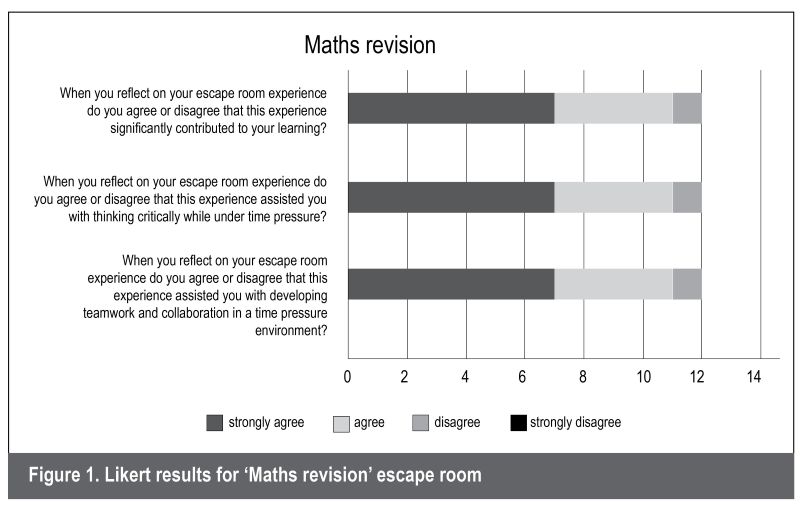
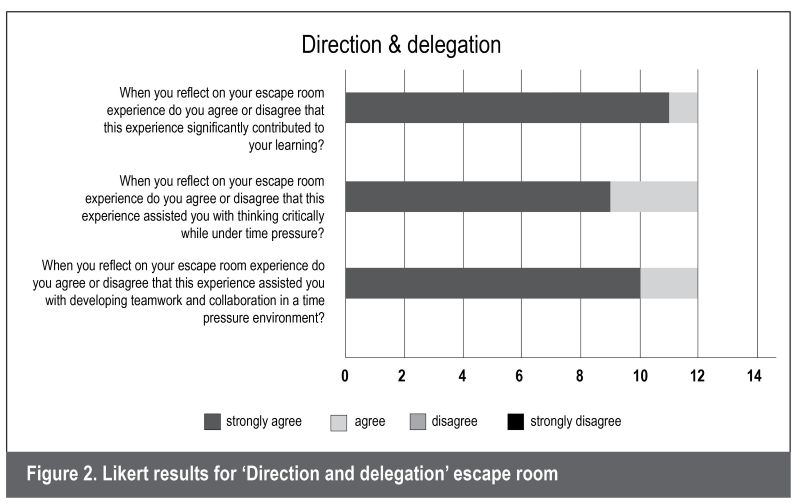
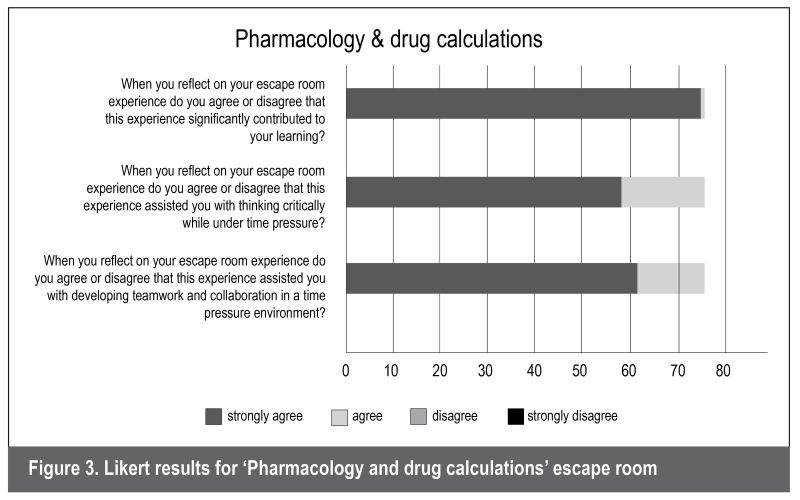
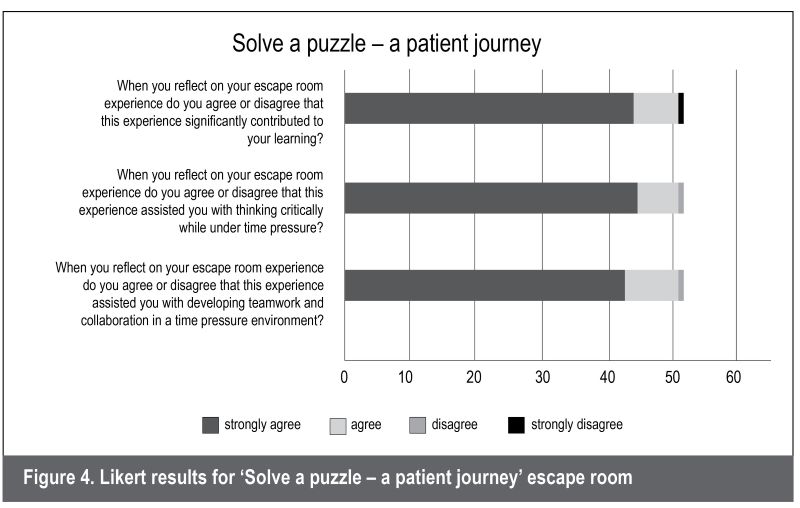
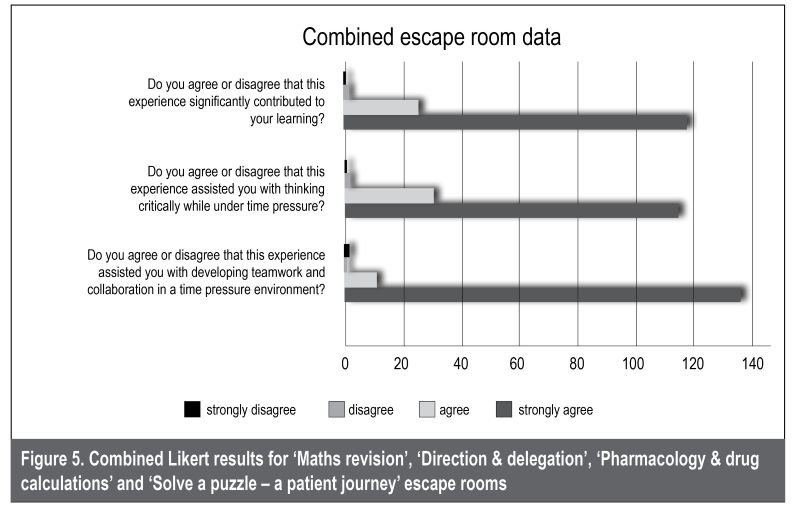
The answers to the Likert questions showed that most students who participated in an escape room considered that this experience had contributed significantly to their learning by promoting teamwork and collaboration while having to think critically under time pressure. The individual results from each escape room were consistent and generally very positive.
Two escape rooms, “Maths revision” and “Solve a puzzle – a patient journey”, generated responses that the experience had not contributed to developing teamwork and collaboration, nor thinking critically under time pressure, nor contributed to their learning. As none of these questions asked for an explanation, students’ reasons for answering “strongly disagree” or “disagree” are not known. Where students answered “strongly agree” or “agree” to the questions, their reasons are also unknown. However, the final open-ended question offered an opportunity for students to express any further opinions they had, potentially capturing a further understanding of the results from the Likert questions.
Open-ended question
The final question, which was open-ended, asked, “When you reflect on your participation in an escape room, please share any further opinions that you have about your overall experience.” The open-ended question was analysed using a thematic approach. The process of thematic analysis followed the six steps recommended by Braun and Clarke (2006, p. 19): (1) familiarisation with the data, (2) initial coding, (3) searching for themes among the initial codes, (4) reviewing and refining the themes, (5) defining and naming final major themes, and (6) writing up the themes to report the overall account of the participants.
All participants responded to this question with varying lengths of dialogue. These ranged from one sentence to multiple paragraphs. After becoming familiar with the data, doing initial coding and reviewing themes that fitted meaningfully together, the researcher used the computer-assisted data analysis software NVivo to analyse and synthesise the data. However, it is important to remember the software cannot understand text and cannot replace the analytical skills of the researcher (Houghton et al., 2017). Using NVivo to analyse the data was helpful in a number of ways. It allowed systematic processing of a large dataset by easily merging comments. Once coding was complete, it was especially helpful in allowing data comparison across different participants.
Three main themes emerged during the analysis:
- Memorable
- Challenging and frustrating
- Learning about self under pressure
The results are presented using these themes, supported by verbatim comments.
‘Memorable’
A memorable learning experience is when students can recall information and translate this understanding (Culleiton, 2010). Many of the students’ responses used words like “remembered”, “recall” and “never forget”.
“This class was a while ago, but I remember it well. I especially remembered the twist. While I was on clinical a similar experience happened. I remembered the escape room and asked my registered nurse mentor the key question that our group took ages to figure out, it made a difference for the patient, I made a difference”. (‘Solve a puzzle – a patient journey’ escape room).
This view was shared by the majority of students who had participated in the “Solve a puzzle – a patient journey” escape room. They said they remembered the session and then linked what they had learnt to experiences they had come across in clinical practice.
In the Likert questions, a small number of students expressed “strongly disagree” or “disagree” responses. The following comment may explain these, and highlights the wide variation in learning styles that students bring to classrooms.
“I recall this class for possibly all the wrong reasons as I strongly disliked it, did not work for me. I prefer to sit and listen as this is how I learn. I do not learn without lecture notes to follow”. (‘Solve a puzzle – a patient journey’ escape room).
Dominant among student responses was their recall of the escape room used specifically for revision of pharmacology and drug calculations. This may have been due to nursing students finding drug calculations challenging (Mackie & Bruce, 2016; Wright, 2012). Students also recalled the escape rooms alongside the exam that followed, which may reflect how important assessment outcomes are to them.
“I was very nervous about my exam, I always find exams challenging as I just don’t remember the stuff. However, I aced the exam as during it I remembered the escape room activities and recalled the material I needed. It was the first time ever I got a great mark”. (‘Revision for pharmacology and drug calculation’ escape room).
“Drug calculations don’t come easy to me, I need to think, and work through the formulas. I was worried that my slowness would hold up my group! But I loved the pressure, my group easily escaped. But the best news was, I have the formulas forever in my brain. During the exam I imagined I was trying to escape, I felt that pressure, and escaped with 100% pass”. (‘Revision for pharmacology and drug calculation’ escape room)
“Math[s] is the worst for me. I was extremely nervous about the exam ahead and not sure about an escape room as a way of revising, until I did it. It started to make sense and gave me a context why I needed to know the info. I passed, but for me I actually understood it”. (‘Revision for pharmacology and drug calculation escape room)
Fears about maths were expressed in comments on the “Maths revision” escape room.
“I entered this class wondering what was going to happen, I have a fear of being locked in a room, so did consider not coming. But I knew I had to know about math[s]. I will never forget this class, I understood math[s] at the end. I was not afraid, I was too busy. I have re-done the activities since this class, it remains my favourite class. And I do remember we were not actually locked in the room, but it would not have mattered, it was fantastic”. (‘Maths revision’ escape room)
“Wow, I will never forget that class. I hate math[s], can’t do math[s], don’t get math[s], and suddenly I was in a group and had to do it. But it worked, together our group worked through the math[s] problems, I even led one of them, and got it correct, that never happens to me! I don’t now love math[s], but this way of doing it was awesome, I will never forget that class and bigger miracle I nailed the exam”. (‘Maths revision’ escape room)
The viewpoint of these participants was representative of other students’ responses about the value of learning during the escape room experience, even when they had not been sure about what was going to happen during the class.
Students recognised how they had gained confidence from their experience of being successful in the “Maths revision” escape room, and later used the activities as revision tools.
‘Challenging and frustrating’
The theme “challenging and frustrating” featured in many narratives:
“I wanted to win, but some of my group did not share this, they wanted to take time with each clue, exploring it deeper. I was frustrated. But I realised that I was missing important things and leaping to wrong conclusions. I think for the first time I understood there is no I in team”. (‘Direction and delegation’ escape room)
“Challenging” and “frustrating” were often linked in students’ comments. The challenge of the unexpected twist in the “Solve a puzzle – a patient journey” escape room dominated in these comments.
“This was so challenging. It seemed obvious in the beginning. I didn’t take it seriously, but then it all changed, that one clue, it challenged me, and I was frustrated that I had missed some of the clues. Being challenged with frustration was a great experience, as when I then was on clinical placement, I think I managed this better when things kept changing for my patient”. (‘Solve a puzzle – a patient journey’ escape room)
“We are constantly told to think critically, until this experience I did not really understand what it meant, or if it actually mattered. On that day, as our group struggled to escape it clicked, critical thinking while challenging and frustrating does matter”. (‘Solve a puzzle – a patient journey’ escape room)
The following comment may go some way to explaining why a small number of students expressed either “strongly disagree” or “disagree” responses in the Likert questions. It highlights the importance of continuing to recognise the wide variety of learning styles students bring to classrooms.
“I wanted to escape long before we did, I was not learning as my frustration with my group dominated my experience. Not having lecture notes to guide, was terrible”. (‘Solve a puzzle – a patient journey’ escape room)
‘Learning about self under pressure’
Insight into self was a vivid theme in the students’ responses:
“I felt pressure when I walked in the room, I don’t like feeling edgy as it makes me unbalanced. But I had a wonderful person in my group who was very calming, and led us all fantastically, I felt supported. When we escaped, I reflected and realised that being under pressure does not have to be stressful”. (‘Solve a puzzle – a patient journey’ escape room)
“I know I can be quite pushy, and dominate in group situations, add pressure to this and perhaps I am worse. I like to lead, so did in this case, but for once I listened, for some reason I realised I could not do this alone. Later I thought about this and concurred that I must consciously change my behaviour in pressure situations. A few months later when I was in a clinical setting, I was placed under immense pressure, I felt my self act up, but stopped myself and remembered. It was remarkable, the situation changed. I don’t remember the specific content of the escape room, but I passed the exam, so it worked. But beyond that I learnt about me”. (‘Revision for pharmacology and drug calculation’ escape room)
“I did not think I react badly when under stress, how wrong. I wanted the music to stop, I wanted space to think. I made good decisions but realise I could make bad decisions easily when pressured”. (‘Direction and delegation’ escape room)
The following comment adds to previously mentioned possible explanations for the small number of students who expressed “strongly disagree” or “disagree” responses to the Likert questions:
“I don’t feel pressure in lectures, I like to listen rather than do. I wonder now how I will cope in pressured clinical situations as I don’t think I have experienced these yet, it has made me think how I rely on lecture notes for information”. (‘Solve a puzzle – a patient journey’ escape room)
Looking at the results of the Likert questions and the open-ended question, the characteristic that all the escape rooms had in common was that students were involved in the challenge, with a common goal of wanting to escape before the time ran out. The escape rooms required students to make choices which affected the outcome. The results suggest that the escape games created memorable learning experiences by connecting the puzzles/activities in a meaningful way. The nursing school’s implementation of escape rooms was intended to provide an opportunity for students to work in a chaotic and unpredictable environment that inspired them to seek more knowledge collaboratively in order to escape. These experiences helped them reflect on how the learning connected to their own lives and clinical experiences, arguably helping them develop motivation to further learn and explore.
The escape rooms offered a non-traditional learning opportunity that fostered constructive interactions, leading to observations of one’s own and others’ unique strengths and limitations – not unlike working in a health-care setting. The results show that students recognised that successful completion of the puzzles/activities in a group required particular abilities and skills in terms of communication, interpersonal relations and transactions with each other. Overall, based on the results from this study, the students found that participating in the escape rooms was an effective and innovative experience that contributed to their learning by promoting teamwork and collaboration, while forcing them to think critically under time pressure. The additional comments from the open-ended question revealed how the students had applied intangible proficiencies and collective problem-solving in a high-pressure situation. These qualities were likely to benefit them in clinical practice, as the escape-room concept was designed to reflect what they could encounter in real-life practice.
DISCUSSION
The results of this study are consistent with previous evaluations of escape rooms in educational settings. Morrell and Eukel (2020) conducted a non-experimental mixed-methods pilot study using concurrent triangulation, with assessment administered electronically immediately before and after participation in escape rooms. Their study concluded that an escape room, as a teaching and learning method, had enabled students to actively engage in recall and application of cardiovascular critical care content. The escape room immersed students in learning while providing them with immediate feedback. This finding highlights a connection between knowledge acquisition and the development of practice-ready skills such as critical thinking, communication and collaboration. Morrell and Eukel’s results are reflected in the results of this study, providing further evidence of escape rooms contributing significantly to students’ learning while developing teamwork and collaboration.
A longitudinal, prospective observational study conducted by Welton et al. (2018) concluded 89 percent of participants had increased their awareness of patient safety, following simulated patient rooms with manikins set up with five patient safety problems. Their results found that 100 percent of the participants considered the escape room had been valuable for team-building and wanted this form of teaching to be repeated for future topics. The results of the Welton et al. study also support significant findings in this study with similar strong reference to teamwork and collaboration across the results of the Likert and open-ended questions.
A systematic review of escape rooms for learning conducted by Fotaris and Mastoras (2019) reviewed 68 studies, with 20 concerning health and welfare. Their overall conclusions were there were major advantages in introducing escape rooms as a method of learning and teaching to promote teamwork and collaboration. Fotaris and Mastoras also found escape rooms reinforced and strengthened social relationships. This finding connects with the theme identified in this research, “learning about self under pressure”. Improvement of analytical skills was highlighted in Fotaris and Mastoras’ systematic review, providing an example of critical thinking. Again, this was reflected in this study, with a high percentage of students agreeing that participating in an escape room had helped them think critically while under time pressure.
The “challenging and frustrating” theme identified in this research is not specifically visible in the literature reviewed. However the literature does refer to challenging puzzles and activities. The findings of this research confirm that participating in an escape room is a challenging experience, and participants’ perception of the level of challenge particular types of puzzles and activities present to them are an important consideration. The effectiveness of using escape rooms in this New Zealand nursing school, as shown in this study, supports their continued use by the school in future academic years. The positive results of this study may also encourage other nursing schools to consider using escape rooms as an educational tool.
LIMITATIONS
This study has four limitations. Firstly, it provides results of the use of escape rooms in only one school of nursing. The results cannot be generalised to all other nursing schools. Secondly, no data was gathered on the gender, age or cultural identity of the participants. While this would be available via the institution’s student management system, the researcher felt this was not necessary for the aims of this study, but suggests this could be relevant in future research on this topic. Thirdly, this research was conducted at the end of the academic year and for some students there was a significant time gap between their escape-room experience and the collection of the research data. It is not known if the responses would have been different had the data been collected directly after their experience. Finally, reference has been made to the use of escape rooms as a learning and teaching method to help prepare students for chaotic and unpredictable health-care environments. However, the findings of this study may not be generalisable to the clinical environment.
CONCLUSION
This research concluded that the implementation of escape rooms as a learning and teaching method contributed to positive experiences for the students. These positive experiences relate to developing teamwork and collaboration and thinking critically while under time pressure. Despite the limitations of the study, this conclusion validates continuing to use this learning and teaching method, with further opportunities for research and evaluation.
ACKNOWLEDGMENTS
The author wishes to acknowledge the generosity of participants for their time and contributions.
REFERENCES
Adams, V., Burger, S., Crawford, K., & Setter, R. (2018). Can you escape? Creating an escape room to facilitate active learning. Journal for Nurses in Professional Development, 34(2), E1-E5.
Braun, V., & Clarke, V. (2006). Using thematic analysis in psychology. Qualitative Research in Psychology, 3(2), 77-101.
Cain, J. (2019). Exploratory implementation of a blended format escape room in a large enrollment pharmacy management class. Currents in Pharmacy Teaching and Learning, 11, 44-50.
Culleiton, A. L. (2010). Preceptor pointers: Try these educational techniques to create a current, memorable learning experience for new nurses and managers. Nursing Management, 41(11), 40.
Dietrich, N. (2018). Escape classroom: The Leblanc process – An educational “escape game”. Journal of Chemical Education, 95(6), 996-999. https://doi.org/10.1021/acs.jchemed. 7b00690
Edwards, T., Boothby, J., & Succheralli, L. (2019). Escape room: Using an innovative teaching strategy for nursing students enrolled in a maternity clinical course. Teaching and Learning in Nursing, 14, 251-253.
Eukel, H., Frenzel, J., & Cernusca, D. (2017). Educational gaming for pharmacy students – design and evaluation of a diabetes-themed escape room. American Journal of Pharmaceutical Education, 8(7), 1-5.
Fotaris, P., & Mastoras, T. (2019). Escape Rooms for Learning: A Systematic Review. European Conference on Games Based Learning, 235-243.
Hermanns, M., Deal, B., Campbell, A., Hillhouse, S., Opella, J., Faigle, C., & Campbell, R. (2017). Using an escape room toolbox approach to enhance pharmacology education. Journal of Nursing Education and Practice, 8(4), 89-95.
Houghton, C., Murphy, K., Meehan, B., Thomas, J., Brooker, D., & Casey, D. (2017). From screening to synthesis: Using nvivo to enhance transparency in qualitative evidence synthesis. Journal of Clinical Nursing, 26(5-6), 873-881.
Kinio, A., Dufresne, L., Brandys, T., & Jetty, P. (2019). Break out of the classroom: The use of Escape Rooms as an alternative teaching strategy in surgical education. Journal of Surgical Education, 76(1), 134-139.
Land, M. H. (2013). Full STEAM ahead: The benefits of integrating the arts into STEM. Procedia Computer Science, 20, 547-552.
Mackie, J., & Bruce, C. (2016). Increasing nursing students’ understanding and accuracy with medical dose calculations: A collaborative approach. Nurse Education Today, 40, 146-153.
Mitgutsch, K. (2011). Playful learning experiences: Meaningful learning patterns in players’ biographies. International Journal of Gaming and Computer-Mediated Simulations (IJGCMS), 3(3), 54-68.
Morrell, B., & Ball, H. (2019). Can you escape nursing school?: Educational escape room in nursing education. Nursing Education Perspectives. Advance online publication.
Morrell, B., & Eukel, H. (2020). Escape the generational gap: A cardiovascular Escape Room for nursing education. The Journal of Nursing Education, 59(2), 111-115.
Taub, M., Azevedo, R., Bradbury, A., Millar, G., & Lester, J. (2018). Using sequence mining to reveal the efficiency in scientific reasoning during STEM learning with a game-based learning environment. Learning and Instruction, 54, 93-103.
Welton, C., Peterson, E., Styling, G., Milijasevic, N., & Sia, S. (2018). You can escape, but did you learn? Using Escape Rooms to measure knowledge and increase awareness. Canadian Journal of Respiratory Therapy, 54(2), 51.
Wright, K. (2012). Student nurses’ perceptions of how they learn drug calculation skills. Nurse Education Today, 32(6), 721-726.
Wu, C., Wagenschutz, H., & Hein, J. (2018). Promoting leadership and teamwork development through Escape Rooms. Medical Education, 52(5), 561-562.
Daily doses – uncut news
| 5 Oct |
Labour's pay rise a first step, but pay equity needs a full settlementTōpūtanga Tapuhi Kaitiaki o Aotearoa NZNO has welcomed Labour's promised pay rise for care and support workers as a first step. It says care and support workers now need a full settlement of their pay equity claim and a workable pay equity system for all of its members. |
| 1 Oct |
Health NZ releases first national report on serious adverse eventsHealth New Zealand has published its first national Serious Adverse Event Report, acknowledging the serious harm experienced by patients and whānau and outlining the improvements identified and actions underway to strengthen patient safety. The report covers serious adverse events reported in Hospital and Specialist Services between 1 July and 31 December 2025. |
| 25 Sept |
380 more health care workers at the end of winter too little too lateAn announcement of 380 additional nurses, midwives and health care assistants for hospitals around the country at the end of winter is too little too late, NZNO says. |
| 23 Sept |
Auckland University research finds nurse shortages increase post-surgery deaths and complicationsNew research by Auckland University has found addressing nurse shortages in post-operative care may save 182 lives a year because short-staffed wards have higher rates of potentially preventable deaths and complications after their surgeries. |
| 21 Sept |
Whanganui Hospital ED averaged 680% capacity over a week Working in an overcrowded emergency department (ED), up to 680% capacity over a week, makes staff feel overwhelmed with the pressure, Tōpūtanga Tapuhi Kaitiaki o Aotearoa NZNO says.
|
| 14 Sept |
WellSouth's Newborn Enrolment Kahu Taurima Programme a finalist at the Primary Care Awards 2026WellSouth's Newborn Enrolment Kahu Taurima Programme is a finalist at the Primary Care Awards for the HALEO Best Supplier Service, Product or Campaign category. Winners will be announced on 17 October. |
| 14 Sept |
Global Study: Nursing Shortages Require Workforce Policy Solutions, Not Recruitment Campaigns AloneWhy people choose nursing, and why they leave, comes down to the same factors. The global nursing shortage cannot be solved simply by encouraging more people to enter the profession, according to a new evidence brief. |
| 8 Sept |
Overworked, understaffed Gisborne ED staff strike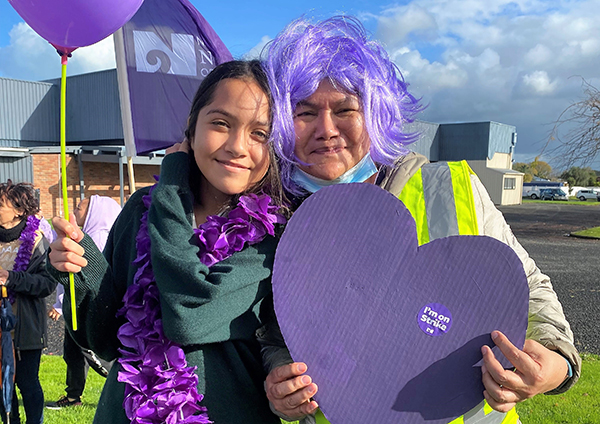 Health and safety concerns arising from unsafe staffing levels have forced nurses at Gisborne Hospital’s emergency department (ED) to go on strike.
|
| 4 Sept |
Strong growth in wāhine Māori and Pacific women’s cervical screening rates highlights success of self-testing programmeCervical screening participation has increased significantly for both wāhine Māori and Pacific women, reflecting the strong impact of self-testing, Screening Services and the dedicated efforts of health providers working alongside their communities. |
| 4 Sept |
Government must adopt Wai 2713 recommendations on disability systemThe Coalition Government must urgently adopt new recommendations from the Waitangi Tribunal which has found significant parts of the disability system prejudice tāngata whaikaha Māori (Māori with disabilities), NZNO says. |
| 31 Aug |
Employing graduate nurses will help keep them in nursing and the countryA new proposal that will require Te Whatu Ora to offer all eligible graduate nurses jobs in the public health system will help keep them in nursing and in Aotearoa New Zealand, NZNO says. |
| 26 Aug |
Health Minister’s claim Winter Plan ‘managing well’ delusionalHealth Minister Simeon Brown’s claim that hospitals are ‘managing well’ because of the Government’s Winter Plan is delusional, NZNO says. |
| 25 Aug |
Hospital data shows nursing shortages continue to put patients at riskTe Whatu Ora data released today shows patients are continuing to be put at risk by the Coalition Government’s deliberate failure to safely staff hospital wards, NZNO says. |
| 24 Aug |
Fed-up North Shore ED staff declare state of emergencyNZNO members working in the emergency department (ED) at North Shore Hospital have declared a state of emergency due to unsafe staffing levels resulting in ongoing overcrowding. |
| 19 Aug |
What happened to the winter health plan?The $25 million 2026 Winter Plan launched by Health Minister Simeon Brown in March to erase pressure on the health system has been an unmitigated disaster, Tōpūtanga Tapuhi Kaitiaki o Aotearoa NZNO says. |
| 11 Aug |
Applications open for advanced nursing education programmesHealth New Zealand is encouraging registered nurses to apply for two advanced education programmes that support nurses to further develop their clinical skills and expand access to care in communities across New Zealand. |
| 3 Aug |
Health New Zealand welcomes settlement of NZRDA collective agreementHealth New Zealand welcomes the vote by New Zealand Resident Doctors Association (NZRDA) members to settle their collective agreement. |
| 30 Jul |
Backing our frontline rural health workforceRural communities across New Zealand will benefit from three new investments that will support the rural health workforce and help more people access care closer to home, Associate Health Minister Matt Doocey says. |
| 22 Jul |
Te Whatu Ora must disclose staffing levels at time of tragic deathTe Whatu Ora must disclose whether the Waikato emergency department (ED) was short-staffed at the time a man tragically died in the waiting room, NZNO says. |
| 6 Jul |
Reflecting on IND 2026Looking back on last month’s International Nurses Day 12 May 2026 (IND 2026), the impact of this year's theme "Our Nurses. Our Future. Empowered Nurses Save Lives" continues to resonate across the world. ICN’s landmark IND 2026 report defined seven key powers of nursing and this message has been strengthened with nurses in every region celebrating, naming, and owning their powers throughout May. |
| 3 Jul |
Health New Zealand acknowledges Ombudsman statement on Wakari Ward 10AHealth NZ welcomes the independent investigation by the Ministry of Health into Ward 10A. On Wednesday the Health NZ board agreed to close Wakari Ward 10a as a forensic intellectual disability (ID) unit, with the future use of the ward yet to be determined. |
| 2 Jul |
New programme to fast track bowel cancer care and cut colonoscopy waitlistsHealth New Zealand is today launching a national initiative, designed to fast track bowel cancer care and reduce colonoscopy waitlists by up to 30 per cent. |
| 1 Jul |
Six new Co-Response Team locations announced to strengthen support for people in mental distressThe next six locations for Health New Zealand and NZ Police Co-Response Teams have been confirmed, expanding a model that helps people experiencing mental distress receive timely, wraparound support that better meets their health needs. |
| 29 Jun |
Mental health and addiction targets progress continuesHealth New Zealand continues to make important progress against its mental health and addiction targets, meeting four out of five national targets this quarter. |
| 25 Jun |
Access to care continuing to improve across a range of health indicatorsNew health data released today shows continued improvement in access to care across a range of health indicators. |
| 18 Jun |
Funding "boost" continues dangerous under-funding of aged careThe Health Minister’s funding "boost" for aged residential care continues underfunding to the sector and will continue unsafe practices and short staffing, which is putting vulnerable residents at risk, NZNO says. |
| 16 Jun |
Labour to make maternity scans freeLabour will add free maternity scans to the Medicard alongside three free doctor’s visits a year, so every pregnant woman gets the care she needs. |