


About the authors:Isabel Jamieson, RN, BN, MNurs(Melb), PhD, CertAT, is a principal lecturer – nursing, at Ara Institute of Canterbury, and a senior lecturer in nursing at the University of Canterbury, Thomas Harding, RN, PhD, is a senior lecturer in the School of Health Sciences, at the University of Canterbury, This article was accepted for publication in May 2019. |
ABSTRACTAim: The aim of this study was to understand the circumstances surrounding the establishment of New Zealand’s first graduate-entry registered nursing programme. Background: Since the late 1990s, the single point of entry to registered nurse (RN) education, as stipulated by the regulator, the Nursing Council of New Zealand, has been via a three-year degree programme. In 2014, Christchurch Polytechnic Institute of Technology (CPIT), (now known as the Ara Institute of Canterbury [Ara]), and the University of Canterbury (UC), in Christchurch, New Methods: A qualitative, descriptive, case-study approach was used. Purposive sampling was used to select key stakeholders involved in the establishment of the graduate-entry programme. Findings: The establishment of this programme was complex and challenging, given that no prototype existed in New Zealand. Stakeholders envisioned such a programme as enhancing and growing the profession, due to the numbers and diversity of the graduates. Many foresaw this programme as having the potential to support accelerated practice for graduates seeking promotion. Conclusion: The complexity of developing a programme across two academic institutions and the health service, is evident in the opposing reactions of university and polytechnic staff to the proposal. However, historical collaboration between Ara and the health service appears to have resulted in a high level |
||
KEYWORDS |
|||

BACKGROUND: The history of nursing education in New Zealand
THE PROFESSIONAL STANDING OF nursing in New Zealand was recognised with the passing of the Nurses Registration Act 1901 (Tennant, 1993). The passing of this act also marked the beginning of formal education for nurses, who were to be trained in hospital-based programmes via an apprenticeship system (Jamieson, 2012; Papps, 2002). Schools of nursing were affiliated with public hospitals, where work-based training was undertaken. Students graduated with a hospital-based certificate and became registered nurses (RNs) upon passing the Nursing Council of New Zealand’s state exam. The medical profession oversaw nursing education by developing, administrating and marking the state exam (French, 2001). The benefits of this were threefold: 1) student nurses were exposed to “hands-on” nursing work, 2) employers were guaranteed a steady supply of inexpensive labour, and 3) newly-registered nurses were considered work-ready. However, because the theory taught to students in class did not always match up with the practical work they were doing in clinical placements, the links between theory and practice were not always evident (Ministry of Health, 1998).
From World War II on, health-care delivery changed (Gage & Hornblow, 2007). The health-care industry became one of New Zealand’s largest employers and improvements in medicine, assisted by new technologies, created new medical specialties and sub-specialties. The changing environment of health care also demanded the delivery of more advanced nursing care (Jamieson, 2012). Following the publication of The Carpenter Report (Carpenter, 1971), the transfer began of nursing education from its traditional hospital-based environment, under the control of medicine, to tertiary-based institutions led by nurses (Jamieson, 2012). The first polytechnic courses for New Zealand nurses opened in 1973 in Christchurch and Wellington, followed by Nelson in 1974 and Auckland in 1975 (Department of Education, 1978). After a three-year programme of study, students gained a diploma of nursing and New Zealand registration. By 1989, the transfer of nursing education to the tertiary sector was completed. From 1990, polytechnics were able to offer their own undergraduate degree programmes (Jamieson, 2012). This resulted in the development of undergraduate degree programmes for nurses that offered students the opportunity to clearly link nursing theory to nursing practice, to develop critical thinking skills and to underpin their practice with research-based evidence (Ministry of Health, 1998). By the late 1990s, the single point of entry to RN education, as stipulated by the regulator, the Nursing Council of New Zealand, was via a three-year degree programme. Moving undergraduate nursing education to the tertiary education sector opened up postgraduate education opportunities for nurses at several universities and, eventually, at polytechnics across the country (Jamieson, 2012; Gage & Hornblow, 2007).
However, the move to tertiary education has not been without its critics. O’Luanaigh (as cited by O’Connor, 2005) questioned the suitability of nursing education being delivered via “a trades-school type environment” (p10). Likewise, Cottingham (2005) saw no evidence connecting academic writing skills and clinical nursing skills. He went on to say that tertiary institutions were failing to prepare nurses for the real world of clinical practice (p25). Laiho and Ruoholinna (2013) noted that nursing in Western countries had historically been viewed as a non-academic pursuit. The findings of these studies suggest the presence of an anti-academic discourse, underpinned by a view that nursing education should place more emphasis on practice-oriented experiences than on academic activities.
Graduate-entry programmes
While graduate-entry programmes are a relatively new concept in Australasia, they have been offered in the United States (US) since the 1970s, often as a means of managing nursing shortages (American Association of Colleges of Nursing, 2013; Cangelosi & Whitt, 2005). Cangelosi and Whitt noted that graduates from these programmes were considered by employers to be mature, clinically strong and fast learners. More recently, graduate-entry programmes have been established in the United Kingdom (UK). These programmes were established following Project 2000, which heralded nursing education’s move from the National Health Service (NHS) apprenticeship model to higher education institutions (Stacey et al, 2014). McKenna and Vanderheide (2012) noted that graduate-entry programmes were a recent phenomenon in Australia, and had been established as a response to “the aging nursing workforce, and subsequent demands on health care systems” (p50).
New Zealand’s first graduate-entry programme
In 2014, a new educational pathway to RN registration was offered by the Christchurch Polytechnic Institute of Technology (CPIT) (now known as the Ara Institute of Canterbury [Ara]) and the University of Canterbury (UC) (Kai Tiaki Nursing New Zealand, 2016). The first version of the pathway was a two-and-a-half year programme, comprising a masters of health science (240 points) awarded from UC and a bachelor of nursing awarded from CPIT. By 2016, the masters component had evolved to a masters of health science professional practice (nursing) (180 points), meaning that the combined programme could be completed in two years. To enrol, students are required to hold an undergraduate degree with a minimum grade average of B.
The first cohort, in 2014, numbered 16; subsequent intakes have had an average of 25 students. The academic backgrounds of the students range through theology, zoology, pharmacology, environmental biology and human biosciences (Jamieson, Dixon, Papps, Norris & Short, 2017). The programme appears to be attracting mature students, as well as being of interest to men (Harding, Jamieson, Withington, Hudson & Dixon, 2017).
This programme is unique for several reasons. Firstly, it was the first New Zealand graduate-entry nursing programme. Secondly, it allows students to graduate with two degrees in two years – a masters of health sciences professional practice (nursing) and a bachelor of nursing. Thirdly, the programme is offered across two education institutions, requiring staff to work together for a common good. O’Toole and Meier (2017) suggest that the way organisations react to such a project will differ across and within institutions, given the intricacies of workplaces, coupled with a potentially problematic array of views among individual staff members.
Hult (2011) notes that stakeholders who need to collaborate across workplaces play the role of “boundary spanners”, crossing workplace boundaries for the greater good.
METHOD
Design
A qualitative, descriptive, case-study approach was used for this study. Lambert and Lambert (2012, p255) note that a qualitative, descriptive, case study is “a comprehensive summarization, in everyday terms, of specific events experienced by individuals”. This method is often used to study a modern phenomenon within its real-life context, because it facilitates the exploration of a single “unit” or “case” (Yin, 2009). The intent of this case study was to “catch the complexity of a single case” (Stake, 1995, p. xi) by understanding the circumstances surrounding the establishment of the graduate-entry programme.
Sample
Purposive sampling was used to select “information rich cases” considered by the researchers to be participants who would most benefit the study (Burns & Grove, 2009; Polit & Beck, 2012). Nine key stakeholders (KS) were selected due to the leadership positions they held during the establishment phase of the programme from January 2009 to December 2013.
They were:
- A head of department/director of nursing (academic: polytechnic/university) (KS1).
- An executive director of nursing (clinical) (KS2).
- A director of nursing (clinical) (KS3).
- The first programme coordinator (KS4).
- A pro-vice chancellor (academic: university) (KS5).
- A dean (academic: university) (KS6).
- A head of department (academic: university) (KS7).
- The Kawa Whakaruruhau (Māori) Advisory Committee chairperson (polytechnic) (KS8).
- The New Zealand Nursing Council chief executive officer (CEO) (KS9).
Ethical considerations
Ethics approval was granted by the CPIT Human Ethics Committee (reference number 1758). All participants recruited into the study agreed to be interviewed at a time and place convenient for them. It was highlighted on the information sheet, and consent form, that participants might be identifiable, due to the use of their work titles, in any dissemination of the project’s results. All agreed to be interviewed. A copy of the transcript of their interview was provided to each participant for approval and amendment. They were able to withdraw up until the time of completed data analysis – no one chose to do so.
Data collection
Individual, audiotaped, semi-structured interviews were conducted to collect the data. The participants were asked to reflect on their contribution to the establishment of the graduate-entry pathway. The interview schedule covered “conversation starters” relating to the broad topics of motivation, reaction, managing the unknown and future direction (see Table 1, below). The audiotapes were transcribed by a professional transcriber, who signed a confidentiality form.
Table 1: Interview schedule
| Motivation |
|---|
|
| Reaction |
|
| Managing the unknown |
|
| Future directions |
|
Data analysis
The data analysis was informed by Braun and Clarke’s (2006) method of thematic analysis. Both researchers commenced the initial data analysis independently, which required repeated reading of the transcripts and initial coding of data to three themes. The next level of analysis involved the researchers meeting to share and review their independent findings and their fittingness, before arriving at a consensus.
FINDINGS AND DISCUSSION
Three themes, and related subthemes, emerged from the findings:
1. Motivation
a) Broadening and building upon previous learning
b) Diversifying nursing
c) Evidenced-based practitioners
2. Health sector response
a) Resistance vs acceptance
b) Leveraging collaborations
3. Future directions: Potential for accelerated practice
Motivation
Broadening and building upon previous learning
KS1’s key motivation for developing this unique pathway to nursing in New Zealand was her observation of the frustration of graduates enrolled in undergraduate nursing programmes. While graduate students might be expected to flourish as they studied for another undergraduate degree, this did not appear to be the case:
“we just couldn’t credit it or RPL [recognition of prior learning] previous degree work. Why did they need so many hours when they’ve clearly got a graduate-level grade that can absorb information, critique information much faster? But we’re still making them sit in class with school leavers and go through the same content-driven processes and progression of their critical thinking skills and all that, rather than actually accepting these are adult learners who have degrees, who are critical thinkers, and can be pushed a lot further. So that was quite a big driver for me and that was over quite a number of years, and I just kept puzzling on what can we do that would be better”.
This participant had spent many years mulling over how to offer a graduate programme, given the regulations of the times, when the serendipitous opportunity arose to work with a university wanting to expand its education programmes in the health arena:
“So having this opportunity to work with a university meant that they could award the master’s, we could award the undergrad, and it wasn’t double-dipping in terms of academic credit”. (KS1)
Consultation followed with key stakeholders from education, the health service and the regulator, who agreed in principle that such a programme would be possible. The positive reaction from the other stakeholders was a motivating factor – they also foresaw that such a programme would allow graduates to build on their previous formal learning experiences:
“[it] will suit a number of people, because . . . if it’s something like nursing they want to do, it’s actually a pathway for those people [with a degree] to build on what they’ve already got”. (KS2)
Likewise, KS3’s personal experience of a friend’s daughter having been enrolled in such a programme in Australia meant KS3 had observed that students of graduate-entry programmes were highly likely to be motivated students, who would build on their expertise:
“I thought, well why not. And I suppose I was a bit sceptical about who would be attracted, which I shouldn’t have been, because Bobbie [pseudonym used] was a typical – probably mimics exactly who is part of the programme now, highly motivated. So yeah, I thought it was a good idea”. (KS3)
At the time of the interviews, several participants noted they had received unsolicited feedback from clinicians in the health service that students and graduates from the graduate-entry programme were well-received in clinical practice. This was a tribute to their maturity and confidence (KS2, KS3, KS8). Such comments supported the predictions noted by others that such a programme would suit both graduates and health providers.
“What I’m hearing about the students that are coming through is because they’ve got life experience, they’ve got degrees from a variety of things. It seems to provide a good platform for them . . . and certainly there’s been lots of comments around the standard. The master’s students that come in, they’re there for consolidation of learning the clinical side, the art of nursing . . . people comment about the standard that they bring and the enthusiasm, critical thinking skills. They want to know why they want to go and do this, they want to go and do that. They’re not just thinking about, oh, I’ve got to complete this. They seem to have a broader breadth of confidence and knowledge.” (KS3)
Diversifying nursing
Other participants saw such a programme as enhancing and growing the profession, due to the diversity of the graduates and the emphasis on theory at postgraduate level:
“If you look at the bachelors of nursing around the country, and you look at postgrad nursing . . . the emphasis is on a clinical master’s . . . and yes, nursing’s all about the application to practice . . . but the pendulum’s swung so far, then some of the things that excite me about nursing, which are the theoretical ideas behind nursing, or theory development, or research . . . had dropped off because they were doing the clinical master’s”. (KS4)
In addition, KS4 felt that graduates would be able to “meld their graduate degree with their nursing knowledge”, offering them a range of employment options.
Likewise, KS7’s view was that “we’ve brought different people into nursing . . . with skill sets [they] will be able to exploit within nursing that will grow the profession further than what it would normally”.
Evidenced-based practitioners
Unlike others interviewed, KS5 was motivated to support the programme because “I do think having master’s-level students provides the opportunity for a stronger research base coming through” which would, over time, strengthen the profession. KS5 believed the profession would benefit from graduates who had the ability to undertake “critical reflection, the inquiry-based reflecting on research more deeply and how it might influence practice. I think they are really important for any profession, and seeing how that might help influence and advance nursing and positive ways for our communities, I think, was probably one of the underpinning factors around, this is a really good thing to do. And it’s an exciting pathway for nursing”.
Health service response
Resistance vs acceptance
Initial reactions to the proposal were mixed, which presented challenges for the developers of the programme. The participants in this study who were from the university sector described university staff, in general, as conservative and thus more likely to be slower to embrace change. This helped explain why the proposed programme was met with considerable resistance from the university sector. Health service providers, however, welcomed the proposal.
A participant from the university sector (KS7) said there were “a range of views . . . university staff were concerned about [academic] standards”, while KS6 noted: “There was a lot of resistance from [university] staff – I think their perception was that this would lower the value of the master of health sciences, because it had a strong practical component” . . . “I would have to say it was probably the most polarising qualification or proposal that I’ve ever been involved in.
KS7 also noted that university staff struggled with the applied nature of the programme; however, there was some support of the concept: “ . . . the thing I really liked about it is the fact that it was aimed at postgraduates who’ve come from different sorts of places moving into a larger clinical space, but they will have – and we’ve got parts of that within the course – community focus or understanding as well. So it didn’t sit so uncomfortably, philosophically.”
In terms of health providers, KS2 said: “ . . . in fact we had very little resistance [from the health industry], once you explained it to people. And whether that was because we had the culture really well and truly – the partnership culture, the collaborative culture between Ara and us was already well established, so therefore there was a high degree of trust from within practice”.
Participants KS5, KS6 and KS7 also commented that discussions about this programme were occurring at a time of transition for university staff, due to a change in some key leadership positions. This contrasted with a stable staff culture in the polytechnic. From the health industry perspective, once nursing directors knew this programme included the same number of clinical hours as the undergraduate programme and that graduates would be treated like other new graduates, any initial concerns were easily mitigated. Furthermore, “we got nothing but positive feedback right from the word go” (KS2) about the abilities students were demonstrating in their clinical placements. Some participants did anticipate there might be a resurgence of anti-academic discourse from the health service; however, this was not apparent:
“It’s been really positive feedback from the nurses, who have obviously worked alongside some of these students who have come in, and they don’t seem too fussed about it. There’s not that sense of, ‘Oh, they’ve got a master’s and we haven’t’ – they seem very embracing of it”. (KS3)
The ability of nurses – both academics and clinicians – to work together was commented on by KS8, who had faith that any concerns would be worked out: “Oh I just wondered how two different – you’ve got a polytech and you’ve got a university – how that would gel together . . . But being nurses, I think they worked it out anyway. Cos, just able to work across the board”.
Leveraging collaborations
Although some academic staff had expressed considerable concerns about the proposed degree, the university stakeholders interviewed for this project noted they were able to build on the successful history of collaboration between the polytechnic education provider and health-service providers to develop this “ground-breaking” (KS7) programme. Several participants (KS1, KS2, KS5 and KS7) said it was a unique opportunity for three institutions to work together for the good of nursing education, and, ultimately, patients. However, it was vital that those in key roles were well informed about education policy and regulations. It was also apparent to the key stakeholders that they needed a high level of trust among themselves.
All participants considered the involvement of the nursing regulator, the Nursing Council, to be important. The Nursing Council chief executive commented:
“I didn’t feel wary at all, because I think the regulation’s pretty clear-cut – the standards are the standards” . . . “Does the education pathway meet the standards and produce work-ready, safe-to-practice graduates” . . . “As long as it meets the standards, then that’s the only thing that’s our business.” (KS9).
In addition, the polytechnic was considered “a very experienced provider and have a very good reputation with the council. They have been doing what they do well for a long time. So that obviously did give some confidence [to the Nursing Council]”. (KS9).
Given the New Zealand context, the involvement of the polytechnic’s Kawa Whakaruruhau Committee and the university’s cultural advisory group was an important aspect of the consultation process for both education and health-service providers. However, little concern was evident. KS9 said she wondered how:
“ . . we work together with the [university’s] Māori departments” . . . however “ . . . [our previous Kawa Whakaruruhau chairperson], she’s Ngāi Tahu and that worked quite well. She knew the people over there at the university and it was more those intricacies of iwi and, yeah, how we would work together with the iwi – and it’s been no problem. It has not been a problem; it’s been fine. From a Māori nursing perspective, it’s offered opportunities that there weren’t before”.
Future directions: Potential for accelerated practice
Participants generally agreed that the point of difference for this nursing programme was its potential to accelerate career trajectories, and to strengthen nurses’ contribution to nursing research. KS2’s view was that:
“ . . . if they want to get into audit research, education, management, they’ve got the start of their postgraduate pathways already there . . . it’s actually then a better building block to build on, otherwise you’d be doing six years and only come out with two bachelors . . . ”
Nursing participant KS5 suggested that:
“It’s probably one of the reasons I really supported it, because I do think having master’s-level students provides the opportunity for a stronger research base coming through. What’s the difference between a master’s and an undergraduate student? It is around the critical reflection, the inquiry-based reflecting on research more deeply and how it might influence practice. I think they are really important for any profession, and seeing how that might help influence and advance nursing and positive ways for our communities”. (KS5)
DISCUSSION
The purpose of this case study was to document the establishment of New Zealand’s first graduate-entry nursing pathway programme. It is clear that its establishment was a complex undertaking, given that no programme of its type existed in New Zealand, so there was no template to follow; given how unique it was to offer a programme across different education providers; and given the need to get both academic staff and clinical staff “on board” with the concept.
Several factors motivated the stakeholders to support the establishment of this programme. These factors included their observations of how demotivated graduate students felt when enrolled in undergraduate nursing degree programmes, and the potential they saw for a programme designed for graduates to “turn this tide”. These views echo the observations of Cangelosi and Whitt (2005), who noted that nurses in graduate-entry programmes were highly motivated learners. At the time the participants were being interviewed, many of these stakeholders were receiving unsolicited feedback from clinical staff on the students’ placements, suggesting that the programme’s graduate-entry students were indeed different – they were mature, confident and focused.
Evidence of the complexity of developing a programme across two academic institutions and the health sector was shown by the differing reactions of staff to the proposal. This perhaps reflects the phenomena of “organisational context” noted by O’Toole and Meier (2017), where employees’ behaviour is driven by workplace opportunities and constraints. In this study, the differing contexts inside organisations were manifested by university staff, who were experienced at delivering master’s-level education, and were wary about an applied degree that might impact negatively on the institution’s academic standards. In contrast, polytechnic staff felt the “time was right” to step up to teaching beyond bachelor-degree level, as they were academically ready to do so.
At the same time, health-service staff were very used to working collaboratively with polytechnic staff. This historical collaboration appears to have resulted in a high level of trust across the organisations, hence the readiness of health providers to embrace this change. Zaheer, McEvily, and Perrone (1998) noted that organisations with high levels of trust among employees reap advantages in the marketplace. It is also apparent that the key stakeholders interviewed for this study were acting as “boundary spanners” (Hult, 2001; Mull & Jordan, 2014), who were able to network with, and link staff across institutions, so that different perspectives, skills sets and knowledge could be interlinked.
It was also noticeable that the intent of the key stakeholders, as boundary spanners, was the common good, rather than just a move to increase student numbers. Health providers were not asking for more students, while the academic institutions were not filling any shortfall in student enrolments. No comments on such motivators were offered by any participants. Rather, the emphasis was on how to best serve the needs of mature students with degrees, who wished to become nurses and who could add to the diversity of the profession. The prediction that such programmes would contribute to the diversity of the nursing profession has been a noted feature of similar Australian programmes (McKenna, Brooks & Vanderdeide, 2017).
The apparent lack of anti-academic discourse between nurse educators and practitioners is noteworthy. It is over four decades since New Zealand nursing education moved to the tertiary sector. For many years, an anti-academic discourse, as described by Laiho and Ruoholinna (2013), was evident among New Zealand nurses. While findings from this small study are not generalisable, it does appear that nursing’s clinical and education sectors, in this setting at least, are now well-aligned and respectful of each other.
A longitudinal study is being conducted to track the nursing careers of the graduates of this programme, which may go some way to answer questions from stakeholders about the potential for this programme to accelerate the graduates’ careers.
LIMITATIONS
A strength of this study is the breadth of experience of the key stakeholders who agreed to be interviewed. A further strength is that this is the only study which has recorded the establishment of New Zealand’s first graduate-entry programme for students who wish to become registered nurses. A limitation of the study is that only key stakeholders, as defined by the researchers, were asked to be included. Therefore the views of staff involved in establishing the programme and putting it into operation have not been captured.
CONCLUSION
The intent of this case study was to document the establishment of New Zealand’s first graduate-entry nursing programme. It has achieved this aim by capturing the views of the key stakeholders. At the time this programme was established, it was innovative because for the first time in New Zealand it allowed graduate students to study to become registered nurses via a fast-track master’s level programme. Although setting up the programme was a complex undertaking, the well-established links between education and practice contributed to the successful implantation of this innovative programme. This may prove to be a watershed moment for nursing education in New Zealand. Since its inception, another similar programme has been offered and several more are being developed. This would suggest its establishment was timely and met students’ needs. The programme is about to enter its seventh year. Student demand is high and informal feedback from the health service is that these graduates are highly valued.
REFERENCES
American Association of Colleges of Nursing. (2013). Accelerated programs: The fast track to careers in nursing.
Braun, V., & Clarke, V. (2006). Using thematic analysis in psychology. Qualitative Research in Psychology, 3(2), 77-101.
Burns, N., & Grove, S. K. (2009). The practice of nursing research: Appraisal, synthesis and generation of evidence (6th ed). Saunders Elsevier.
Cangelosi, P. R., & Whitt, K. J. (2005). Accelerated nursing programs: What do we know? Nursing Education Perspectives, 26(2), 113-116.
Carpenter, H. M. (1971). An improved system of nursing education for New Zealand. Wellington, New Zealand: Department of Health.
Cottingham, C. (2005). Essay wha? Is there any point whatsoever in nursing students writing essays? Do they really serve their supposed purpose of developing critical thinking skills and ascertaining how students are processing information? A former educator has his doubts. Kai Tiaki Nursing New Zealand, 11(8), 25.
Department of Education. (1978). The evaluation of nursing courses in technical institutes: Interim report. Wellington, New Zealand.
French, P. (2001). Nursing registration: A time to celebrate? Kai Tiaki Nursing New Zealand, 7(8), 17-19.
Gage, J., & Hornblow, A. (2007). Development of the New Zealand nursing workforce: Historical themes and current challenges. Nursing Inquiry, 14(4), 330-334.
Harding, T., Jamieson, I., Withington, J., Hudson, D., & Dixon, A. (2017). Attracting men to nursing: Is graduate entry an answer? Nurse Education in Practice, 28, 257-263.
Hult, G. T. M. (2011). Boundary-Spanning Marketing Organization – A Theory and Insights from 31 Organization Theories. Springer.
Jamieson, I. M. (2012). What are the views of Generation Y New Zealand Registered Nurses towards nursing, work and career? (Doctoral dissertation).
Jamieson, I., Dixon, A., Papps, E., Norris, K., & Short, K. (2017, September). Demographic characteristics of Masters Pathway nursing students. Paper presented at the Australasian Nurse Educators Conference. Christchurch, New Zealand.
Kai Tiaki Nursing New Zealand. (2016). News and events: Intensified masters’ programmes launch. Kai Tiaki Nursing New Zealand, 22(1), 8.
Laiho, A., & Ruoholinna, T. (2013). The relationship between practitioners and academics – anti-academic discourse voiced by Finnish nurses. Journal of Vocational Education and Training, 65(3), 333-350.
Lambert, V. A., & Lambert, C. E. (2012). Qualitative Descriptive Research: An Acceptable Design. Pacific Rim International Journal of Nursing Research, 16(4), 255-256.
McKenna, L., Brooks, I., & Vanderheide, R. (2017). Graduate entry nurses’ initial perspectives on nursing: Content analysis of open-ended survey questions. Nurse Education Today, 49, 22-26.
McKenna, L., & Vanderheide, R. (2012). Graduate entry to practice in nursing: exploring demographic characteristics of commencing students. Australian Journal of Advanced Nursing (Online), 29(3), 49-55.
Ministry of Health. (1998). Report of the Ministerial Taskforce on Nursing: Releasing the potential of nursing. Wellington, New Zealand.
Mull, C. D., & Jordan, J. W. (2014). Boundary spanning. Reclaiming Children and Youth Journal, 23(3), 56-59.
Nursing Council of New Zealand. (2016). State final examinations.
O’Connor, T. (2005). Something is rotten in the state of education. Kai Tiaki Nursing New Zealand, 11(5), 10.
O’Toole, L. J., & Meier, K. J. (2017). Comparative public management: A framework for analysis. In Meier, K. J., Rutherford, A., & Avellaneda, C. N. (Eds.), Comparative Public Management: Why National, Environmental and Organizational Context Matters (e-book, pp. 1-48). Washington DC: Georgetown University Press.
Papps, E. (Ed.) (2002). Nursing in New Zealand: Critical issue perspectives. Auckland, New Zealand: Pearson Education.
Polit, D. F., & Beck, C. T. (2012). Nursing research: Generating and assessing evidence for nursing practice (9th ed). Philadelphia, PA: Wolters Kluwer Health/Lippincott Williams and Wilkins.
Stacey, G., McGarry, J., Aubeeluck, A., Bull, H., Simpson, C., Sheppard, F., & Thompson, S. (2014). An integrated educational model for graduate entry nursing curriculum design. Nurse Education Today, 34(1), 145-149.
Stake, R. E. (1995). The art of case study research. Thousand Oaks, CA: Sage Publications.
Tennant, M. (1993). Neill, Elizabeth Grace. Dictionary of New Zealand Biography.
Yin, K. K. (2009). Case study research: Design and methods. Thousand Oaks, CA: Sage Publications.
Zaheer, A., McEvily, B., & Perrone, V. (1998). Does trust matter? Exploring the effects of interorganizational and interpersonal trust on performance. Organization Science, 9(2), 141-159.
Daily doses – uncut news
| 27 Oct |
Pilot registry to trial a safer path for women’s pelvic healthHealth New Zealand has started a pilot in Christchurch today to test processes required to establish a nationwide registry for female pelvic floor procedures, including surgical mesh. |
| 23 Oct |
National’s hiring freeze puts lives at riskLast night’s warnings from doctors at Wairau Hospital that patients may die if they don’t get more staff is yet another example of the damage National’s hiring freeze has done to our health system. |
| 23 Oct |
Recognition of need to fix primary care crisis good for patientsRecognition of the need to fix the crisis in primary health care is good for patients but stops short of a much-needed overhaul of the sector, NZNO says. |
| 20 Oct |
Winners of the 2026 NZ Primary Healthcare Awards | He Tohu Mauri Ora announced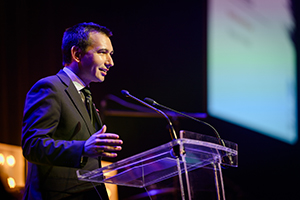 Over 600 supporters of primary care gathered at the Auckland's Viaduct Events Centre on Saturday night for a glittering gala dinner for the 2026 New Zealand Primary Healthcare Awards | He Tohu Mauri Ora.
|
| 19 Oct |
Te Whatu Ora must fully staff vital Starship Children's Hospital wardsTe Whatu Ora must fully staff all wards at Starship Children's Hospital including four vital wards which are short of a total of 18 full-time nurses, NZNO says. |
| 16 Oct |
Paid placements policy will help boost nursing workforceA policy to pay nursing students a weekly allowance while they're on clinical placements will help them graduate and boost Aotearoa New Zealand's homegrown nursing workforce, NZNO says. |
| 5 Oct |
Labour's pay rise a first step, but pay equity needs a full settlementTōpūtanga Tapuhi Kaitiaki o Aotearoa NZNO has welcomed Labour's promised pay rise for care and support workers as a first step. It says care and support workers now need a full settlement of their pay equity claim and a workable pay equity system for all of its members. |
| 1 Oct |
Health NZ releases first national report on serious adverse eventsHealth New Zealand has published its first national Serious Adverse Event Report, acknowledging the serious harm experienced by patients and whānau and outlining the improvements identified and actions underway to strengthen patient safety. The report covers serious adverse events reported in Hospital and Specialist Services between 1 July and 31 December 2025. |
| 25 Sept |
380 more health care workers at the end of winter too little too lateAn announcement of 380 additional nurses, midwives and health care assistants for hospitals around the country at the end of winter is too little too late, NZNO says. |
| 23 Sept |
Auckland University research finds nurse shortages increase post-surgery deaths and complicationsNew research by Auckland University has found addressing nurse shortages in post-operative care may save 182 lives a year because short-staffed wards have higher rates of potentially preventable deaths and complications after their surgeries. |
| 21 Sept |
Whanganui Hospital ED averaged 680% capacity over a week Working in an overcrowded emergency department (ED), up to 680% capacity over a week, makes staff feel overwhelmed with the pressure, Tōpūtanga Tapuhi Kaitiaki o Aotearoa NZNO says.
|
| 14 Sept |
WellSouth's Newborn Enrolment Kahu Taurima Programme a finalist at the Primary Care Awards 2026WellSouth's Newborn Enrolment Kahu Taurima Programme is a finalist at the Primary Care Awards for the HALEO Best Supplier Service, Product or Campaign category. Winners will be announced on 17 October. |
| 14 Sept |
Global Study: Nursing Shortages Require Workforce Policy Solutions, Not Recruitment Campaigns AloneWhy people choose nursing, and why they leave, comes down to the same factors. The global nursing shortage cannot be solved simply by encouraging more people to enter the profession, according to a new evidence brief. |
| 8 Sept |
Overworked, understaffed Gisborne ED staff strike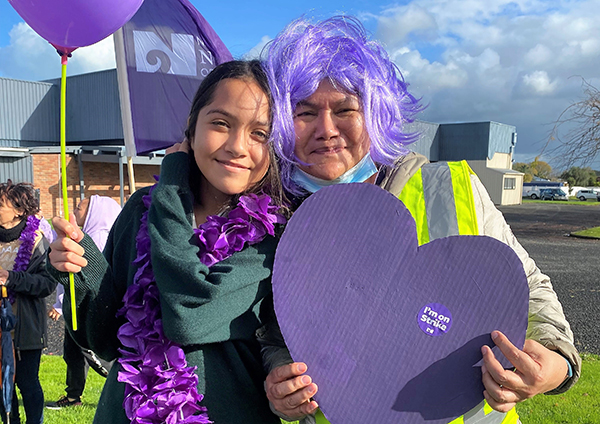 Health and safety concerns arising from unsafe staffing levels have forced nurses at Gisborne Hospital’s emergency department (ED) to go on strike.
|
| 4 Sept |
Strong growth in wāhine Māori and Pacific women’s cervical screening rates highlights success of self-testing programmeCervical screening participation has increased significantly for both wāhine Māori and Pacific women, reflecting the strong impact of self-testing, Screening Services and the dedicated efforts of health providers working alongside their communities. |
| 4 Sept |
Government must adopt Wai 2713 recommendations on disability systemThe Coalition Government must urgently adopt new recommendations from the Waitangi Tribunal which has found significant parts of the disability system prejudice tāngata whaikaha Māori (Māori with disabilities), NZNO says. |
| 31 Aug |
Employing graduate nurses will help keep them in nursing and the countryA new proposal that will require Te Whatu Ora to offer all eligible graduate nurses jobs in the public health system will help keep them in nursing and in Aotearoa New Zealand, NZNO says. |
| 26 Aug |
Health Minister’s claim Winter Plan ‘managing well’ delusionalHealth Minister Simeon Brown’s claim that hospitals are ‘managing well’ because of the Government’s Winter Plan is delusional, NZNO says. |
| 25 Aug |
Hospital data shows nursing shortages continue to put patients at riskTe Whatu Ora data released today shows patients are continuing to be put at risk by the Coalition Government’s deliberate failure to safely staff hospital wards, NZNO says. |
| 24 Aug |
Fed-up North Shore ED staff declare state of emergencyNZNO members working in the emergency department (ED) at North Shore Hospital have declared a state of emergency due to unsafe staffing levels resulting in ongoing overcrowding. |
| 19 Aug |
What happened to the winter health plan?The $25 million 2026 Winter Plan launched by Health Minister Simeon Brown in March to erase pressure on the health system has been an unmitigated disaster, Tōpūtanga Tapuhi Kaitiaki o Aotearoa NZNO says. |
| 11 Aug |
Applications open for advanced nursing education programmesHealth New Zealand is encouraging registered nurses to apply for two advanced education programmes that support nurses to further develop their clinical skills and expand access to care in communities across New Zealand. |
| 3 Aug |
Health New Zealand welcomes settlement of NZRDA collective agreementHealth New Zealand welcomes the vote by New Zealand Resident Doctors Association (NZRDA) members to settle their collective agreement. |
| 30 Jul |
Backing our frontline rural health workforceRural communities across New Zealand will benefit from three new investments that will support the rural health workforce and help more people access care closer to home, Associate Health Minister Matt Doocey says. |
| 22 Jul |
Te Whatu Ora must disclose staffing levels at time of tragic deathTe Whatu Ora must disclose whether the Waikato emergency department (ED) was short-staffed at the time a man tragically died in the waiting room, NZNO says. |
| 6 Jul |
Reflecting on IND 2026Looking back on last month’s International Nurses Day 12 May 2026 (IND 2026), the impact of this year's theme "Our Nurses. Our Future. Empowered Nurses Save Lives" continues to resonate across the world. ICN’s landmark IND 2026 report defined seven key powers of nursing and this message has been strengthened with nurses in every region celebrating, naming, and owning their powers throughout May. |
| 3 Jul |
Health New Zealand acknowledges Ombudsman statement on Wakari Ward 10AHealth NZ welcomes the independent investigation by the Ministry of Health into Ward 10A. On Wednesday the Health NZ board agreed to close Wakari Ward 10a as a forensic intellectual disability (ID) unit, with the future use of the ward yet to be determined. |
| 2 Jul |
New programme to fast track bowel cancer care and cut colonoscopy waitlistsHealth New Zealand is today launching a national initiative, designed to fast track bowel cancer care and reduce colonoscopy waitlists by up to 30 per cent. |
| 1 Jul |
Six new Co-Response Team locations announced to strengthen support for people in mental distressThe next six locations for Health New Zealand and NZ Police Co-Response Teams have been confirmed, expanding a model that helps people experiencing mental distress receive timely, wraparound support that better meets their health needs. |
| 29 Jun |
Mental health and addiction targets progress continuesHealth New Zealand continues to make important progress against its mental health and addiction targets, meeting four out of five national targets this quarter. |
| 25 Jun |
Access to care continuing to improve across a range of health indicatorsNew health data released today shows continued improvement in access to care across a range of health indicators. |
| 18 Jun |
Funding "boost" continues dangerous under-funding of aged careThe Health Minister’s funding "boost" for aged residential care continues underfunding to the sector and will continue unsafe practices and short staffing, which is putting vulnerable residents at risk, NZNO says. |
| 16 Jun |
Labour to make maternity scans freeLabour will add free maternity scans to the Medicard alongside three free doctor’s visits a year, so every pregnant woman gets the care she needs. |