


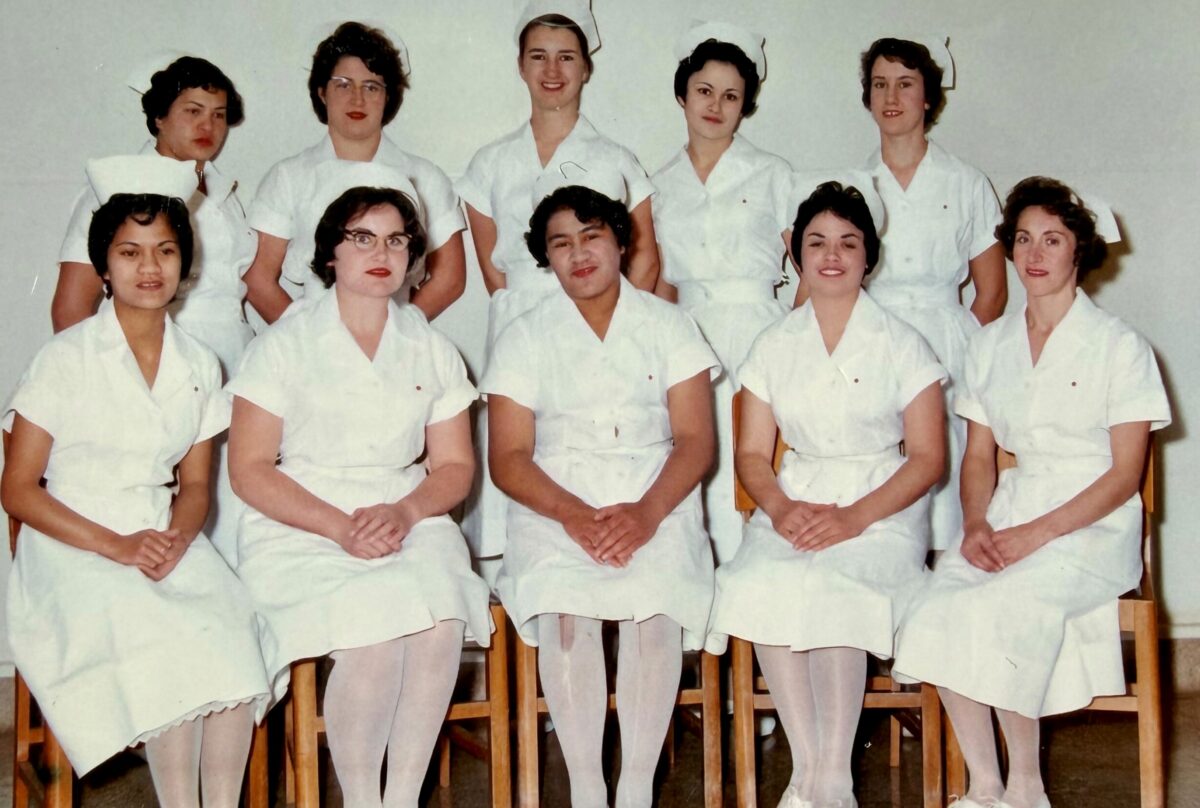
Ros Corban started her 60-year nursing career sharpening syringe needles on a stone — she ended it by spearheading the digital revolution in everyday practice. In between Corban was busy changing countless lives.

The local legend in South Waikato has spoken to Kaitiaki about nursing into her 80s, and the joys and connections of small-town life, after receiving a King’s Birthday nod this month.
Her journey started back in 1962 when Corban (Ngāi Tahu, Ngāti Maniapoto, Ngāti Mutunga o Wharekauri) simply had enough of boarding school. She didn’t want to go back and thought she’d go nursing instead. “It just came to me like that.”
She was in for a culture shock — exchanging Sacred Heart Girls’ College in New Plymouth aged 17, with a few preliminary months in a nursing classes as buffer, for the men’s ward in Taumarunui Hospital. “I learned quickly, as you have to.”
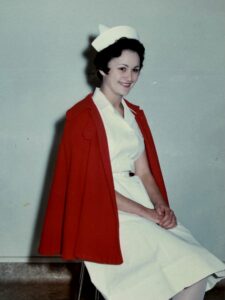
Corban was a registered nurse by 20. After a break to get married and have her two daughters she started at Tokoroa Hospital in 1970.

Tokoroa was a town on the rise. At the end of the 40s it had a population of a few hundred but by the time Corban arrived it had hit 15,000 thanks to the nearby Kinleith Mill. By decade’s end — the thinking was at the time — it would ascend to city-hood, topping 20,000 residents.
These days the hospital has been downsized, like all such rural facilities said Corban — and also like Tokoroa itself — but at the time it had everything: medical wards, surgical, maternity, paediatric. She loved the work, and the hospital was even near her home, a five-minute drive in winter and a pleasant walk in summer.
But the work was hard. There were no showers for patients, and there were no hoists so nurses got bad backs lifting people in and out of baths and beds, she said.
Nurses would sharpen syringe needles — not throw them away after one jab — running the tip across a whetstone. The needles, along with glass syringes would then be sterilised in autoclaves.
Things like bed pans and urinals had to be washed by hand. “We never had gloves, terrible when I think about it today. Today wherever you go in a hospital now there’s boxes of gloves, sanitiser everywhere. So it’s so much easier today, that’s probably why I’ve managed for so long.”
In modern nursing everybody is on a first-name basis, whether a nursing colleague or a specialist. “It was very formal back then. Every time a doctor came, we were terrified of the doctors. We had to stand up with our hands behind our back. The ward sisters, they were fierce.”
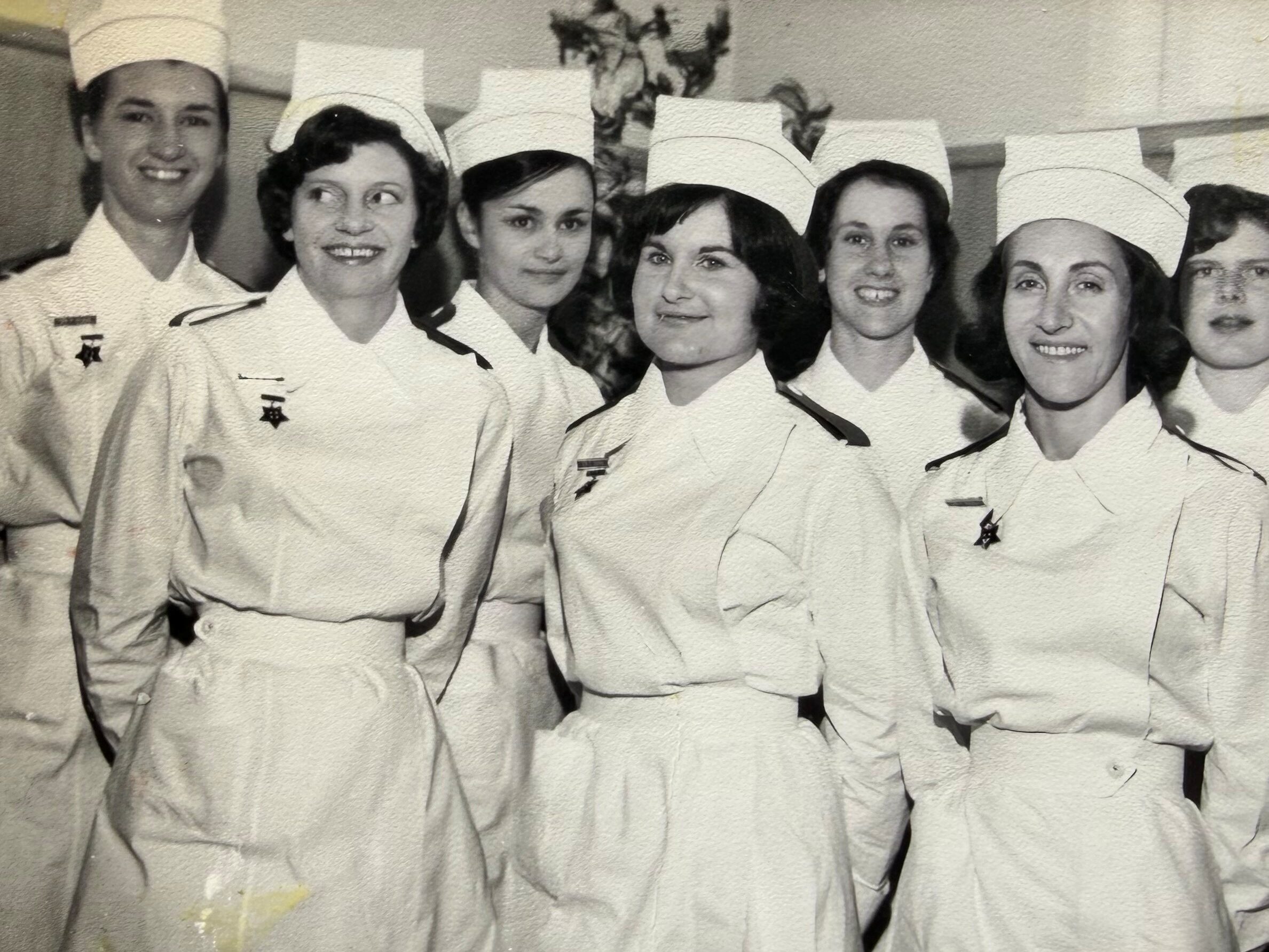
Scrubs and sneakers might be the modern nursing uniform, but back then they wore those starched uniforms and caps, belts, stockings and shoes. “Can you imagine doing showers and baths dressed like that? It was much harder physically.”
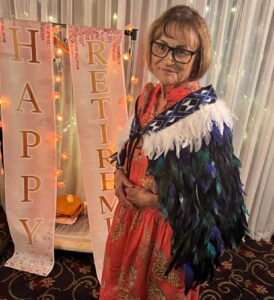
Corban worked at the hospital for 37 years with stints including ward charge nurse in paediatrics and night charge nurse in the accident and emergency department, before heading to Rangiura Retirement Village, “a beautiful place to work” where she stayed for another 18 years. It was there that Corban, clinical nurse leader, retired late last year, aged 81.
She would have kept working too if she hadn’t become a bit unwell.
This year she was awarded a King’s Service Medal for her services to nursing. Those services didn’t necessarily end with a patient’s discharge and return home, or sometimes even with their death for that matter.
Over the years Corban would help people get home from hospital, then check in to make sure they were coping; she’d do some shopping for them, do a bit of cooking. “It was just something I did. A lot of people touch your heart when you look after them.”
Then there was Lilian and Bob. Lilian was a resident at Rangiura, a special person, a “lovely lady”, said Corban. She and her son Bob came from the United Kingdom: there was only the two of them in New Zealand.
“So anyway, Lilian died and Bob was very unwell, so he had her cremated and I picked her up from the funeral place and brought her home. And then he went and died.”
Corban then had Bob cremated and kept them both at her home before having them both buried a year later. “They had absolutely no one so what would have happened? And they were such good people, but anyway, that’s what you do.”
She left a huge gap
Helen Tuck, physiotherapist and current joint acting clinical lead at Rangiura, was there when Corban first arrived, and one of those who sent letters supporting her medal.
Corban might have been nursing for a long time, but she was always open to fresh ideas, said Tuck. She showed huge love and support for new international nurses, and supported her staff as medication management went digital.
‘I can never say I’ve learned everything. You learn every day — that’s the thing about nursing, there’s always something new to learn.’
Even as a clinical nurse lead hitting 80 it wasn’t unknown to see Corban emptying a bed pan, or a commode: she was still doing the practical hands-on stuff to help residents, Tuck said. She was a “proper old-fashioned nurse”.
“She got on so well with everybody, the cleaners, the carers; everybody thought of her as a mother to us all. She’s left a big hole actually.”
Despite being a mentor to so many new nurses, Corban still considered herself a student of the profession, even after 60 years, even on her last day at work, even aged 81.
“I can never say I’ve learned everything. You learn every day — that’s the thing about nursing, there’s always something new to learn.”
Now in her retirement, Corban was modest about her honour. It was almost unfair since her 60 years had been a labour of love. “There’s so many people who do the work and don’t get recognised, and I’ve only done what I’ve been so passionate about.”