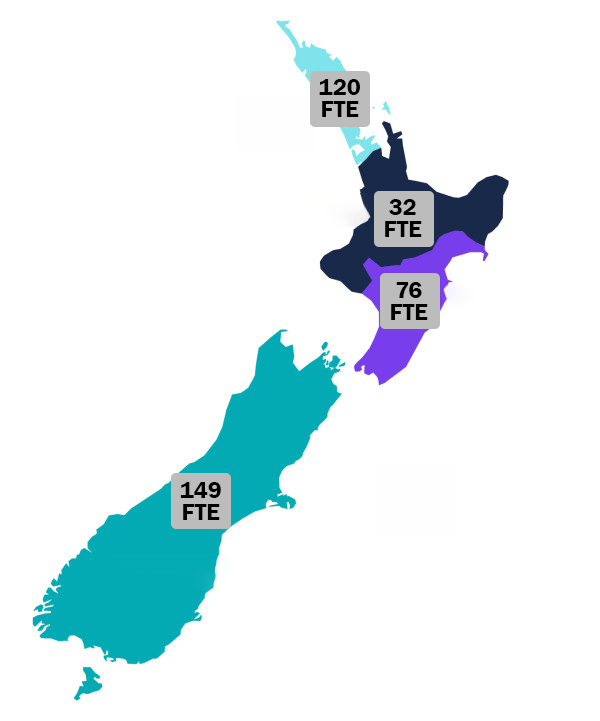



National chief nurse Nadine Gray announced on Friday HNZ would be recruiting an additional 380 full-time equivalent (FTE) frontline workers, including nurses, midwives and HCAs by June 30, 2027.
Gray could not say how many of the 380 would be nurses, which would be up to hospitals, but did say it included 94 FTE emergency staff who would be “largely nurses”.
NZNO college of emergency nurse co-chair Natasha Hemopo, who watched the announcement with colleagues, said the reaction was: “You’re joking”.
“They were like, ‘380 nationally, for the whole country? You’re joking. And 94 allocated for emergency departments? Not enough’.”
‘This has come from health-care workers speaking up and calling it out.’

Hemopo said her own region, Midlands, was allocated fewer than 40 of the additional FTE roles. “Waikato ED alone, they will soak up 40 nurses,” she told Kaitiaki.
“When you break that down over the Midlands, or per region as they’ve done, it doesn’t even clinically backfill what’s needed on the floor right now.”
Hemopo said it was the courage of nurses and health-care workers speaking out that had led to the staffing boost, five weeks out from the General Election.
“This has come from health-care workers speaking up and calling it out. In part it’s an acknowledgement from HNZ that they need to do something about it. I just worry that it’s too late — on boarding of staff takes months.”
Staff at Waitākere Hospital and Gisborne ED have gone on strike for safer staffing recently, while Tauranga Hospital ED staff have asked HNZ bosses for 15 more nurses, North Shore ED have called a state of emergency and Whanganui Hospital ED staff have spoken out about being nearly seven times over capacity this month.
Hemopo estimated thousands more staff were urgently needed simply to bring the workforce back to full strength after a two-year hiring freeze under the current Government.
“Our [emergency] departments are in crisis now, they’re struggling now.”
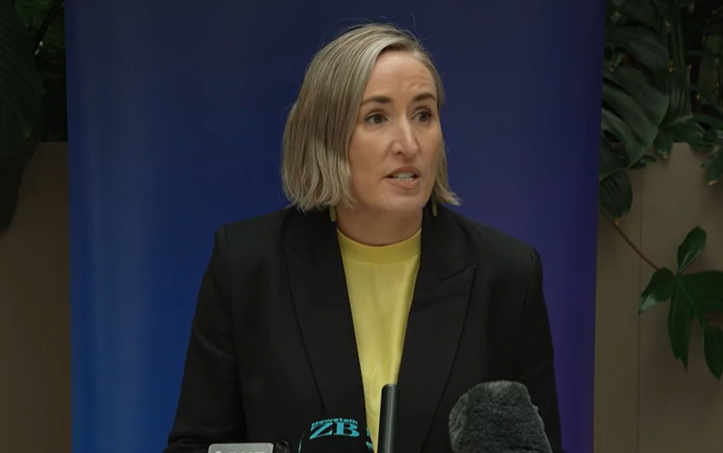
NZNO kaiwhakahaere Kerri Nuku said the promise rang hollow, coming after two years of warnings from frontline health workers.
“In the meantime, nurses have struggled through the worst influenza outbreak in a decade, overcrowding in our hospitals and hours . . . long waits in emergency departments.”
New roles
HNZ confirmed to Kaitiaki these were new roles rather than filling existing vacancies — revealed to be nearly 1500 for nurses last month.

Gray told RNZ she did not have an “absolute breakdown” of how many nurses would be hired as that would be up to individual hospitals to work out. As for thousands of nurses being employed by Christmas — as promised by Minister of Finance Nicola Willis — Gray could only say “best efforts will be made”.
In a release, Gray only said the staff would be hired in regions and services where a particular need had been identified by safe staffing tool CCDM (care capacity demand management).
HNZ was also investigating whether nurse-to-patient ratios could improve its workforce planning, said Gray, describing the current system, CCDM, as “complex”.
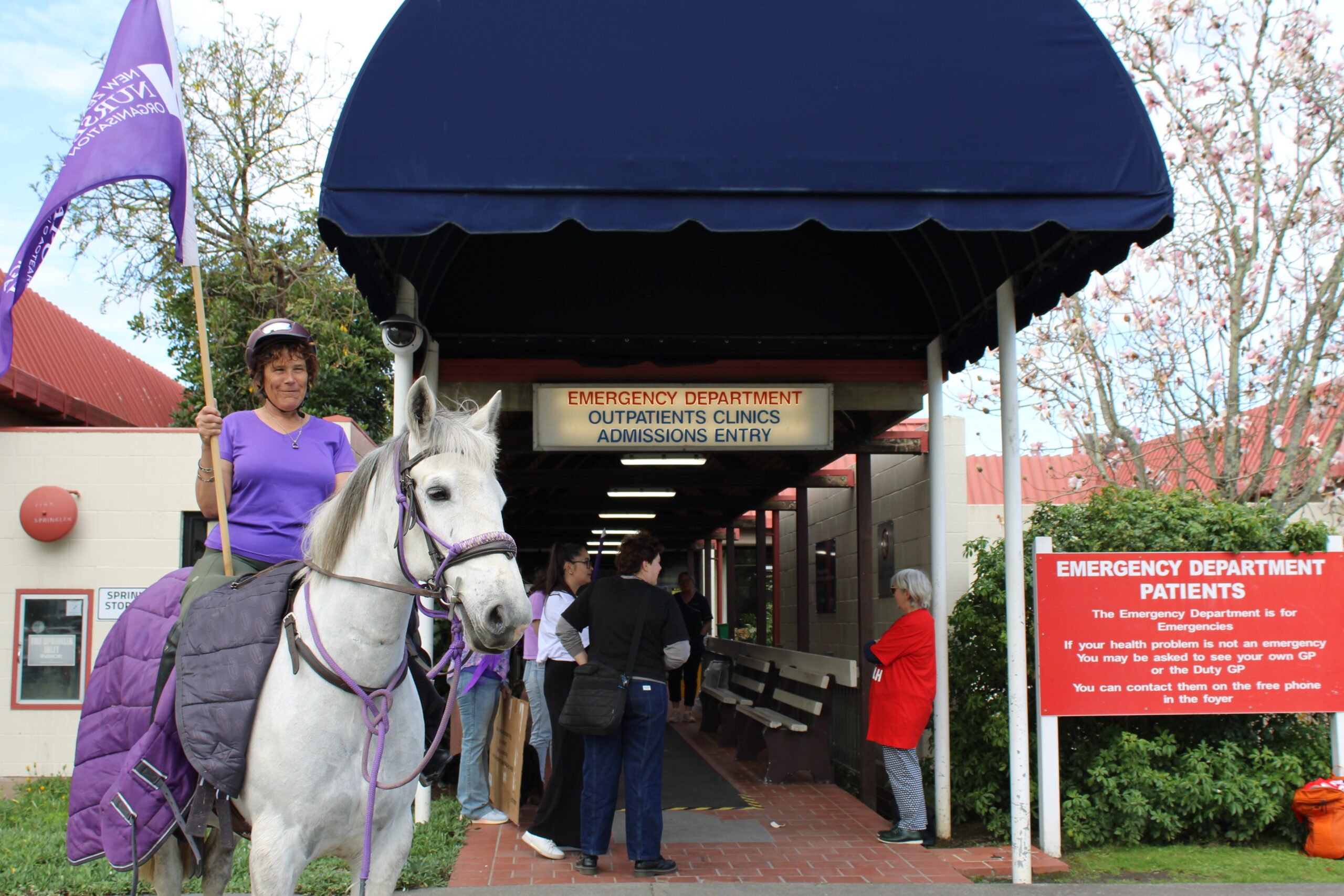
HNZ committed to investigating ratios as part of its 2026-27 collective agreement with NZNO.

In 2023, HNZ identified it was short 4800 nurses nationally before recruiting another 3000 FTE nurses over 2023-24. Since the first quarter of 2024, the nursing workforce has grown by just 54 FTE — despite claims by Minister of Health Simeon Brown that 2100 new nurses had been hired.